4 sustainable construction trends to watch for in 2026
Architecture, engineering and construction firms will implement new tools and techniques to cut carbon, curb waste and build more sustainably — when they’re a priority for clients and jurisdictions. Read More
- Construction is a major contributor to greenhouse gas emissions and waste, but the industry builds what governments and owners ask for.
- Trends to watch for in 2026 include reusing existing structures, building in harmony with climate, making glass part of the solution and adopting technologies like AI to increase performance.
- The industry is slowly adopting practices, tools and materials that can reduce carbon footprint — which will be essential as the global building stock doubles by 2050.

Throughout their lifecycle, buildings are among the largest contributors to greenhouse gas emissions and waste. Erecting and operating structures accounts for one-third of global greenhouse gas emissions, while construction and demolition waste amounted to 30-40 percent of the total global solid waste stream in 2022.
And that is unlikely to change until governments and owners demand it.
“What’s built depends on what jurisdictions mandate and clients specify,” said Eamonn Connolly, director of engineering at Chicago-based McHugh Construction. Low carbon is currently not an emphasis — and even if it were, diffusion of best practices across the industry is sluggish.
The construction industry has historically been a slow adopter of almost everything, including sustainability. But there is progress. “As companies, individuals, entities, and suppliers gain experience, they become more capable and open to advocating for low-carbon strategies,” Connolly added.
Architecture, engineering and construction (AEC) firms must embrace approaches that support fundamental change, because incremental improvements are no longer enough. Here are four trends to watch for in 2026 — none completely new, but all coming into their own.
Adapt, don’t build
Architects know that the most sustainable building is the one never built. Not building cuts the embodied carbon energy required to extract natural resources, manufacture and transport materials, and build structures. And that means reusing existing structures.
Detroit’s redevelopment offers a lauded example. Many projects feature buildings on local, state or national historic registers. Often, the materials and craftsmanship aren’t cheap — or can’t be had today at any price. Retrofitting with energy-saving components delivers significant efficiencies, and renovations that preserve the building envelope typically take far less time and money.
Adaptive reuse goes a step further by finding new uses for old structures. Detroit-based architecture firm McIntosh Poris has led in stopping the wrecking ball and giving structures new life. The firm transformed a 1925 bank building into a techno nightclub called Panacea, the former Detroit Fire Department Headquarters into the boutique Detroit Foundation Hotel and Fischer Body Plant 21 (below) — opened in 1919 and abandoned in 1993 — into multi-use apartments with retail and co-working space.
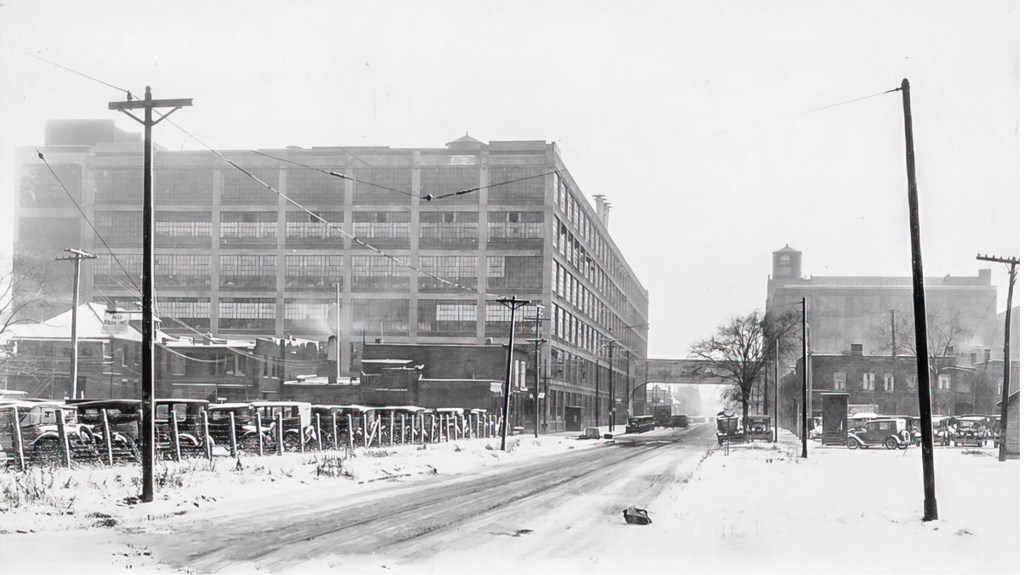
Adaptive reuse produced approximately 25,000 new apartments across the country in 2024, a 50-percent increase year-over-year. Nationwide, projects are on the upswing, with a record-breaking 181,000 apartments in development, mostly from office spaces never reclaimed after the pandemic. A driving factor is the boost in affordable housing from reusing structures, which cuts construction expenses and timelines for units in desirable locations. For example, at least 20 percent of the units at the Fisher 21 Lofts will be designated for residents earning at or below 80 percent of the area median income. Tax credits and government incentives can make these developments more economical with mixed-income properties and help revitalize older neighborhoods.
Design around climate
Instead of one-size-fits-all architecture, climate-responsive design focuses on energy efficiency that arises from the site and environment. Designers orient structures to block or capture sun and wind, and select materials that naturally reduce energy use and embodied carbon. The result: reducing the use of mechanical systems for heating, cooling, ventilation and lighting.
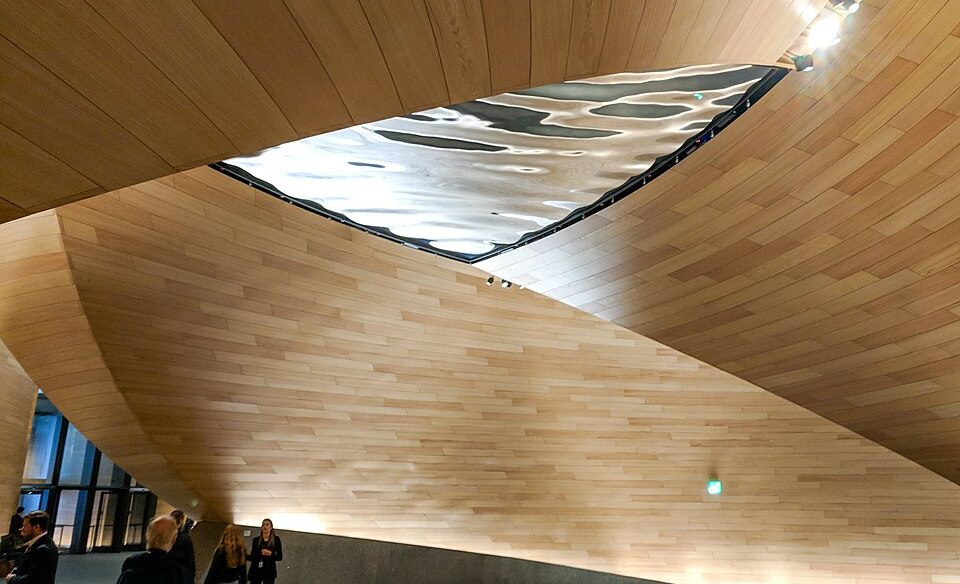
For instance, natural airflow decreases the need for electric cooling. So, architecture firm Foster + Partners designed the Bloomberg European HQ in London to feature a unique “breathable” façade. Automated bronze louvers open and close to provide natural ventilation and, combined with a central atrium, reduce energy use by about 35 percent compared to a typical office.
Climate-responsive design has evolved into holistic architecture driven by data and technology. Google’s Bay View campus in Silicon Valley, opened in 2022, features a massive geothermal system, solar roofs, 100 percent outside air ventilation, natural light, native landscapes and net-zero water use.
Still, the vast majority of the world’s building stock needs to be transformed for true climate responsiveness.
Reenvision glass
The appeal of sleek glass curtain walls, combined with light and open interiors, explains why glass is the material used for more than half the exterior surface of modern skyscrapers. That typically leads to poor energy efficiency given glass’s low insulating value. But several innovations can dramatically reduce energy loss from glass facades:
- Low-emissivity coatings to control heat flow
- Insulated glass units that seal two or three panes inside, cutting heat loss
- Using denser argon and krypton to replace air between panes, slowing heat transfer even more
The logical progression is windows that can generate energy by capturing light and converting it into electricity — as NEXT Energy Technologies’ windows do at Patagonia’s corporate headquarters in Ventura, Calif.
Also crucial is increasing the sustainability of manufacturing, which requires mining of sand, soda ash and limestone, and running furnaces fed by fossil fuels at 1500 degrees Celsius. To address these issues, manufacturers are increasing recycled glass content, using cleaner oxy-fuel technology, improving furnace efficiency and capturing carbon. Given glass’s infinite recyclability, it has the potential to become a true circular material.
Optimize with AI
The consensus from a survey of 235 contractors by Dodge Construction Network is that AI will transform the industry once construction adopts technologies that use it. But that may take time; in Yooz’s 2023 Technology in the Workplace survey, workers in construction viewed their own industry as the least technologically advanced.
Still, construction is seeing the value of AI. Autodesk’s 2025 State of Design & Make: Spotlight on Construction report highlights some of the top use cases for AI in sustainability, including supporting data-driven decision-making, analyzing and improving supply chains, enhancing reporting, optimizing energy use and efficiency, and reducing material waste.
Questions about data privacy and security remain. Still, architects and engineers are using generative AI to explore alternatives for structural design that use the least material while maintaining integrity. AI programs can be trained to predict the exact material quantities a project requires, eliminating over-ordering and cutting cost and waste. By quantifying embodied carbon in materials, AI can also help reduce a project’s carbon footprint.
Digital twins — virtual replicas of real-world entities such as buildings — also use AI to predict behavior from design to end of life. Continually updating digital twins with data from sources like embedded sensors enables managers to test new ideas and make changes. For instance, a digital twin of Heathrow Terminal 5 simulates energy use, airflow and thermal comfort for greater efficiency and post-occupancy performance.
Double down
By 2050, the global building stock is expected to double. The practices and tools to lower future buildings’ carbon footprints are out there, awaiting demand and adoption. “We’re just an industry waiting for the signal to do more,” said Connolly.

Subscribe to Trellis Briefing