Disney sustainability VP to fellow pros: Stop talking yourself out of a job
Yalmaz Siddiqui thinks too many leaders in the field devalue their unique expertise. Read More
- Don’t undermine the technical expertise required to lead corporate environmental strategy.
- Companies need both an integrated and centralized plan for managing ESG commitments.
- Different psychological approaches are required as practices are integrated with core business functions.
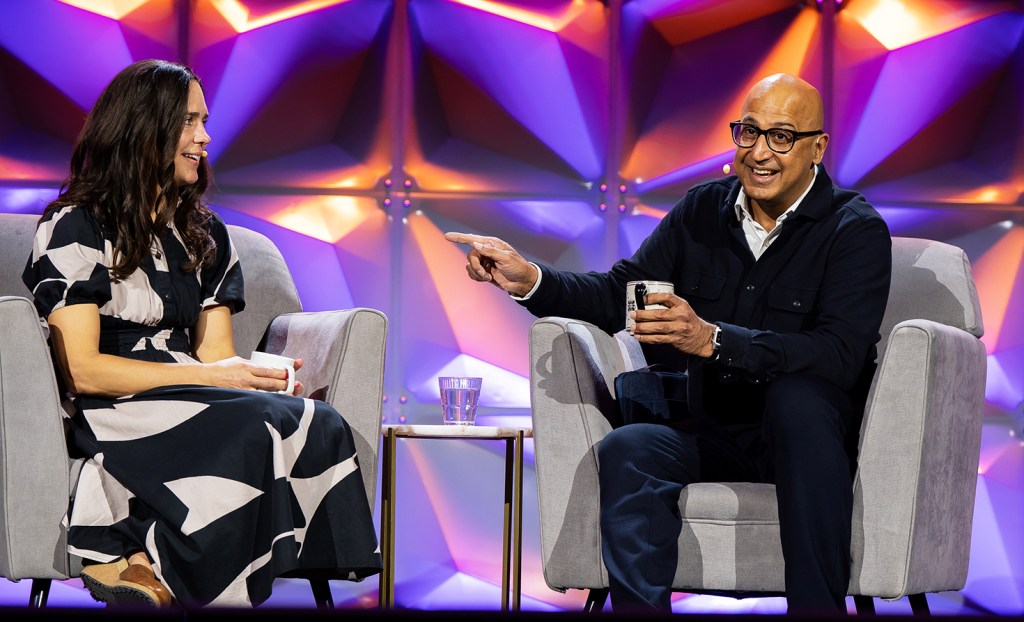
Yalmaz Siddiqui, vice president of environmental sustainability at The Walt Disney Co., has a bone to pick with sustainability professionals at any level who declare their career goal is to make their job redundant.
The storyline that companies don’t need dedicated sustainability leaders and teams devalues the unique expertise about environmental risks and ESG jargon that sustainability professionals bring to their organization, said Siddiqui during keynote remarks last week at GreenBiz 26. His observation was prompted by a debate during the conference about the evolving role of chief sustainability officers.
While integrating environmental metrics across corporations is an important goal, he argued that companies need sustainability professionals with strong technical skills to keep them abreast of the perpetually evolving landscape for corporate action on emissions reductions, water consumption, plastics usage, waste management, biodiversity and other environmental issues, including the many regulatory changes afoot.
Siddiqui said: “When we say we want to integrate good financial practice into the organization, does that mean we need to get rid of the CFO? No. When we say we should integrate good human resources practices and performance management, does it mean to get rid of the CHRO? No. I think there’s a strong argument for technical expertise in the center and integration with both technical expertise and functional expertise to move things forward.”
A sustainability veteran’s path
A Pakistani native who grew up in a Zambian mining town, Siddiqui in 2026 celebrates his 20th anniversary as a corporate sustainability leader, at three very different companies — although he’s never actually held the chief sustainability officer title. He spent 10 years at Office Depot, where he helped triple sales of greener product alternatives, to more than $3 billion. During his six years with MGM Resorts, he developed a donation strategy to reduce food waste that has cumulatively delivered more than 5 million meals.
Siddiqui’s job at Disney, which he joined about four years ago, is to manage goals for emissions, water, waste, materials and sustainable design. He co-leads Disney’s strategy for sustainability matters with Kelley Greenman, Disney’s vice president of environmental policy and ESG strategy. They both report to Brent Olson, senior vice president of global public policy.
Disney’s headline commitment is to reduce its greenhouse gas footprint by 46.2 percent for operations and electricity (Scope 1 and 2) by 2030; as of the 2024 fiscal year, Disney had reduced those direct emissions by 28 percent. Disney has pledged to cut emissions from purchase goods and services and other supplier relationships by 27.5 percent, but it didn’t report on progress in its FY2024 report.
Siddiqui’s complex job requires orchestrating strategy across a wide array of businesses, from streaming brands like Hulu to Disney’s theme parks and resorts to movie production studios. Many divisions employ a team of embedded environmental experts, and the group led by Siddiqui and Greenman acts as the central coordinating team. There are more than 100 people across the company responsible for these functions.
The role of Disney’s centralized team aligns with three priorities and phases, each handled with a different psychological approach to win support, he said. They are:
Initiate
Introducing new policies or processes that are outside the traditional functions of the business unit demands that the central team use “polite, patient persistence to keep going.”
Integrate
Helping environmental practices become the new normal requires sustainability teams to empathize, let go of decision-making authority, reward progress and trust that line-of-business teams will do the right thing.
Communicate
Sharing progress for both reputational and regulatory reasons in accessible, non-jargony terms. Different stakeholders need different messages. “I made the mistake once of making very financial arguments to a business resource group and they didn’t like to hear the economic arguments,” Siddiqui said. “They wanted the social and moral arguments.”
Editor’s note: This story was updated Feb. 28 to update the headline, add more context about Siddiqui’s title and role at Disney and correct a reference to his nationality.

Subscribe to Trellis Briefing