The green manufacturing boom is happening. Just not here
Without a change in U.S. workforce skills and reasonable tariff policies, China will continue to dominate. Read More
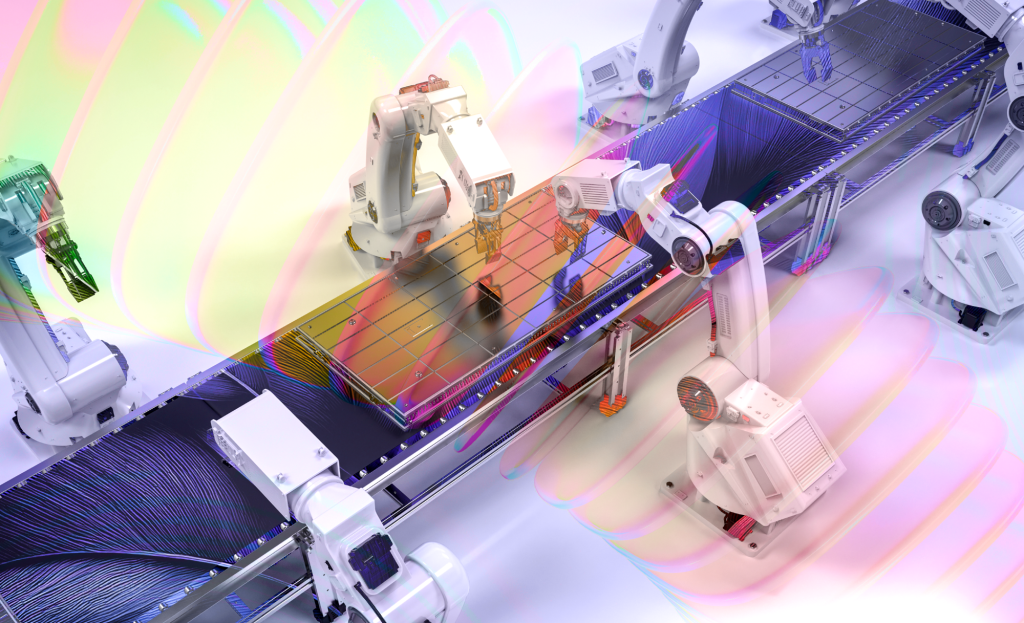
- Recent policies have made the U.S. one of the worst places to manufacture in the world.
- While tariffs aren’t categorically a bad thing, the way they’ve been implemented has caused the cost of domestic production to rise.
- To get back on track, the U.S. needs a highly-skilled workforce that’s appropriately trained for better productivity or produces exceptional craft that improves product quality.
The opinions expressed here by Trellis expert contributors are their own, not those of Trellis.
Manufacturing is in the headlines, both as a major goal of current U.S. policy and a point of competitive tension with China. It’s a surreal moment, which could be summarized as the world’s biggest consumer picking a fight with the world’s biggest producer.
In 2024, America exported $140 billion of goods to China, while China exported $440 billion of goods to the U.S. One doesn’t sensibly pick a fight with their biggest customer. Instead of counterpunching, China has worked to address any structural weaknesses it could find to minimize the damage if its relationship to its biggest customer were to change.
While the current U.S. policy direction suggests that green technologies are a scam that force more expensive and unproven technology into the market, China is demonstrating that green technology is a huge boost to economic growth. This is evidenced by its dominance in solar, battery and EV technology in global markets — a point that became clear during COP30 in Brazil earlier this month.
Automaker BYD, for example, is building an EV plant larger than the entire city of San Francisco and seven times larger than the biggest Tesla gigafactory. Green manufacturing isn’t a dead end; it’s a huge economic boom. But it’s not happening here.
How we got here
The economic order since the fall of the Berlin wall has been one of ever-expanding international trade and rising prominence of multinational corporations. Military conflicts have been more regional (as opposed to global), and most international competition moved into the economic sphere. While any system has room for critique, the economic efficiencies that came from global production both provided cheaper goods and a reason for ongoing international cooperation.
This approach was very good for business, and generally good for world peace. What it was less good at was guaranteeing jobs in any specific country, as global trade also meant the ability to offshore labor at lower costs. Some industries and national policies advanced their manufacturing with technology, which drove more productivity and sustained living wages even at the higher cost of living in industrialized nations.
Still, over the past two decades, domestic manufacturers have steadily ceded market share to imports: U.S. producers now supply roughly two-thirds of the home market for manufactured goods, down from more than three-quarters in the early 2000s, a shift worth on the order of $600 billion–$750 billion in annual sales now captured by factories overseas. At the same time, a growing reshoring push and “make it here” industrial policies show just how eager voters, workers and local leaders are to bring more of that production back onto domestic ground.
My venture firm invests in deep tech for productivity improvements to the industrial sector that also bring along massive ecological improvements — so I have a front row seat to the effort to “bring back manufacturing” to America. We’ve set up several new manufacturing facilities in the U.S. in the past five years and for a time, those production lines were humming. But now, thanks to recent policies, the U.S. is one of the worst places to manufacture in the world.
Tariffs have crippled U.S. manufacturing
Tariffs aren’t categorically a bad thing. When used wisely, along with thoughtful investments in education, infrastructure and cultural incentives, they can bring valuable industries back into domestic production. But there’s a bad way to implement them and the worst way to use tariffs, which is what’s happening now: to have them be unstable, large and arbitrary.
The instability actively punishes folks setting up manufacturing domestically because they cannot predict input costs, nor the cost of production equipment. If your team was waiting on best-in-class equipment to arrive from Germany or Japan the same week that a 50 percent tariff is imposed broadly on those nations, then you may have just accidentally bankrupted the effort, as capital expenditure costs are huge project budget line items.
Almost no country except China has the luxury of sourcing its entire supply chain within their borders. So when tariffs are imposed on inputs, the cost of domestic production can go up to the point where it is no longer workable.
When tariffs are unstable, they don’t encourage investment, because bold moves that set up new production could accidentally kill your business.
When tariffs are large, they create expensive discoordination arising from having to halt production or re-route sourcing to new vendors in other geographies to get you back to gross margin positive while you incur costs from supply chain delays and production uncertainty.
When tariffs are arbitrary, one cannot predict whether your government is wanting to support your industry or abandon it. This makes life harder for investors, business leaders and entrepreneurs that are the main personnel that establish domestic production.
Getting back on track
If you live in a higher-income nation, the operating band for labor costs will be higher than labor costs in lower-income ones. Given this, the labor cost disadvantage either needs to be made up for via higher individual productivity, which lowers labor cost fraction per unit, or you need to make higher-quality goods that command enough margin to justify the higher labor costs.
In either case, you need a highly skilled workforce appropriately trained for better productivity or exceptional craft that improves product quality.
To get here, a thoughtful approach for governments would be to lower the cost and improve the quality of educational options — from advanced degrees and four-year universities to trade schools and support of regional craft guilds and maker communities. The people, places and tools that enable mass-upskilling need to be well-resourced and respected.
In other words, you’ll need to pay teachers more. (Which, if you’re counting, would be another source of meaningful work.) While these adjustments may sound expensive and time-consuming, in countries where they have been applied, the efforts have shown fantastic ROI. Beyond education and re-skilling, infrastructure investments in roads, bridges and ports, lower-cost energy, and clear labor laws that simplify bringing the best talent are all huge boosts to establishing robust industry.
Tariffs can positively contribute to this effort if they are stable, low and principled.
A 5 to 10 percent tariff that is stable for 10 years provides enough time for new manufacturing to be established. It also signals to the workforce that those industries will likely be growing and that engaging in re-skilling into that industry is a worthwhile career investment.
When tariffs are low, it also means that when they eventually expire, the country maintains an industrial base that can still produce near the globally competitive costs. This greatly strengthens the likelihood of strong export markets making use of that newly developed production capacity.
The good news is that we know where to put our attention and investment, if the intent is more manufacturing skill: education, infrastructure, social respect and low-intensity, time-stable tariffs (if needed). The countries that do this well will pull ahead in the coming decades and become net drivers and suppliers of the waves of economic transformation to come.

Subscribe to Trellis Briefing