How Alaska Air’s sustainability lead became Hawaiian Airlines’ CEO
Diana Birkett Rakow’s experience leading the parent company's ESG and public affairs efforts map closely to the subsidiary's focus on local sourcing and operational efficiency. Read More
- Chief sustainability officers and CEOs share a common challenge: navigating systems change.
- Alaska is the nation’s most fuel-efficient premium airline.
- Her advice: Don’t overlook the importance of winning over policymakers, employees and customers.
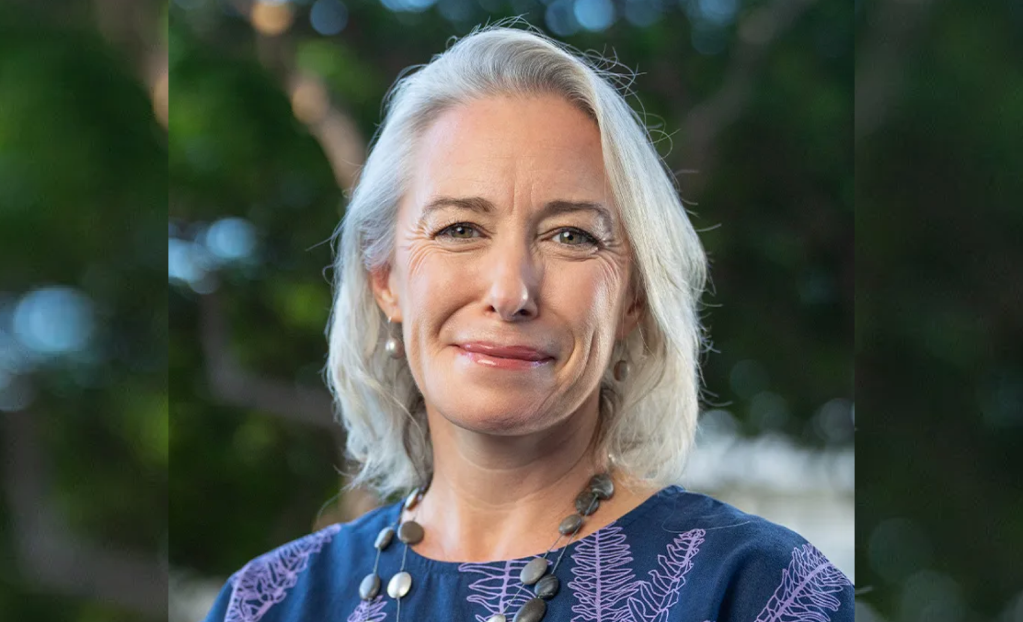
Diana Birkett Rakow became CEO of Hawaiian Airlines in October 2025 after eight years heading parent company Alaska Air Group’s sustainability, venture investments and public affairs strategy.
It’s a rare career progression among corporate sustainability professionals, but Birkett Rakow argues it should be more common because CSOs and CEOs share a common challenge: creating business value while navigating systems change.
“Fundamentally, the definition of sustainability is durability,” she said during the latest episode of our Climate Pioneers interview series. “It’s being here and being successful for a long time.”
Hawaiian celebrated its 96th anniversary in 2025, making it one of the oldest U.S. airlines. It was acquired by Alaska Air in September 2024, and Birkett Rakow was closely involved with the integration planning as part of the executive committee led by her boss, Alaska Air CEO Ben Minicucci. She was named to Hawaiian’s board when the integration was completed, ahead of her promotion. Her mission: build on the airlines’ investments in sustainable aviation fuel and efficiency measures, such as local sourcing, to position the combined company for low-carbon business growth.
“Knowing climate science is a real asset, increasingly, for chief sustainability officers, but not just knowing that science, knowing how to translate it into business integration and business outcomes and into initiatives that will actually drive impact,” she said. “I think the duality of that experience is also really important.”
Birkett Rakow’s long-time experience in public affairs and community relations was also a key factor in her promotion to CEO one year later. Before her experience at Alaska Air, she worked on public health policy in the U.S. Senate and in corporate roles at Group Health and Kaiser Permanente (which bought Group Health in 2017).
“One of the things that has always been part of my career is working with multiple stakeholders to get to a solution,” she said. “You can’t go off in a corner and come up with a piece of legislation and expect that it’s going to get done, partly because no one person has all the answers.”
Airline CEOs love fuel efficiency
Birkett Rakow remains accountable for Alaska Air’s overall sustainability strategy and for Alaska Star Ventures, created four years ago, and the work to reduce emissions across the airlines’ operations is top of mind in both her roles. One of the combined company’s environmental goals (adopted from Alaska Air’s sustainability playbook) is to be the most fuel-efficient premium U.S. airline, a title it already claims.
Alaska Air cut 6.4 million gallons of jet fuel in 2024; almost half that amount came from a procedure that requires planes to taxi to runways using just one engine before turning both on for takeoff. It saved 900,000 gallons by using Flyways, an AI software application Alaska developed in collaboration with Air Space Intelligence. The system optimizes flight path information for dispatchers and pilots in real time, so adjustments can be made on the fly that decrease fuel consumption.
Alaska Air doesn’t publish how much fuel it burns annually, but it used close to 300 million gallons in the first half of 2024. “Fuel that we don’t burn is emissions that we don’t need to create,” Birkett Rakow said. “It’s a win-win for the business, because it also is fuel that we don’t need to pay for.”
Alaska Air’s partnership with Air Space Intelligence inspired the creation of Alaska Star Ventures. “Seeing how technology could be built and serve us in the future started us thinking about the role we should play in enabling that new technology,” Birkett Rakow said. “Some of the role we should play is using it. Some of it is informing its development with our own expertise.”
SAF ambitions
The venture group invests in startups and technologies that support the airlines’ operational efficiency goals, fleet renewal initiatives and the transition to sustainable aviation fuel (SAF). For example, Alaska Air in August 2024 funded JetZero, which is developing a blended wing aircraft design designed to burn 50 percent less fuel than current planes.
Alaska Air has funded several SAF companies, with the goal of building supplies for its hubs in Hawaii and the Pacific Northwest. For example, Hawaiian and Alaska will receive the first SAF deliveries in the first quarter made from locally grown Camelina crops through its partnership with Par Hawaii and Pono Energy. Alaska is investing in carbontech company Twelve through a venture with Microsoft and others in Washington state, the Cascadia Sustainable Aviation Accelerator. It is also backing a new Breakthrough Energy Ventures fund that aims to scale commercial availability of sustainable aviation fuel. To build awareness with customers, Alaska Air awards elite qualifying miles to flyers who buy SAF credits.
SAF production is building slowly, and it will take a combination of definitive airline purchasing commitments, policy development and customer engagement to accelerate commercial availability. Alaska Air’s corporate customers including Autodesk, Meta, Microsoft, Skanska, Watershed and We are buying into the mission
“It’s really exciting, but it’s going to take time,” Birkett Rakow said. “I think a couple of years ago with SAF, we thought if we just created … demand signals, if we just purchase SAF, the market will grow. I think there was some rationale to that, but it hasn’t worked in part because the regulatory environment hasn’t been consistently supportive in a way that was probably required for that to happen, and the cost of building new technologies and new production and the capital needed to stand that up is very significant.”

Subscribe to Trellis Briefing