How Oatly takes the steam out of its industrial emissions
The Swedish alternative dairy company is retrofitting factories and evaluating electrification where possible. Read More
- The company gets 11 percent of its thermal energy from renewable sources.
- First priority: Make better use of waste heat.
- Oatly plants have an annual energy reduction metric measured monthly.
Swedish alternative dairy maker Oatly is among thousands of companies with a 100 percent renewable electricity goal. It is one of the few — alongside Mars, PepsiCo and Procter & Gamble — to explicitly outline plans for thermal heat in that commitment.
Oatly’s commitment, updated in May 2025, is to source 100 percent of its energy including electricity and thermal heat from renewable sources in Europe by 2030. The company gave itself five additional years to meet that goal in North America, because there are fewer options in the region.
Energy accounted for 16 percent of Oatly’s carbon footprint in 2024, its latest reporting year. It hasn’t set absolute greenhouse gas reduction goals. Rather, its target is to reach a 40 percent cut by 2030 in climate emissions per liter of product.
“Our decarbonization strategy includes a couple of very simple steps,” said Erin Augustine, vice president of global sustainability at Oatly. “The first is energy efficiency everywhere. Use less electricity, use less steam, use less heat all across the board and make sure our processes are operating efficiently. We need to make operational improvements before we even get to capital improvements.”
Eliminate steam where possible
Approximately 62 percent of the energy used in factories operated by Oatly and its production partners in 2024 came from natural gas and other fossil fuels used to generate steam and hot water for processing oats and keeping equipment clean. Between 2020 and 2024, Oatly expanded from three factories to six, including two in the U.S.
Most of these processes require temperatures at or below 200 degrees Celsius, or 392 degrees Fahrenheit. That’s fairly typical for food companies, according to data from the U.S. Department of Energy.
Oatly sourced 38 percent of the energy it uses from renewable alternatives in 2024; 11 percent of Oatly’s total energy usage was for renewable thermal processes, according to its 2024 sustainability metrics. The thermal figure includes biofuels used by some suppliers, along with biomethane certificates that Oatly buys to match energy consumed by its plant in Landskrona, Sweden.
Those strategies are a stop-gap, however, while Oatly evaluates ways to reengineer its processes to rely less on boilers that use natural gas.
These are board-level decisions. Each factory has an annual energy reduction target and is expected to measure progress monthly. Assessments are ongoing at all of the company’s manufacturing facilities, and Augustine’s team is closely aligned with the global engineering and supply chain teams.
“We work closely with the various functions within our sustainable operations team to develop the operational strategy and the accountability and [how to] embed all the decisions into our processes so that we can make progress on our targets and meet our targets,” she said. (Before being named to her current rule last July, Augustine was focused on supply chain sustainability.)
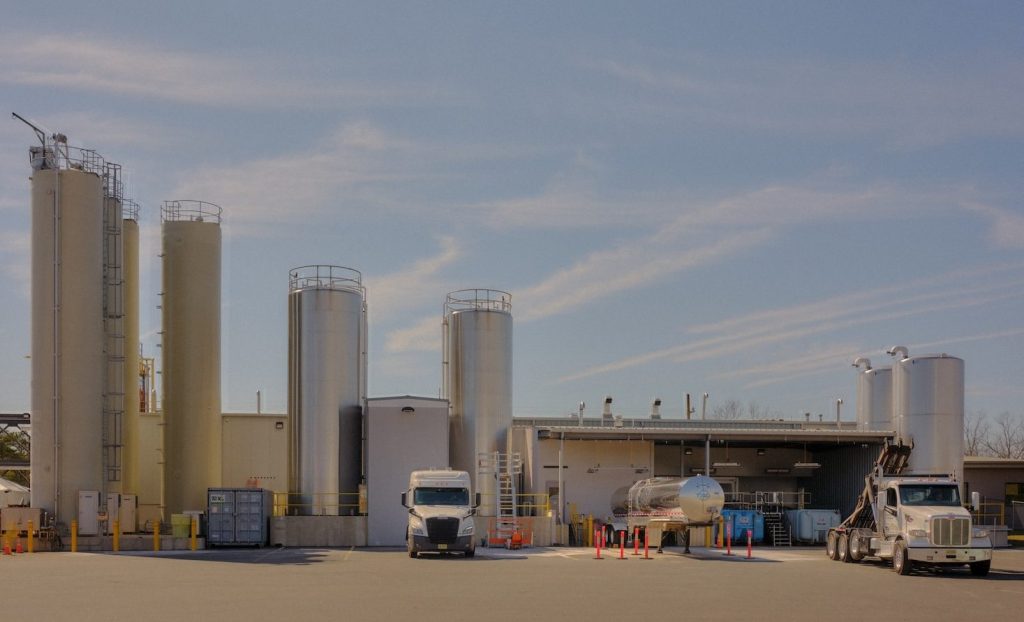
One strategy Oatly plans to encourage across all of its factories, including those of its suppliers, is better use of waste heat and hot water to redirect more thermal energy to places it’s needed. For example, Oatly’s facility in Millville, New Jersey, installed heat exchangers to recycle waste heat, which reduces natural gas consumption required for steam.
“The first step in our strategy is to identify all those processes and find other ways to get the heat,” Augustine said. “Once we’ve done all the de-steaming we can, then our intention is to generate steam differently.”
For the next phase of its plan, Oatly is evaluating industrial heat pumps, which can turn waste heat into higher temperature resources, and boilers that run on electricity, biomass or natural gas alternatives. “Start with heat pumps and heat exchangers,” she said. “That is the nearest available technology that is working for food processing companies.”
Whiskey maker Diageo uses electric boilers at some of its distilleries, but many systems Oatly is studying aren’t widely adopted. For example, industrial heat pumps accounted for just 2 percent of the global heat pump market in 2021, according to research firm Energy Innovation.
Oatly’s Landskrona factory installed hybrid equipment that can run on biomass but switch to natural gas if necessary. But the availability of cheap natural gas in the U.S. makes heat pumps and electric boilers more difficult to justify, especially when equipment is relatively new, Augustine said.
Oatly will share more details on how it’s reckoning with industrial heat in a GreenBiz 26 session that also includes Johnson & Johnson and Suntory.

Subscribe to Trellis Briefing