How Starbucks and WM made it easier to recycle plastic to-go cups
Polypropylene, widely used to serve cold drinks and beverages, can now be handled by curbside pickups at 60 percent of U.S. households. Read More
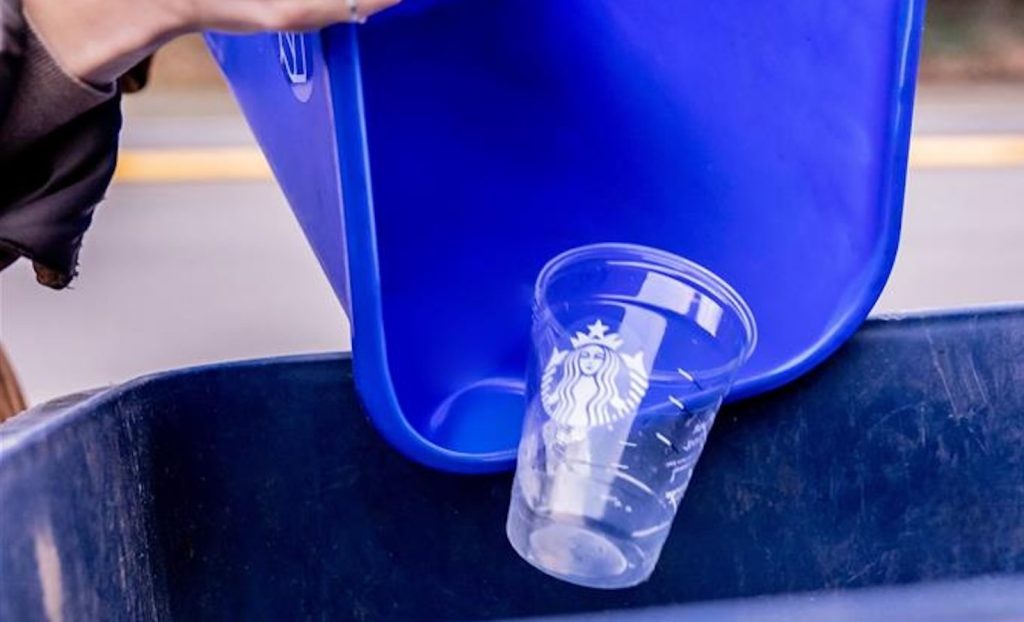
- Cold cups are recycled at a much lower rate than plastic bottles.
- Recycled polypropylene is often turned into paint cans or garden planters.
- Starbucks wants to buy more high-quality recycled polypropylene.
An estimated three-quarters of Starbucks’ sales are for cold beverages, almost all of which are served in plastic cups containing food-grade polypropylene.
The national coffeehouse wants more customers to recycle those containers when they’re finished sipping their drink, but polypropylene recycling rates have historically been low compared with other plastics — less than 8 percent compared with around 30 percent for plastic bottles made of polyethylene terephthalate (PET), according to industry research.
Starbucks is pushing to change that narrative with several like-minded collaborators: WM, the biggest U.S. waste and recycling services company; certification organization How2Recycle; and two industry-led coalitions, The Recycling Partnership and NextGen Consortium, managed by investor Closed Loop Partners’ Center for the Circular Economy.
Since last August, representatives from these organizations have met with cities and communities across the U.S. to build awareness, with Starbucks often leading the outreach and conversations.
As a result of those efforts, polypropylene cups can now carry the “widely recyclable” label from How2Recycle. That means they can be recycled through curbside pickup or drop-off programs used by more than 60 percent of U.S. households. That’s an increase of 14 percentage points in the past four years alone.
“The missing piece was that municipalities, cities and towns across the U.S. had not realized that, in fact, for this particular format, there is access and so that wasn’t formally being communicated as part of their programs to households or at the community level,” said Marika McCauley Sine, who leads sustainability at Starbucks.
Historically, food-grade polypropylene hasn’t been considered as valuable to recyclers as other plastics. It has also been tough to process, because it’s often contaminated with food and drink, said Thalia Bofiliou, senior investment analyst for plastics with research firm Planet Tracker.
“Many of the original systems were designed around PET and a few other core polymers like high-density polyethylene, so polypropylene has come into mature recycling markets quite late,” she said.
More companies, however, are looking to source recycled polypropylene that can be downcycled and turned into plastic paint containers or garden planters, among other applications, said WM Chief Sustainability Officer Tara Hemmer.
“We, of course, are having conversations with other brands to educate them about the How2Recycle designation and that this material will be widely recyclable,” she said.
More than 90 percent of WM’s facilities can handle polypropylene, and that number will reach 100 percent by mid-2026, she said. The company has invested $1.4 billion since 2022 in sorting-automation technologies at close to 40 facilities across North America. Its polypropylene recycling rates have already increased by 1.5 times.
“What we know is that people will recycle more if recycling is easy, and if they believe more materials can go in the bin and actually get recycled,” Hemmer said.
Another motivator is extended producer responsibility (EPR) laws — coming into effect in Oregon, Maine, Colorado and California and being considered in at least a dozen more states — that make businesses responsible for footing the bill for better recycling infrastructure.
High-quality recycled polypropylene needs more development before it can be used by Starbucks for food-grade applications, McCauley Sine said, but the company is investing in improvements.
“Part of the effort is increasing access, and increasing the sorting and processing of cups, which serves to bolster and enhance,” she said. “That’s when the likelihood of having that kind of high-quality, food-grade recycled content starts coming through, and everyone from Starbucks to all the other users of this type of plastic can then capitalize on it.”
Starbucks is researching many ways to decrease dependence on virgin plastic, including encouraging customers to embrace reusable cups.
The coffeehouse chain has already reduced the overall amount of plastic used in cold cups by 10 percent to 20 percent, depending on the format.
Starbucks’ goal is to make 100 percent of its customer-facing packaging reusable, recyclable or compostable by 2030. As of its 2024 environmental update, it had achieved 27 percent.

Subscribe to Trellis Briefing