Mapping global optimism and pessimism in 2026
Europeans lead in skepticism. Read More

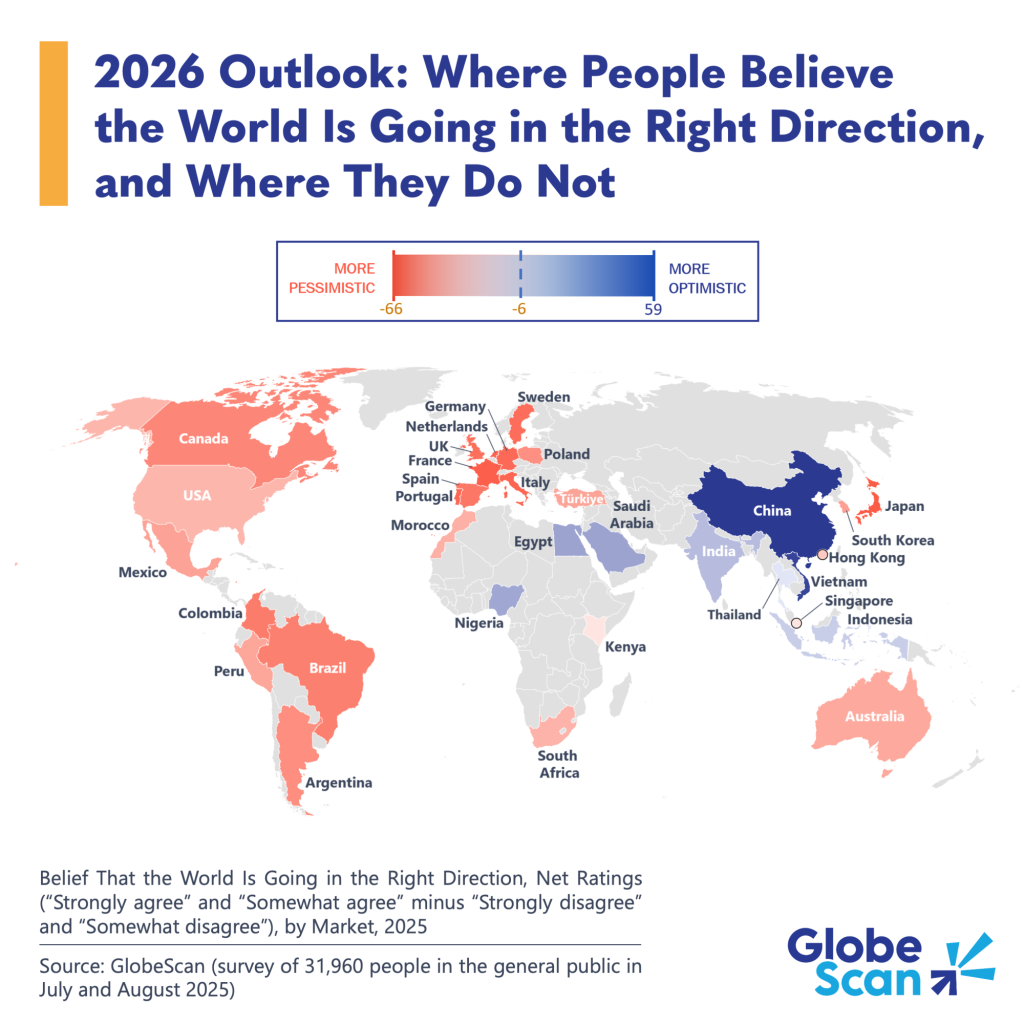
- Optimism thrives in Asia, Africa and the Middle East, with belief in progress and positive change leading in China, Vietnam and Saudi Arabia.
- Latin America is less hopeful, compared to most other emerging regions, but less pessimistic compared to Europeans.
- Sentiment in many European countries is the lowest, while the U.S. shows a blend of hopeful and cautious attitudes driven largely by political affiliation.
We’re less than two weeks into 2026 and already it’s been a turbulent start. Beneath the headlines, recent research reveals a striking divide in optimism versus pessimism about the world’s direction, offering key insights for organizations seeking to engage global audiences on the sustainability agenda.
Trellis data partner GlobeScan found that when looking at net ratings across 33 markets surveyed China and Vietnam ead the world in confidence that things are moving in the right direction. Saudi Arabia, Egypt and Nigeria also show high levels of optimism, along with India and Indonesia. These markets represent fertile ground for sustainability initiatives and forward-looking partnerships.
Markets in Latin America are more pessimistic than most other emerging regions, although attitudes vary across countries surveyed. Pessimism is strongest in Colombia and Brazil, and lowest in Peru.
On the flip side, Europe and North America are significantly more pessimistic. It’s highest in France, the Netherlands, Portugal and Italy, with Germany and Sweden also among the most pessimistic countries.
In North America, the United States shows a blend of hopeful and cautious attitudes, largely corresponding with political affiliation: Republican-leaning voters are far more optimistic about the future than Democrat-leaning voters. Canadians tend to be more skeptical than Americans overall. These markets require communication that acknowledges concerns and demonstrates measurable progress.
What this means
Optimism and pessimism are unevenly distributed globally, presenting distinct opportunities and challenges for engagement. In emerging markets, high confidence offers momentum for sustainability programs, innovation and partnerships, with communications playing a key role in amplifying achievements and inviting participation.
In contrast, skepticism in Europe and North America calls for a more strategic approach: acknowledging concerns, demonstrating measurable impact and fostering trust. Tailoring strategies to these regional mindsets is essential for sustainability professionals aiming to drive their agenda forward in a world where optimism and skepticism coexist.
Based on a survey of more than 31,000 people conducted July — August 2025.
Subscribe to Trellis Briefing

Tove Malmqvist
Featured Reports






The Premier Event for Sustainable Business Leaders