Stripe, Shopify and Google accelerate progress toward zero-emissions lime
Reversing the emissions equation for lime could turn the hard-to-abate industry into a carbon removal powerhouse. Read More
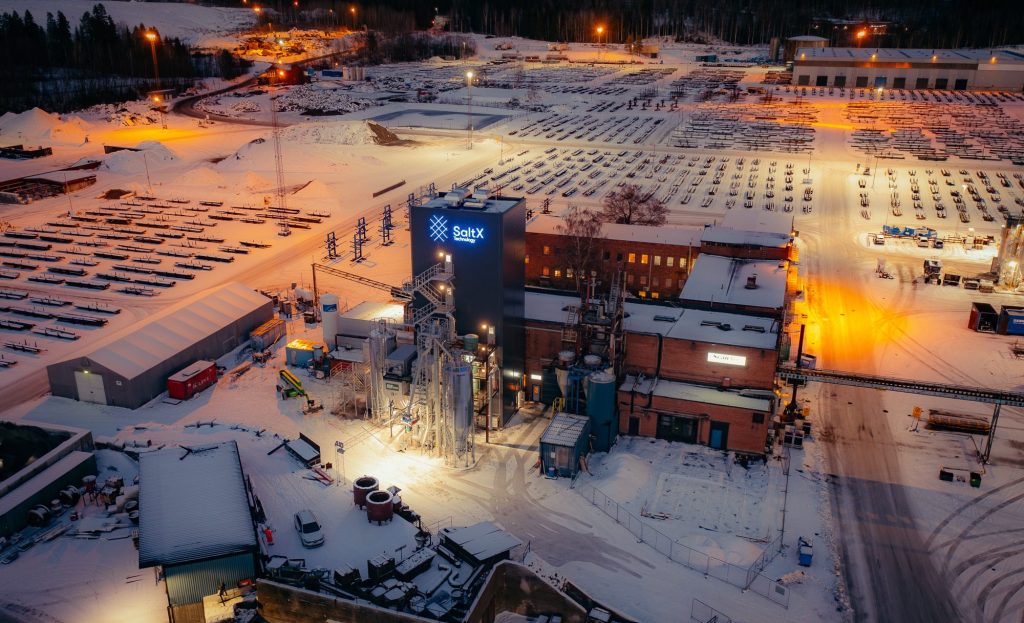
- Startups in Israel, U.K. and Sweden are moving toward commercialization of low-carbon lime production.
- The technology would boost some carbon removal mechanisms and help decarbonize iron, steel and other industries.
- Frontier, a carbon removal buyers coalition, backed two of the startups.
Decarbonizing the emission-intensive process used to produce lime, a key ingredient in steel, iron, agriculture and other industries, has the potential to avoid or remove gigatons of greenhouse gas emissions annually. That goal moved closer to reality over the past week as three startups working to achieve it took significant steps forward.
Using $2 million in backing from Stripe, Shopify and Google, two European startups will accelerate research and development as they gear up to commercialize zero-carbon processes for lime production. And an Israeli startup announced plans to construct a second pilot facility as it too scales.
Lime’s natural ability to absorb carbon dioxide from the atmosphere can be leveraged to capture carbon in ocean waters and at desalination plants. There are also plans to decarbonize maritime transport by using lime to capture CO2 from ships’ exhausts. And if used in steel production or as a soil additive in agriculture, low-carbon lime would cut emissions from both sectors.
High-emissions production
Conventional production involves heating limestone (calcium carbonate) at high temperatures — generated by burning fossil fuels — to produce lime (calcium oxide). The reaction and burning of fuels release around 0.8 metric tons of CO2 (tCO2) for every ton of lime, which more than outweighs any capture that takes place once the lime is utilized. A low or zero-emissions alternative could tip the balance the other way.
Leilac, a U.K. startup that received research money from the tech companies, has developed a method for capturing the CO2 created during the reaction and heating process using renewable sources. The funding — which was channeled through Frontier, a coalition of carbon removal buyers — will be shared with SaltX, a Swedish startup that uses a plasma torch to power the reaction and also captures the carbon released.
A third startup in the race, Israel’s CarbonBlue, said this week that it planned to build a second demonstration plant. Rather than starting with limestone, the company uses renewable energy to transform calcium-rich waste from the steel and construction industries into lime.
Impact of commercialization
All three companies have plans to build commercial-scale lime production facilities in the next few years. If they can produce lime at prices competitive with conventional methods, or at least within reach of buyers willing to pay a premium, the output from the plants could help drive carbon removal schemes that rely on lime.
They could also help change the emissions equation for industries that use lime as an input. A 2024 study from South Pole, an environmental consultancy, looked at the potential impact of low-carbon lime on the European iron and steel industries. Using carbon capture and renewable energy during lime production, together with methods to increase the absorption of CO2 by lime after production, could transform lime’s contribution from emissions of 6.0 million tCO2 to removals of 5.8 million tCO2.
“Lime production is a hard to abate sector,” said Oscar Rueda, a former principal consultant at South Pole and co-author of the report, “but it has the potential to turn into a net negative sector.”

Subscribe to Trellis Briefing