Redefining modernization for growth and sustainability

How Infrastructure Monetization™ is reshaping enterprise modernization at scale without CapEx. Read More
Most large industrial organizations are caught in the same trap—aging infrastructure, escalating energy costs and ambitious decarbonization goals colliding with capital constraints and operational complexity.
The systems that power business operations—from HVAC and lighting to controls and metering—continue to age faster than they are replaced. Meanwhile, success for sustainability goals depends on modernization models that are financially scalable, operationally executable and capable of delivering verified outcomes. The result is a widening gap between modernization goals and the tools available to achieve them.
At Redaptive, we’ve seen this struggle firsthand. Many enterprises want to move decisively toward modernization but are held back by their own funding and delivery models. To meet this need, we created Infrastructure Monetization™—a new category that bridges financial innovation and infrastructure transformation.
A new category for modernization
For decades, infrastructure improvements have been managed as a series of isolated projects—one building, one upgrade, one budget cycle at a time. This approach fragments progress and limits scale. Even as Energy-as-a-Service models have expanded access to financing, they tend to focus narrowly on energy systems rather than full portfolio transformation.
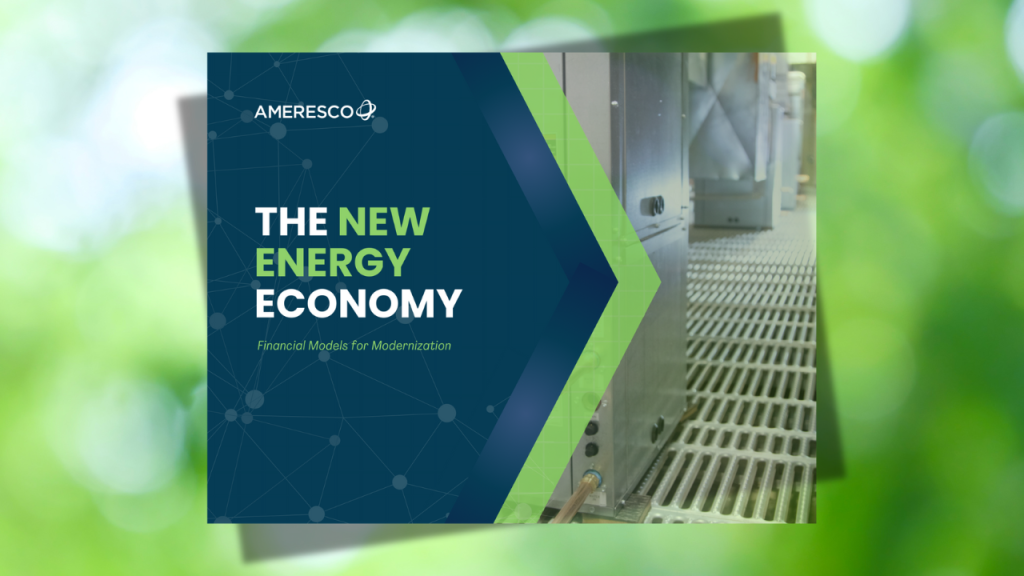
The industry has made incremental progress through financing and efficiency programs, but the underlying model hasn’t changed—until now. Infrastructure Monetization™ represents a shift from this project-based mindset to a continuous modernization process. It brings together three essential components: Tailored Capital that aligns with balance sheet and business priorities; Turnkey Execution that simplifies portfolio-wide delivery; Measurable Outcomes that verify results and guide future decisions.
The intent isn’t simply to fund energy-efficiency projects—it’s to make modernization a strategic, repeatable business function. In doing so, enterprises can upgrade faster, manage risk more effectively and create measurable financial and sustainability outcomes all at the same time.
Infrastructure Monetization™ turns modernization into an enterprise financial strategy—one that generates value and resilience, not deferred maintenance.
Aligning the CFO and sustainability leaders
The timing for Infrastructure Monetization™ has never been more urgent. Across the United States, deferred maintenance on commercial and industrial facilities exceeds $1 trillion to $2 trillion. Fragmented projects fail to deliver holistic value. Budgets are tightening as enterprises juggle competing demands from digital transformation, workforce shifts and the rising cost of capital. The Inflation Reduction Act (IRA) has fueled progress, but as incentives and tax credits begin to phase out, the financial window for subsidized sustainability investment is closing. At the same time, boardrooms are demanding more transparency and accountability in ESG performance.
CFOs and sustainability leaders are being asked not just to commit to targets but to prove measurable ROI—a task that’s nearly impossible without reliable, enterprise-scale infrastructure data.
The secret is that the greatest untapped source of enterprise value is already hidden within your existing buildings. Infrastructure Monetization™ helps enterprises move now—and build a model that keeps working after incentives are gone.
In most organizations, finance and sustainability have shared goals but separate playbooks. CFOs focus on capital efficiency and predictable returns. Sustainability leaders focus on impact, emissions and compliance. Infrastructure Monetization™ unites these functions under one strategy.
By treating infrastructure as an investable asset class, IM provides CFOs with structured financing and measurable ROI. For sustainability teams, it enables real progress without waiting for new capital allocations. Both benefit from the same foundation—verified, outcome-based data that feeds into board reporting and ESG disclosures.
Simply put, Infrastructure Monetization™ is where sustainable finance and enterprise modernization converge.
Results from the field
Infrastructure Monetization™ is already in play, reshaping how organizations address modernization. For example, Iron Mountain, a global information management company, worked with Redaptive to upgrade 311 lighting and 114 HVAC sites across four countries. The initiative projected $101 million in savings and avoided 668 million kWh over 10 years—all achieved with no upfront capital commitment.
The outcome demonstrates what’s possible when modernization is treated as a strategic investment rather than a discretionary project. Across industries, from healthcare to logistics, similar results are proving that infrastructure can be modernized at scale while maintaining financial discipline and measurable ESG impact.
Defining the next era of modernization
Redaptive’s journey began with a focus on Energy-as-a-Service, helping organizations pursue efficiency without CapEx. But as customer needs evolved, so did the category we were shaping. We recognized that modernization had to expand beyond single-system efficiency to encompass entire infrastructure portfolios—integrating financial, operational and environmental outcomes.
Infrastructure Monetization™ is the result of that evolution. It combines Redaptive’s experience in project execution with structured capital and rigorous data measurement to create a cohesive modernization model. While Redaptive has pioneered this category, the concept itself is meant to serve a broader purpose: enabling enterprises everywhere to modernize in ways that are financially sound and environmentally responsible.
This isn’t a new product. It’s a new approach—one that reflects the realities of how businesses must invest and operate in the years ahead.
The convergence of finance, sustainability and infrastructure is no longer theoretical—it’s necessary. As organizations plan for the next decade of growth and resilience, they’ll need models that are both flexible and verifiable, capable of delivering measurable impact while adapting to economic and policy shifts.
Modernization should be a source of growth, not constraint. The tools now exist to make that possible. What’s needed is foresight—and the will to turn today’s challenges into tomorrow’s competitive advantage.

Subscribe to Trellis Briefing