Systemic Risks: COVID’s Lessons and Climate Mitigation

Many companies are failing to apply COVID-era lessons to climate change, missing out on resilience strategies that could protect against financial losses. Read More
Five years ago, the COVID-19 pandemic reshaped global business operations. This black swan event exposed vulnerabilities in value chains, work models and consumer behavior. It also proved how quickly the world can pivot under pressure when faced with a systemic threat. This happened again more recently, when companies worked quickly to adapt to the United States’ new tariffs.
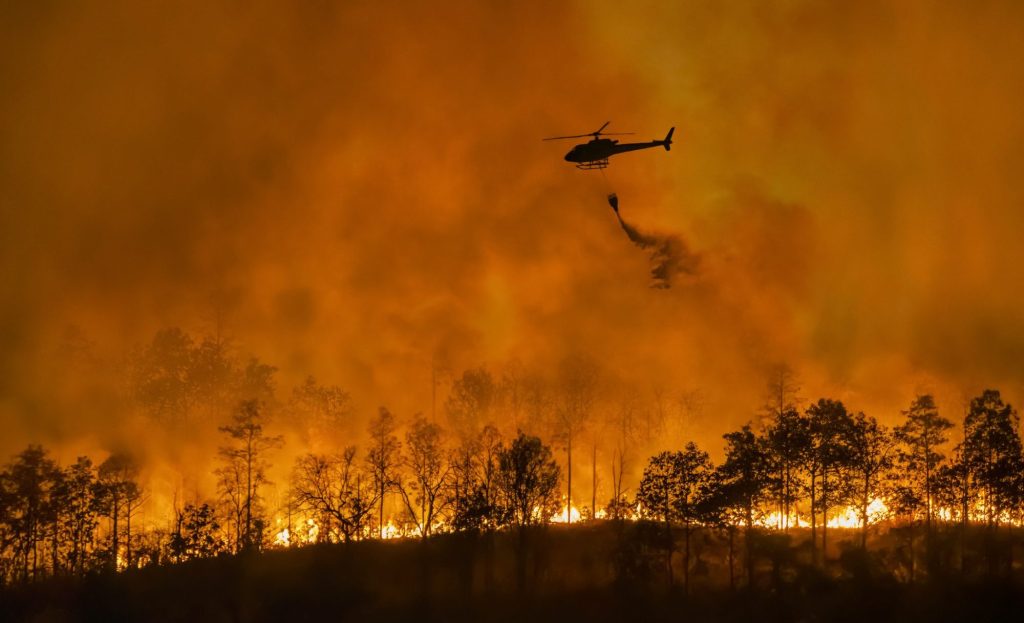
However, businesses continue to ignore the elephant in the room that is staring them directly in the face: climate change. With five years left until the internationally agreed deadline to nearly halve emissions and avoid climate catastrophe, both emissions and temperatures continue to rise. Yet, many businesses continue to ignore the risks climate change poses and have not fully applied COVID’s hard-earned lessons to climate risk management.
This gap is costly. Research suggests that companies failing to manage and adapt to climate risks could lose up to 7 percent of annual earnings by 2035. Risk drivers such as extreme weather, biodiversity loss, ecosystem collapse and their potential impact on companies are consistently deprioritized by the private sector compared with governments and civil society.
Systemic risks such as climate change multiply uncertainty
Systemic risks are not isolated — they amplify other risks. For example:
- Cyberattacks become more frequent during climate disasters, when systems are already strained.
- Misinformation spreads faster in crisis conditions, undermining trust.
- Geopolitical tensions that cause such crises are likely to intensify as climate impacts grow.
As we approach 2030, businesses must leverage the institutional knowledge gained during COVID. Without formal documentation and integration into strategy, these lessons risk being forgotten as employees move on to other roles and priorities shift.
Resilience is a defining capability
Companies investing in adaptation, decarbonization and resilience are seeing up to $19 in avoided losses for every dollar spent. The pandemic proved that proactive risk management pays off as businesses that acted early, diversified their operations, and built flexibility into their systems were able to absorb shocks more effectively and recover faster.
Climate risk management demands the same rigor. Companies that delay adaptation may face frequent value chain disruptions, regulatory penalties and investor scrutiny. On the other hand, those that embed resilience into their core strategy are better positioned to navigate volatility, maintain stakeholder trust and even uncover new opportunities in the transition to a net-zero economy.
Six key lessons from COVID for climate risk management
1. Mainstream climate scenario planning
During COVID, companies shifted from single-point forecasts to multi-scenario planning — optimistic, medium and pessimistic. This approach must now be standard for climate risk across a range of climate and policy scenarios. For example, Unilever has embedded climate scenario analysis into its strategic planning through its Climate Transition Action Plan. This enables the company to assess physical and transition risks, stress-test its value chain and investment decisions, and prepare for a range of global warming pathways.
Scenario planning isn’t just about modeling — it’s about preparing actionable responses for each outcome. Companies must explore how climate change interacts with other risks and build contingency plans accordingly.
2. Break down silos and collaborate
The pandemic naturally broke down silos as crisis response demanded cross-functional collaboration. Risk management can no longer reside solely in finance or legal departments. Every team — from operations to HR — must be engaged in identifying and mitigating risks.
Integrated risk management is vital. By embedding climate risk into enterprise-wide governance and fostering collaboration among traditionally siloed teams, Swiss Steel Group has improved its agility and resilience in the face of accelerating environmental and regulatory pressures. The company uses shared data platforms and regular interdepartmental meetings to ensure that risk insights are communicated across silos and incorporated into investment planning, operational adjustments and long-term strategy.
3. Continuously monitor risks
COVID taught us that yesterday’s risk models are insufficient for today’s volatility. Risk registers should be updated at minimum monthly, and decision-making timelines shortened to reflect the pace of change. Continuous monitoring helps mitigate decision fatigue and strategic misalignment, which were common during the pandemic.
Real-time data feeds and predictive analytics are now essential, and many software options enable this. The global engineering firm GEA group has integrated climate risk monitoring into its ongoing enterprise risk management (ERM) cycle, enabling frequent updates and cross-functional decision-making. This includes monthly reviews of climate-related financial impacts and operational risks, ensuring that climate considerations are embedded in strategic planning and investment decisions.
4. Leverage technology and AI — with oversight
AI offers powerful tools for climate risk modeling, scenario analysis and value chain optimization. It can process massive datasets and simulate outcomes across geographies and timeframes. However, AI is only as good as the data it’s fed — and human oversight is essential.
Biases or flawed inputs can have costly consequences — seen in iTutor Group Inc.’s $350,000 fine when an AI hiring tool discriminated by age and gender. In climate risk, ethical AI governance and climate-literate teams are critical to ensure accuracy, accountability and fairness.
5. Diversify suppliers to build resilience
Value chain resilience was a major theme during COVID, and it remains central to climate adaptation. Firms with value chains in high-risk regions are diversifying their supplier base to avoid overreliance on vulnerable areas. Both Walmart and The Coca-Cola Company have engaged with suppliers to analyze climate exposure for key commodities and actively restructured supply chains to reduce reliance on climate-vulnerable suppliers.
Stress-testing supplier options against climate scenarios helps ensure continuity and cost stability. Strong supplier relationships and geographic diversification are key to mitigating future disruptions.
6. Stay agile to seize opportunities
The most resilient companies during COVID were those that adapted quickly — changing policies, products and operations to meet new demands. Climate risk management should follow the same principle because understanding risks also reveals opportunities in the transition to a net-zero economy.
Leaders have been doing this for nearly a decade. Danone responded to operational threats from droughts and rolling blackouts in South Africa by investing in a microgrid and water reuse system, saving €1 million annually in electricity costs and avoiding €112 million in potential production losses.
Proactive adaptation strategies and agility allow companies to turn climate risk into a competitive advantage, aligning sustainability with brand innovation and consumer demand.
From risk management to resilience
COVID-19 was a wake-up call for systemic risk management. Climate change is the next test—and the stakes are even higher. Businesses must apply the lessons of the past five years to build resilience for the next five. That means mainstreaming scenario planning, investing in continuous monitoring, breaking down silos, leveraging technology wisely, diversifying suppliers and staying agile.
Resilience is no longer a discipline — it’s a defining capability and competitive advantage. And in a world of rolling crises, it may be the most valuable asset a company can build.

Subscribe to Trellis Briefing