Why the parent company of Coach and Kate Spade is investing in community solar in Illinois
Tapestry's dealmaking reflects its mosaic of clean energy efforts toward net zero by 2050. Read More
- The project helped the company achieve its 2025 goal of 100 percent renewable energy across offices, stores and fulfillment centers.
- Tapestry’s new goal for 2030 includes powering 40 percent of its supply chain with renewables.
- Scope 3 emissions are a major focus, with a target to cut them by 42 percent from 2022 levels over the next four years.
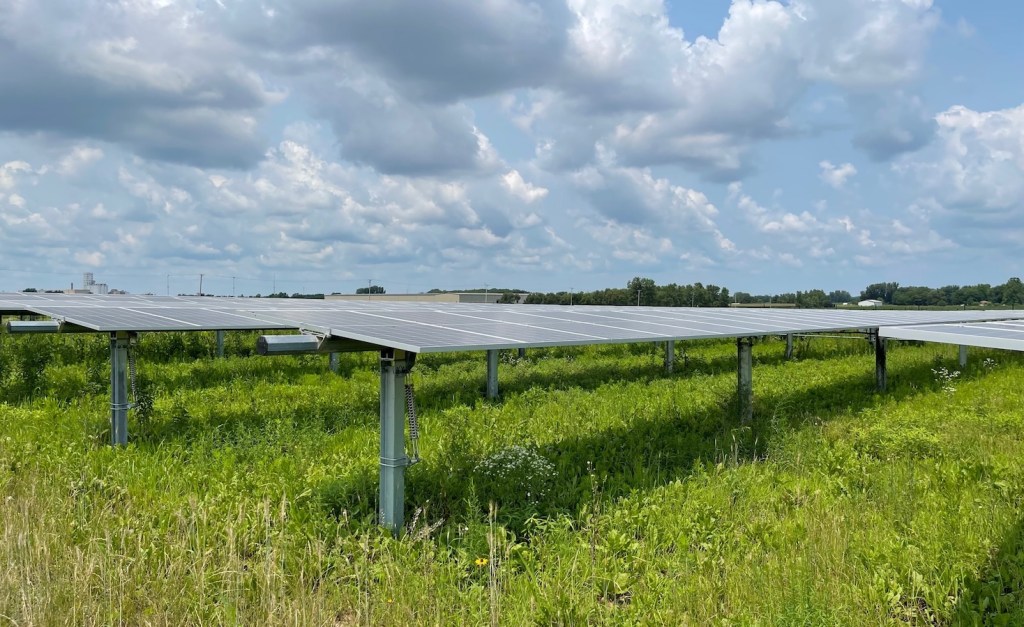
What is a New York City handbag giant doing in central Illinois, where it lacks boutiques, offices and factories? Tapestry, which runs the Coach and Kate Spade brands, together with Pivot Energy, completed three community solar projects on Jan. 8. They total 13.5 megawatts, enough to power about 2,500 homes.
Two more installations will follow those just established in Peoria, Ottawa and tiny Dover, Illinois, in a 15-year partnership, announced in 2023.
The five community solar projects will add up to a modest 33 megawatts. However, those clean electrons are instrumental to Tapestry’s goal for 2025, which it reached, to count 100 percent renewables across its own operations, according to Logan Duran, global head of ESG and sustainability at Tapestry.
“Getting our own house in order from a renewables perspective was the first step,” Duran said, “simultaneously continuing to engage with our long-term and strategic partners in the supply chain, on the facility and factory level.”
In pursuit of its science-based net zero deadline of 2050, Tapestry is stretching toward a new target, announced Dec. 22. By 2030, it seeks to power 40 percent of its supply chain with renewables. Today that’s at 12 percent.
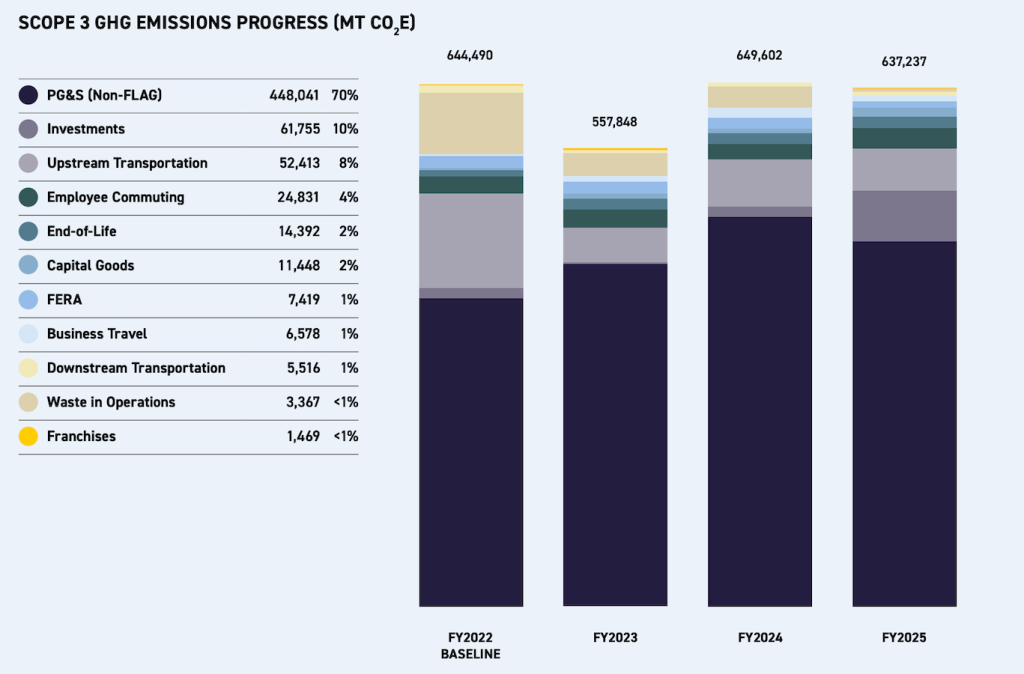
Ninety-nine percent of the corporation’s climate emissions are in Scope 3. By 2030, Tapestry aims for 42 percent cuts over 2022 levels.
In 2025, the business noted a 14 percent rise in Scope 3 emissions since 2021, which it is seeking to reset to 2022 to account for the impacts of the COVID-19 pandemic. Emissions intensity dropped by 10 percent in the same period.
Land of Lincoln
The corporation took a portfolio approach toward its achieved goal of 100 percent renewables for its own offices, stores and fulfillment centers.
“What we found was, we have a lot of stores but they all have small roofs,” Duran said. The company, which has more than a dozen stores in the Chicago area, liked Denver-based Pivot Energy’s proposition for a long-term Renewable Energy Credit (REC) offtake agreement in Illinois.
The project-based REC allows Tapestry to take credit for the clean electricity and its associated emissions reductions.
“We can’t necessarily track direct electrons to our individual stores but if we’re able to stay within the same grid or within the same region, we felt like it was meaningful from a commitment perspective,” Duran said.
The bulk of Tapestry’s 2025 emissions
“Illinois has become a favorable market for renewable energy development, with the enactment of the Clean and Equitable Jobs Act,” noted Pivot Energy Senior Director of Project Development Buzz Becker. The law, enacted in 2021, offers incentives for RECs and requires social equity support for new energy installations.
Supporting the local community also appealed to Duran. Illinois consumers who opt for the solar power can enjoy discounted utility bills. Meanwhile, Illinois Central College and HIRE360 receive $65,000 contributions from Pivot Energy, a certified B Corporation based in Denver.
“This project announcement makes state policy tangible,” said Matthew Popkin, U.S. program manager at RMI. “Illinois encouraged the market to use community solar to not only meet today’s energy needs but also increase consumer access to fixed-cost energy and support longer-term workforce development goals.”
The energy portfolio
In other markets, Tapestry uses a mix of unbundled and bundled RECs as well as Energy Attribute Certificates (EACs).
In Europe, Tapestry is among 12 brands joining the Fashion Pact in a Collective Virtual Power Purchase agreement, announced in 2023. The solar project they’re supporting in Spain would generate an estimated 100 MW under peak sunlight.
Tapestry is also directly helping suppliers to adopt renewable energy and ditch coal by 2026, part of risk mitigation within its sustainability work.
“If there are random brownouts or blackouts or disruptions, it obviously impacts our ability to manufacture and move product,” Duran said.
The company’s decarbonization program last year engaged with 40 suppliers across Tiers 1 and 2, addressing about 70 percent of its suppliers’ emissions. For instance, Tapestry paid for onsite assessments and feasibility studies for Tier 1 contract supplier Pungkook Ben Tre to install solar panels in Vietnam.
In addition, Tapestry engages with the Apparel Impact Institute to help tanneries slash emissions.
Materials and nature
Circularity and biodiversity protection are other core focuses for the accessory brands’ sustainability work.
Almost all of Tapestry’s leather tanneries are rated Gold or Silver by the Leather Working Group. Environmentally preferred materials include “wet blue” leather scrap from startup Gen Phoenix. That only appears in the experimental Coachtopia brand, but products are being developed for the main line, too, Duran said.
“When we look at the longevity, the durability and the intrinsic quality of the material, it ultimately really lends itself well to things like the circular economy,” he said of leather, its main material.
Editor’s note: This article was updated on January 20 to reflect that Tapestry no longer runs Stuart Weitzman, which it sold in August.