The No. 1 environmental concern? Water pollution
Water quality concerns outrank climate change, resource depletion and microplastics. Read More
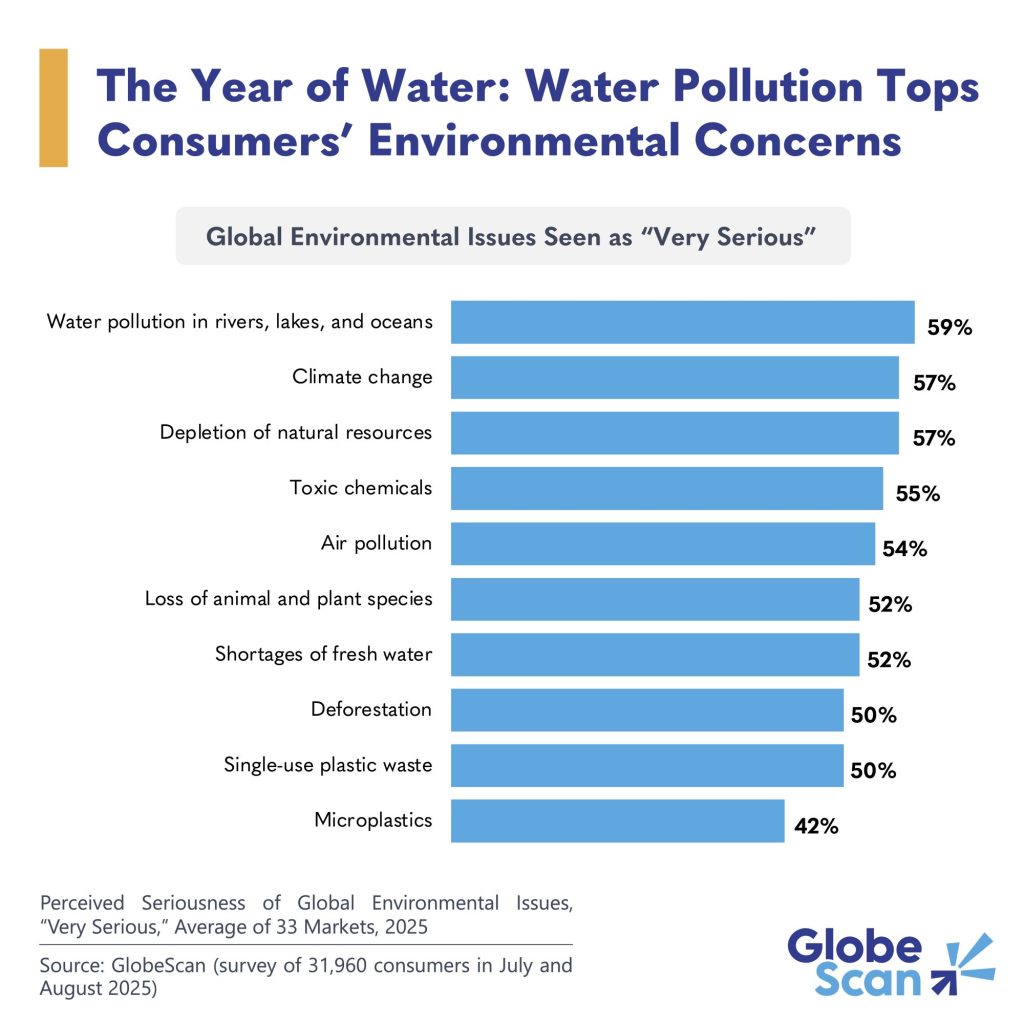
- Fifty-nine percent of consumers rate pollution in rivers, lakes and oceans as very serious, making it the highest-ranked environmental issue globally.
- Water resonates even more strongly than climate alone because it’s tied to daily health, safety and local living conditions.
- Environmental challenges that people encounter directly generate stronger concern than less tangible or emerging risks, positioning water quality as a powerful entry point for engagement.
Consumers are increasingly concerned about what they’re drinking.
Results from Trellis data partner GlobeScan’s consumer survey on environmental challenges show water pollution stands out as the most serious concern globally. This sentiment coincides with the heightened global focus on water as climate extremes disrupt the global water cycle and momentum builds ahead of the 2026 United Nations Water Conference. As global attention turns toward water quality, access and governance, understanding how seriously consumers already view water-related challenges helps frame the landscape in which these discussions will unfold.
Indeed, 59 percent of survey respondents ranked water quality concerns ahead of nine other global environmental issues, including climate change and natural resource depletion, signaling that water pollution is a central consumer concern that feels immediate, visible and close to daily life. Polluted waterways, unsafe drinking water and degraded coastal environments are tangible experiences that connect environmental degradation directly to health, food and local living conditions.
Climate change also remains firmly in the top tier of concern, but it doesn’t dominate consumer priorities on its own. Instead, it sits alongside issues like resource depletion and toxic chemicals, suggesting that consumers probably experience environmental anxiety as a set of interconnected challenges rather than a single defining issue. At the other end of the scale, worries about microplastics receive lower ratings. Despite growing attention, this issue appears to be somewhat less prominent in consumer perceptions.
What this means
With water in sharp focus this year, the findings point to a shift from social license toward clear public expectations that water quality will be elevated on sustainability and policy agendas. Consumer concern is already widespread and grounded in everyday experience, creating an environment in which meaningful action and visible leadership on water are increasingly expected.
Based on a survey of nearly 32,000 consumers conducted in July — August 2025.
Subscribe to Trellis Briefing