Water sustainability: Innovation in industry and agriculture
Wells Fargo helps clients in industry and agriculture tackle drought and flooding through water reuse, smart technologies and nature-based solutions. Read More
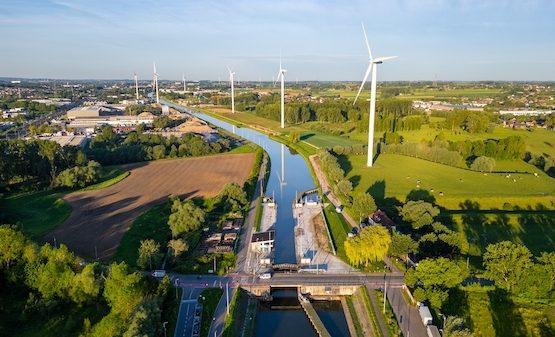
Water is essential for both industry and agriculture, yet its availability is increasingly uncertain. The dual threats of drought and deluge are reshaping how businesses, farmers and communities think about water risk and resilience. With data indicating that severe weather events are intensifying, the stakes are increasing, but so are opportunities for innovation.
For more than 170 years, Wells Fargo has been a partner to American industry as well as food and agribusiness clients. The bank’s expertise and commercial financing solutions empower clients to tackle water-related challenges head-on, supporting everything from infrastructure upgrades and nature-based solutions to advanced water-efficient technologies. Through these efforts, Wells Fargo can help clients and customers address water and conservation concerns and help support their long-term economic viability in a changing environment.
Too little and too much
In 2024, the United States faced a “perfect storm” of water extremes. The West grappled with record-breaking drought and excessive heat, while the East endured severe flooding and hurricanes. Both too little and too much water can have profound impacts on agriculture, which uses 72 percent of the nation’s available water supply. The consequences of these impacts can ripple through the economy in the form of crop losses, higher food prices and increased food insecurity.
Last year, drought, excessive heat and wildfires also led to more than $11 billion in crop losses, hitting Texas, Kansas and California especially hard. Meanwhile, water surplus from storms and hurricanes caused $6.7 billion in losses across the U.S., with Minnesota, Georgia and Florida significantly affected. These disruptions not only affect farmers but may also affect supply chains, rural economies and, of course, consumers.
The shared challenge of water scarcity
The American Southwest faces some of the most pressing challenges in the country for water scarcity. Rising temperatures, declining rainfall and shrinking snowpacks have significantly impacted the Colorado River, which serves as a critical water source for seven states. In a 2025 study that examined data from 2005 to 2024, researchers found that the river basin lost 42.3 million acre-feet of water, and additional research predicts that water availability could drop 20 to 30 percent more by 2050. Neighboring states such as Texas face similar challenges, with groundwater being extracted faster in some areas than it is being replenished.
These potential impacts are not just environmental; they can also be financial. Water scarcity can be a significant risk for water-intensive industries such as agriculture, energy and manufacturing. Limited water can mean higher costs, supply chain disruptions and the risk of operational slowdowns.
Innovation where it counts
Faced with these scenarios, both industry and agriculture are looking to innovation. Smart water technologies, including hardware, software and data analytics, are helping businesses and utilities use less water, reuse what they have and manage resources more efficiently. In Albuquerque, for example, digital technology now helps the local water utility identify and address pressure issues in real time, improving system performance and reducing waste.
Closing the loop on water reuse
One of the most promising and well understood solutions is water reuse. In the industrial and energy sectors, companies are reclaiming water from municipal and industrial waste, transforming it into fit-for-purpose water for irrigation, cooling and even potable uses. Wells Fargo Corporate and Investment Banking recently advised in the structuring of a new blue financing model for a U.S. company to recycle wastewater through a closed-loop, zero-liquid discharge system. This approach not only supports a reliable, drought-resilient water supply but can also reduce the demand for freshwater and decrease environmental impacts.
Water reuse is equally important in agriculture, where every drop counts. By integrating advanced filtration, chemical treatments and scalable desalination, agriculture and various industries are finding ways to turn waste into real value and support a circular water economy.
Nature-based solutions
Nature-based solutions can also play a vital role in supporting water resource management. In the Southeast, where storms and flooding threaten crops and water quality, restoring wetlands can offer a powerful buffer. Wetlands filter out excess nutrients and pollutants, promote biodiversity and improve soil quality, which can be a benefit to both farms and local communities.
An example comes from Texas, where Wells Fargo Bank’s Real Estate Asset Management team, part of Wells Fargo Wealth & Investment Management, assisted a client to address water-quality issues resulting from upstream agricultural runoff. The team developed a plan to fund, restore and donate the 240-acre property as a wetland through phased purchases using environmental grants, with some proceeds going into a Donor-Advised Fund. The wetland is expected to filter nutrients, improve surrounding water quality and support wildlife.
Enabling the future with sustainable finance
None of these solutions happen in a vacuum. Financial institutions can support water sustainability through innovative financing structures. Wells Fargo businesses, for example, have played a key role in financing water technology companies, structuring blue economy financing frameworks and underwriting municipal bonds for water infrastructure and flood control.
By aligning capital with sustainability initiatives, banks and investors can help secure a sustainable business future for both industry and agriculture against water risks.
Building resilience
The intersection of industrial and agricultural water management reveals a common truth: Resilience depends on innovation, collaboration and stewardship. While bringing these elements together can be a challenge, the increasing pressure of severe weather and erratic water supplies have started to generate the kinds of integrated solutions that are needed. Smart technologies, water reuse and nature-based strategies offer a path forward. By embracing these approaches, we can work towards safeguarding our water resources and create new opportunities for economic growth, environmental health and social well-being.
Disclosures:
Wells Fargo Corporate & Investment Banking (CIB) is the trade name for the corporate banking, capital markets and investment banking services of Wells Fargo & Company and its subsidiaries, including but not limited to Wells Fargo Securities, LLC, member of NYSE, FINRA, NFA and SIPC, Wells Fargo Prime Services, LLC, member of FINRA, NFA and SIPC, and Wells Fargo Bank, N.A. Wells Fargo Securities, LLC and Wells Fargo Prime Services, LLC, are distinct entities from affiliated banks and thrifts.
Wells Fargo Wealth & Investment Management offers financial products and services through affiliates of Wells Fargo & Company.
Wells Fargo Bank, N.A. is a bank affiliate of Wells Fargo & Company.
Wells Fargo & Company and its affiliates do not provide tax or legal advice. This communication cannot be relied upon to avoid tax penalties. Please consult your tax and legal advisors to determine how this information may apply to your own situation. Whether any planned tax result is realized by you depends on the specific facts of your own situation at the time your tax return is filed.
Donations are irrevocable charitable gifts. The sponsoring organizations maintaining the fund have ultimate control over how the assets in the fund accounts are invested and distributed. Donor Advised Funds donors do not receive investment returns. The amount ultimately available to the Donor to make grant recommendations may be more or less than the Donor contributions to the Donor Advised Fund. While annual giving is encouraged, the Donor Advised Fund should be viewed as a long-term philanthropic program. Tax benefits depend upon your individual circumstances. You should consult your Tax Advisor. While the operations of the Donor Advised Fund and Pooled Income Funds are regulated by the Internal Revenue Service, they are not guaranteed or insured by the United States or any of its agencies or instrumentalities. Contributions are not insured by the FDIC and are not deposits or other obligations of, or guaranteed by, any depository institution. Donor Advised Funds are not registered under federal securities laws, pursuant to exemptions for charitable organizations.