Why big batteries will be in vogue in 2026
Installations by steelmaker Nucor and data center operator Aligned illustrate growing interest among commercial energy buyers. Read More
- Companies with large loads are evaluating energy storage to get access to electricity more quickly.
- Projections for commercial and industry installations are still modest.
- Lithium-ion technology represents the bulk of projects.

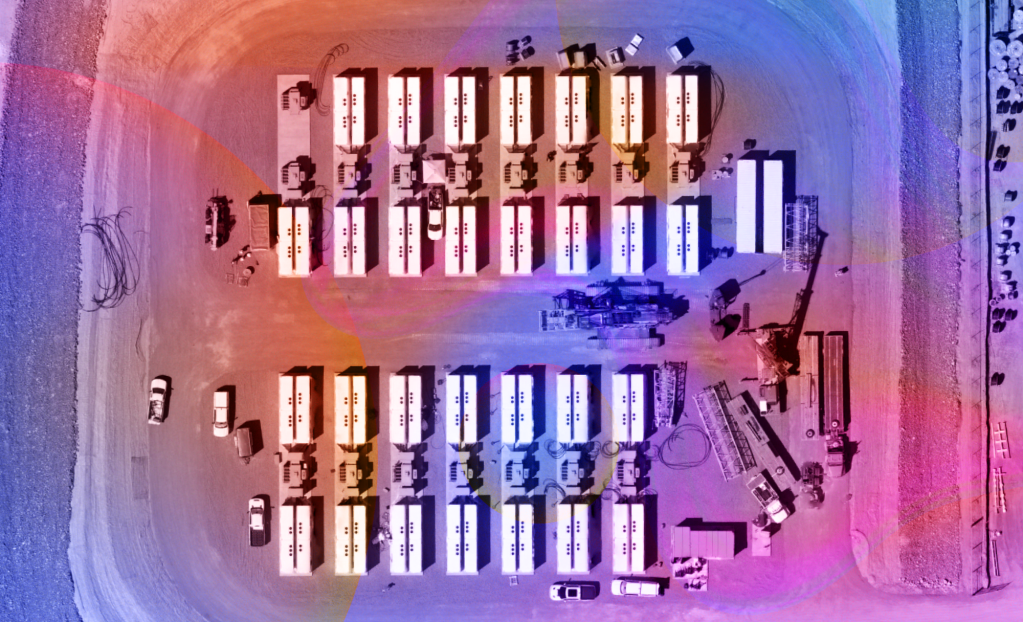
Steelmaker Nucor and data center operator Aligned are among the small but growing number of corporations investing in energy storage systems at or near their facilities — a trend expected to accelerate in 2026.
The motivation: The need to add reliable, lower-carbon electricity capacity quickly in an era of increasingly constrained supply.
Nucor’s installation in Arizona, engineered by service provider Ameresco, will provide it with access to 50 megawatts (or 200 megawatt-hours) of electricity at a steel factory that uses an electric arc furnace to produce 600,000 tons annually.
The batteries will be integrated with 25 megawatts of solar energy. The batteries are operational, but the solar won’t be switched on until next year. The project is on Nucor’s land.
“This is pretty unique, but it opened our eyes to the need for heavy industrials to add power,” said Jon Mancini, senior vice president for solar and battery energy storage systems at Ameresco. “They can save money by putting in batteries. Over the past year, we’ve been taking a lot of inbound phone calls that are looking to do something similar.”
The motivation for Aligned’s contract in the Pacific Northwest, orchestrated by another service provider, Calibrant, was similar. It’s for a 31-megawatt (62 MWh) battery energy storage system at a data center that handles artificial intelligence services and other high-performance computing applications.
“With this [system], we’re converting our load from a potential grid liability into a dynamic grid asset, providing the regional utility with the tools needed to accelerate our ramp,” said Aligned CEO Andrew Schaap, in a statement. “And we’re doing it responsibly, without impacting ratepayers.”
Record year for additions
Utilities, business and energy providers around the world are expected to deploy 92 gigawatts of energy storage in 2025, a growth rate of 23 percent, across a wide spectrum of duration capacity, scales and technology types, according to an October forecast by BloombergNEF. The U.S. and China are the two biggest markets for installations.
The prospects for commercial and industrial additions in 2026 are far more modest given the overall market, but the phaseout of tax incentives for solar and wind projects has more businesses with emissions reduction agendas considering energy storage as a way of reducing their electricity costs and adding new capacity that isn’t fired by fossil fuels.
Most commercial and industrial installations use lithium-ion technology, but some companies, such as Google, are investing in formats that can last far longer — up to 24 hours.
There are many drivers, particularly the opportunity to reduce electricity bills by switching to batteries during periods of peak demand, industry executives and analysts said.
“We are also seeing growing interest in behind the meter energy storage co-located with data centers,” said Isshu Kikuma, analyst for energy storage with BloombergNEF. “That said, interest does not necessarily translate into actual deployment, at least not yet, as we are only seeing a few deals.”
Flexible finance
While the One Big Beautiful Bill Act slashed tax incentives for clean energy resources such as solar and wind, companies investing in energy storage can still benefit from investment tax credits that cover part of the project costs.
“The administration looked at reliability and deemed that storage was a net positive when it comes to reliability,” said Ethan Paterno, a partner in the energy practice for PA Consulting.
One caveat: The technology used is subject to foreign-entity-of-concern requirements that favor domestic vendors, which will affect how projects qualify.
Some states offer virtual power plant or microgrid incentive programs under which utilities pay battery owners for reducing their load on the electric grid during certain peak periods of demand, in exchange for rate cuts.
Kaiser Permanente benefited from a $8.3 million grant to Faraday Microgrids, which installed 2 megawatts of on-site solar panels and 9 MWh of battery storage technology to reduce the electricity costs at the Ontario medical center in Southern California. The installation can serve as a source of clean backup power — an alternative to the usual diesel generators — for up to 10 hours.
Distributed resources allow operators to add capacity where it is most needed, said Jigar Shah, co-managing partner at strategy firm Multiplier. “Even in places where there isn’t a specific financial incentive, there is a speed to power incentive,” he said.
Batteries are being added most quickly in Texas, California, Colorado, New York, New Jersey and the grid served by PJM in the mid-Atlantic part of the U.S. — where many new data centers are gobbling up the available power supply. California, Massachusetts and Illinois led in new deployments in the third quarter, according to research firm Wood Mackenzie.
“These markets are getting a lot of attention,” said Ameresco’s Mancini. “In 2026, we expect to see much more of this both from utilities that are using battery storage as well as their customers that have heavy loads.”

Subscribe to Trellis Briefing