Why Patagonia picked a materials scientist to lead sustainability
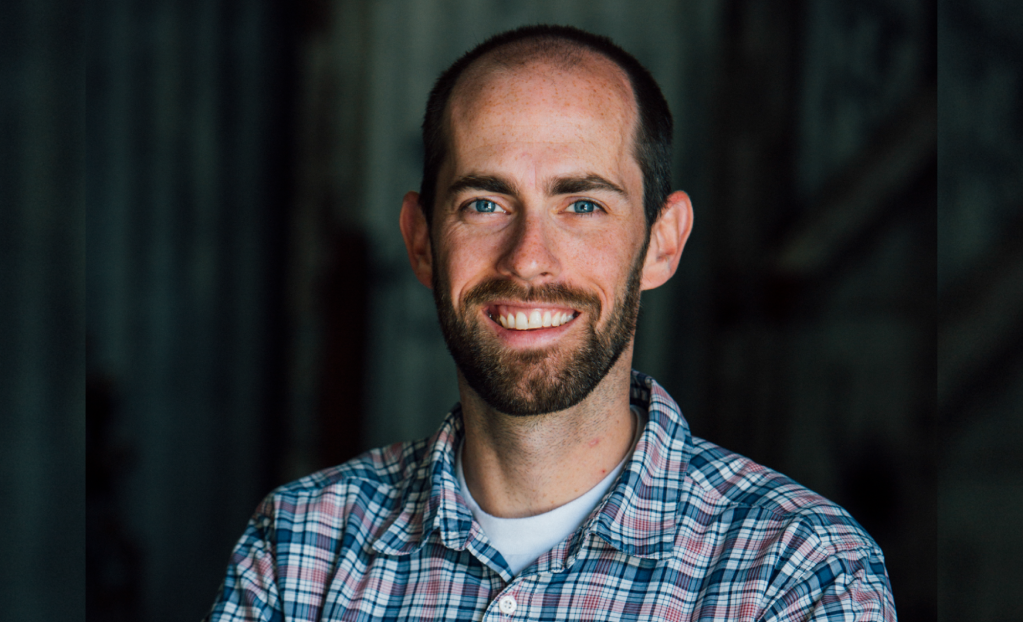
Matt Dwyer, vice president of global product footprint, previously led materials innovation and development. Read More
- Dwyer reports to the company’s president.
- Patagonia’s biggest change to reduce emissions: influencing product design and materials choices.
- Dwyer’s advice: Be skeptical, but never cynical.
Officially, Patagonia doesn’t have a chief sustainability officer. Reducing the environmental impact of the apparel company’s products is everyone’s job.
But materials scientist Matt Dwyer became the company’s effective sustainability champion five years ago after realizing that his team’s job — picking the raw materials for Patagonia’s garments and gear — contributed 85 percent of the company’s greenhouse gas emissions.
“For me as an engineer, as somebody who’s data-oriented, that’s when it became personal,” he told me in the latest episode of Climate Pioneers, our interview series with innovators and leaders shaping the corporate climate movement.
Now, as Patagonia’s vice president of global product footprint, Dwyer uses his engineering and innovation background to source lower-carbon alternatives across the company’s product portfolio.
“One of the things you realize, whether it’s in this work or innovation, is that which lives everywhere actually kind of lives nowhere, and you need a group of focused, talented and capable folks to really push the hard work forward,” he told me.
That team spearheaded the publication of Patagonia’s first comprehensive environmental report in mid-November, which details the company’s struggle to deliver on its commitment to reach net zero by 2040.
Patagonia prepared the analysis, in part, to prepare for potential mandatory reporting requirements. It’s also an educational tool for employees: “I was like, man, if I’m in my position reading through this and learning something new, then hopefully other people in our organization will pick it up and learn something about the company they work for, too.”
Meet Dwyer’s boss
Because materials represent Patagonia’s biggest chance to move the needle on emissions reductions, Dwyer’s team reports into the product development function, led by President Jenna Johnson, who got her start there in product line management.
“By sitting adjacent to or embedded within the product team, you have a far greater chance of selling the idea, getting designers to pick it up,” he said. “I think I’ve experienced in the past, just by virtue of other people’s experience, that when a sustainability team is buried in legal or HR or somewhere deep down in the supply chain, they’re often frustrated.”
Patagonia founder Yvon Chouinard, now 87, remains closely engaged, frequently dropping newspaper clippings on Dwyer’s desk to share ideas: “He always comes back to making sure we’re being really critical of ourselves and our own product, always making it better, always looking out into the world and saying, ‘Who’s doing it best today, and what can we learn from them?’ ”
Beyond its obsession with materials, Dwyer’s team — including environmental scientists, human rights experts and materials science chemists — works with every function to advance other strategies, such as Patagonia’s work on new financing models for funding electrification and other decarbonization initiatives within Patagonia’s supply chain.
“We’re one unit, but we have our feet in four different buckets at any one time, and that could be business, that could be supply chain, that could be impact work or it could be products,” he said.
AI … not yet
Patagonia’s biggest challenge when pulling together its 130-page report was wrangling data from across the company’s information systems, which was a highly manual process. “I’m always a fan of doing it the hard way, just once, but building it to automate every time after that,” Dwyer said.
Patagonia used artificial intelligence to translate the publication into different languages for employees around the globe, but it hasn’t deeply committed to AI for its work. That innovation is more likely to come from service providers and partners in the form of better traceability and forecasting.
Be an optimist
In a moment when many sustainability professionals are struggling to keep their work front-of-mind with colleagues and customers, Dwyer looks for the bright spots. His advice: Prioritize the work, even if your company is reluctant to brag about it publicly.
“It’s always fine to be skeptical, it’s never fine to be cynical,” he said.

Subscribe to Trellis Briefing