2 factors that will determine if brands can make consumer refills work
From hand soap to face masks, consumers are ready for reusable packaging — and they know what they want. Read More
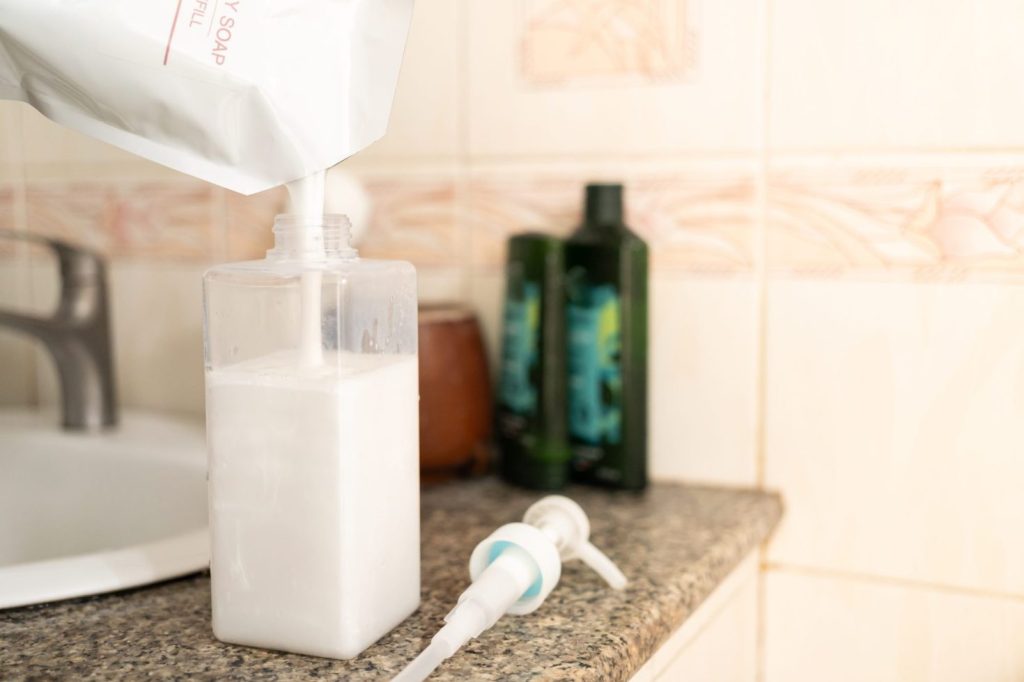
- Interest in refillable packaging is widespread across demographics, but adoption will depend on how well solutions fit into consumers’ everyday routine.
- Convenience, more so than cost or sustainability, is the primary driver of refill behavior, making ease of use critical to success.
- Refill demand is concentrated in high-frequency products like lotions and cleansers, highlighting where brands should prioritize early scale.
The opinions expressed here by Trellis expert contributors are their own, not those of Trellis.
Brands in the personal care and beauty spaces know that most of their packaging formats—the lotion pumps, serum bottles, and powder compacts — aren’t easily recyclable. Between small sizes, special features like droppers, multi-material components like plastic and glass, and leftover product residue, this type of packaging is typically not accepted in curbside recycling programs.
But now, extended producer responsibility (EPR) programs are putting pressure on brands to succeed with refill solutions. For example, under California’s landmark packaging EPR program, brands will be required to move at least 2 percent of their packaging into reusable or refillable solutions (or eliminate it altogether) by 2027, ramping up to a 10 percent minimum by 2032.
With just a year to hit two percent, new research from the Sustainable Packaging Coalition (SPC) reveals three insights brands can use to make refillable solutions a reality for their consumers:
- Scale refillable formats across everyday staples: Demand for refillable packaging formats is highest among staples, like lotions, eye creams and cleansers.
- Prioritize convenience: The strongest motivator behind refillable products is convenience, with 55 percent of American consumers ranking it above factors like cost savings or sustainability.
- Keep it simple: Research shows that meaningful adoption hinges on simplicity — consumers want a seamless process for refilling products.
New table stakes
In California, traditional refill at home systems, where a “parent” package is refilled with a “child” refill format, as well as packaging with refillable components, will count towards these targets.
These types of refill solutions are considered easier for the industry to adopt than in-store refill systems — like dispensing stations for soaps and shampoo — that require new infrastructure. This means brands need to start going to market with more refill-at-home solutions, and quickly.
Despite popularity in premium segments, refills currently represent only one percent of total high-end skincare sales and six percent of perfume sales. Most of today’s refillable options are bottles in the cleanser and shampoo aisles — roughly 38 percent of the reusable system market — indicating significant room to take learnings and branch out into adjacent product categories.
Demand is highest for everyday staples
Across SPC’s survey of 1,300 American adults, virtually everyone who used skincare products expressed interest in refillable options, regardless of age, ethnicity, gender, geography, marital status or employment status. Better yet: Refillable products appeal to all beauty and personal care customers, not just those who buy “green” brands.
For brands, this marks a significant opportunity to create refillable solutions regardless of a product’s target demographic. And when it comes to current usage of refillable products, hand soap, dish soap and cleaning products rank highest, with 65 percent of consumers having used refillable hand or dish soap before. Interestingly, current usage rates are higher among parents and Hispanic consumers across haircare and skincare products, with urban consumers showing higher adoption in refillable oral care, such as mouthwash.
Body and hand lotions as well as moisturizers lead demand for new refillable solutions across all age groups, with Gen Z showing high interest (approximately one-third of participants) in treatments, exfoliants and masks. This intel highlights a growth pathway: Expanding refillable options beyond basics can meet younger consumers’ desire for more sophisticated, customizable skin care systems.
What will make-or-break refills
With demand high and universal, the biggest barrier to refills is limited access and convenience. Our research found that while many consumers believe refillable options can save money and reduce their carbon footprint, people are most concerned about messiness, complexity and limited product availability. To combat this, brands can tap into the strongest motivators — ease of use and durability — to create seamless integration into routines.
The importance of product availability is mirrored in other consumer research — in a 2025 study of French consumers, 44 percent of consumers cited not being able to find their products in refillable formats as a key barrier to adoption. Earlier research of primarily U.S. based consumers found that more than half of surveyed Americans had been put off by difficulty finding available options, with 36.8 percent citing non-availability from preferred brands as a reason.
When it comes to the main product container, function beats form. When consumers were asked to identify the most important features of refillable packaging, ease of refilling (57 percent) and durability (42 percent) mattered most, especially to Baby Boomers and Gen X. Recyclability came in as the third most important feature (27 percent). Aesthetics lag further behind, but parents and Millennials show an appetite for premium design.
When it comes to the mechanism for refilling a product into reusable packaging, such as a pod, pouch or insert, ease of use was once again the top attribute at 59 percent. Cost savings and recyclability both came in second, and aesthetics (e.g., a beautiful or minimalist design, or premium look) again ranked last. The bottom line: brands would do well to make sure simplicity is core to their refill offering.
Playing the long game
With state-level sustainability deadlines looming, it’s time for expanded refill solutions across more personal care categories. Brands can take these consumer research findings, as well as learnings from existing solutions, and focus on scaling into adjacent categories. Tapping into frequent purchases will be key, with more than 25 percent of consumers buying new skincare products at least monthly.
As with many things in sustainability, refill is about playing the long game. A key benefit of refill-at-home solutions is that they start to build new and important reuse habits among everyday consumers. Each new refill offering grows product availability so that with time, these solutions become as widespread as single-use options.