6 themes shaping corporate sustainability in 2026: Takeaways from GreenBiz 26
From ROI and governance to AI and water, here's a LinkedIn-powered review of the themes conference attendees say will define corporate sustainability in 2026. Read More
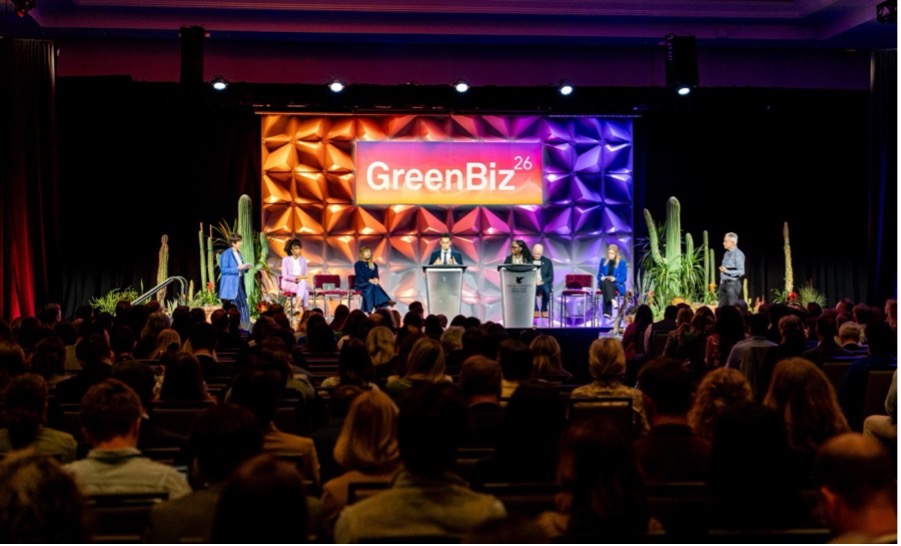
- Rather than retreat, GreenBiz attendees described a moment of “reset.”
- Resilience, capital allocation, risk management and operational efficiency surfaced again and again.
- Many organizations have set science-based targets, but fewer have built the internal systems required to deliver on them at scale.
In the months leading up to GreenBiz 26, sustainability discourse was dominated by questions of corporate commitment and the relevance of sustainability leadership roles. After the conference, though, attendees who shared their post-event reflections across LinkedIn had a very different take.
A clear pattern emerged in those posted responses from a diverse array of professionals: The conversation has shifted from aspiration to the hard-wiring of sustainability into business fundamentals. This year’s dominant takeaways weren’t about bold pledges, dramatic proclamations or policy setbacks. Instead, they were about discipline, governance and operational integration.
Rather than retreat, posters saw a moment of “reset.” In 2026, they said, sustainability leaders must speak the language of enterprise value, risk management and competitive resilience. And while climate remains central, water, nature and AI also need to be strategic agenda items, not just side conversations.
“Sustainability isn’t disappearing,” one attendee wrote. “It’s integrating.”
Below, culled from more than 20 LinkedIn responses, are the themes that will shape corporate sustainability in 2026.
Sustainability speaks finance
Attendees described a move away from narrative-heavy positioning toward enterprise value. Concepts like resilience, capital allocation, risk management and operational efficiency surfaced again and again.
“The conversation has shifted from purpose to performance,” one attendee wrote. Framing sustainability around resilience, capital access and risk mitigation is “not a retreat — it’s maturation.”
Several leaders mapped sustainability’s move from cost center to value multiplier, a lever to be pulled to bolster margin protection and long-term competitiveness. One attendee noted that the companies moving fastest are embedding sustainability into procurement, performance metrics, supplier scorecards and R&D, treating it as an innovation strategy rather than a reporting exercise.
The CSO debate is about authority, not titles
Few moments captured this shift more clearly than the much-discussed mainstage debate: “Is the Chief Sustainability Officer irrelevant?”
The answer, attendees said, lies less in the realm of job titles and more in that of decision rights. The debate revealed that sustainability leaders must wield real authority to drive enterprise-wide change. “Enterprise Risk Management = Sustainability,” wrote one attendee. “If it’s not in the capital plan, risk register and revenue strategy, it’s not enough.”
Vision without authority is not strategy, said another; the CSO must be a “compass for navigating existential risk.” Connecting climate data and environmental metrics to capital allocation and business risk has become a defining skill.
From goal-setting to execution
Multiple attendees described what one called an “execution gap” in transition planning. Many organizations have set science-based targets. Fewer have built the internal systems required to deliver on them at scale.
Tackling Scope 3 emissions, in particular, is becoming more granular and demanding as high-level estimates give way to supplier-specific data and stronger integration within financial systems.
Credibility is a competitive advantage
As sustainability integrates more deeply into enterprise strategy, the bar for credibility rises. Several attendees pointed to a shift from broad commitments to defensible, audit-ready systems. The differentiator, one wrote, is no longer data; it’s trusted data.
One attendee saw this as a pivot from spreadsheets to integrated platforms that connect sustainability metrics to enterprise systems. Another emphasized that governance must be “modeled by finance, enhanced by legal and strengthened by accountability.”
AI: productivity tool, governance challenge
While many companies are using AI to streamline reporting, model supply chain risk or translate Scope 3 complexity, several leaders cautioned that the conversation remains less than fully informed. One attendee described an “AI literacy gap,” noting that though sustainability teams are eager, they often have only a surface-level understanding of how the technology can actually augment their work.
More notably, AI wasn’t framed as a productivity tool so much as a governance issue.
“AI governance is a sustainability issue,” wrote one participant. As the intersection of AI, environmental impact and enterprise risk tightens, companies are being pressed to manage it with greater discipline.
Water and nature step forward
Many attendees noted that issues related to water and nature were more in the spotlight than in years past. Discussions moved beyond reputational risk toward business continuity, resilience and direct operational exposure. One attendee noted that in a world defined by volatility and extremes, water risk is business risk.
Indigenous leadership and landscape-scale collaboration featured prominently in reflections, particularly around projects that integrate technology, local governance and ecosystem restoration.
The vendor ecosystem still skews heavily toward limiting emissions, as one attendee observed. But nature and water are moving from side stage to strategic imperative.