How Google got ahead of the ‘bring your own’ data center power movement
The giant cloud and artificial intelligence services company has negotiated special tariffs and contracts in Minnesota, Nevada and Texas. Read More
- More states want Amazon, Google, Meta and Microsoft to bear the cost of skyrocketing electricity demand.
- New tariffs in Minnesota and Nevada insulate residential customers from energy inflation.
- Google worked closely with utilities to diversify its approach.
Years before President Donald Trump demanded that big tech companies arrange — and pay — for the electricity for their new data centers, Google was brainstorming with utility companies to do exactly that.
That work is evident in three recent partnerships that will power Google facilities in Minnesota, Nevada and Texas. The biggest deal, announced on Feb. 24, will bring almost 2 gigawatts of clean power online through a contract structure Google co-created with Xcel Energy, in conjunction with a separate Xcel program introduced in late 2025 that aims to add 200 megawatts of energy storage to the utility’s service territory.
Under the contracts, Google will pay for additional low-carbon electricity to meet its increased demands so costs aren’t shifted to Xcel’s other customers. Google and Xcel created a new tariff to do this. Called the Clean Energy Accelerator Charge, it’s similar to one that Google is using in Nevada to bring more geothermal resources onto the grid. The Xcel deal must be approved by the Minnesota Public Utilities Commission.
Minnesota passed regulation in June 2025 to get ahead of the potential environmental impact of data center expansion. “Last year’s law that extended incentives for operation of data centers while balancing environmental considerations like water and energy use is a model for other states,” said Doug Loon, president and CEO of the Minnesota Chamber of Commerce, in a statement about the contract.
Virginia, Wisconsin and New Jersey are among those considering similar guardrails.
Big tech scrambles as backlash intensifies
The four largest cloud and artificial intelligence services companies — Amazon, Google, Meta and Microsoft — have been big supporters of new wind and solar projects for close to a decade, using renewable energy certificates generated by such installations to support their decarbonization claims.
Their voracious data center expansion plans have exponentially increased that appetite: The quartet accounted for close to half of the clean power capacity, more than 20 gigawatts, added to the global grid in 2025.
Research published on Feb. 26 suggests that data centers could consume up to 17 percent of the U.S. electricity supply by 2030; consumption is 4 to 5 percent today. In Virginia, data centers already gobble up 25 percent of the state’s available power.
These market dynamics have sparked a backlash across the U.S., as residential customers are blindsided by skyrocketing energy costs, especially in regions where construction has been prevalent.
“Without serious rate design and interconnection reform, the costs of the buildout land on household electricity bills while the benefits flow to tech companies and utilities,” said Anisha Steephen, former senior advisor with the U.S. Treasury department and fellow at the Roosevelt Institute. “This is the K-shape playing out in real time at the grid level.” (A “k-shaped” economy is characterized by a wide wealth gap between higher-income and lower-income households.)
In his Feb. 25 State of the Union speech, President Trump promised to make AI data center operators pay their way. Toward that end, a half dozen prominent companies are expected to sign a data center power pledge on March 4.
All-of-the-above approach
Google is already delivering on that pledge. In late December, its parent company, Alphabet, announced plans to pay $4.75 billion for Intersect, which develops data center energy infrastructure. The acquisition will boost the ability to collaborate closely with utilities and renewable energy developers.
“The U.S. electric system is highly regulated and highly diverse, so we work closely with local utility partners to determine the optimal models everywhere we operate,” Briana Kobor, head of energy market innovation at Google, told Trellis via email.
In Nevada, for example, Google co-developed the Clean Transition Tariff that NV Energy is using to fund a 115-megawatt enhanced geothermal plant being built by Fervo Energy.
That tariff will underpin the long-term contract that Google announced on Feb. 17 with developer Ormat Technologies, which will support another 150 megawatts of geothermal energy slated to come online in 2028. The contract needs to be approved by the state’s utilities commission; a vote is planned for the second half of 2026.
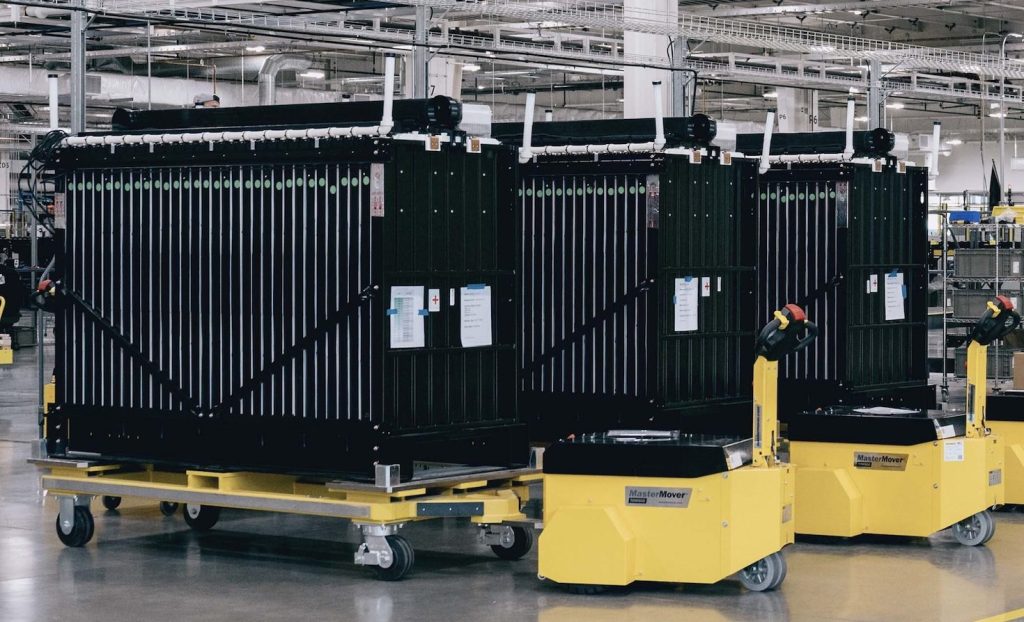
The Xcel tariff is modeled after Nevada’s program. The fees will cover the addition of 1.4 gigawatts of wind, 200 megawatts of solar and 300 megawatts (or 30 gigawatt-hours) of long-duration energy storage from a company called Form Energy. The batteries can last up to 100 hours, far longer than traditional lithium-ion technology. Google invested in another long-duration battery startup, Energy Dome, in August 2025.
Google’s deal in Texas, which is a deregulated electricity market, takes a different shape. Under a partnership disclosed Feb. 24 with developer AES, Google will co-locate clean power generation at or near the site of a proposed data center in Wilbarger County.
It took two years of negotiation with the local community to enable the project. Google is investing more than $40 billion in Texas through 2027.
“Google’s data centers are long-term investments in the communities we call home, and our new site in Wilbarger County will be no exception,” said Amanda Peterson Corio, the company’s global head of data center energy, in a statement. “In partnership with AES, we are bringing new clean generation online directly alongside the data center to minimize local grid impact and protect energy affordability.”
Google and AES didn’t disclose how much electricity will be added under their deal, but AES, which works closely with most of the big tech companies, is developing a total of at least 9 gigawatts of electricity to support new data centers.

Subscribe to Trellis Briefing