Why Levi’s is teaching high schoolers how to mend jeans
Its hands-on workshops aim to extend the lives of clothes, as more brands adopt repair programs in the U.S. and Europe. Read More
-
Levi’s is reframing repair as a missing life skill, not a niche green behavior, as it advances circularity and Gen Z brand loyalty.
-
Patagonia, Uniqlo, Primark, and Neiman Marcus are also expanding workshops, guides, and in-store fixes to mainstream garment longevity.
- For the brands scaling repair, extending garment life cuts emissions and complements resale and trade-in programs.
Levi Strauss and Discovery Education are picking up where home economics classes left off. Which is to say, they are teaching high schoolers basic sewing skills.
The “Levi’s Wear Longer Project,” launched Jan. 14, starts in San Francisco with workshops at Levi’s Eureka R&D center. A global campaign will follow to share virtual and in-person lessons for tasks such as adding buttons, patching jeans and altering hems.
Thirty-five percent of members of Gen Z polled by Levis’s said they would keep their clothes for longer if they knew how to address tears and other flaws — but 41 percent reported having no way to do so. (Levi’s noted similar things about Millennials when it launched repair tutorials in 2014.)
“By building up repair skills within the next generation and emphasizing the idea of durability, we’re helping spark a culture of creativity, sustainability and pride in taking care of the things we value,” Levi Strauss President and CEO Michelle Gass said in a statement.
Levi’s also appears to be vying for youth brand loyalty to carry forward an identity of durability, which originated with its outfitting 1850s gold miners.
“Some brands claim that offering repair creates continued engagement after the point of sale and drives traffic into their stores, which is then converted into new sales on top of the repair,” said New York-based sustainability consultant Liz Alessi.
Indeed, Levi’s is among a small yet growing number of brands advancing repair. That often-neglected pillar of the circular economy movement counters the industry treatment of clothes as perishables. Signs of growth include the rise of apparel-repair startups including Revive and Alternew, which recently signed a deal with Primark.
Globally, the market for mending services will expand by 9.4 percent each year to 2035, growing to $1.18 billion from $.53 billion in 2026, according to Business Research Insights.
Tersus Solutions, which provides resale logistics, cleaning and repair services to apparel brands including The North Face and Eileen Fisher, is seeing significant growth in brands’ warranty and repair programs, according to CEO Peter Whitcomb. “Many brands are shifting from replacement-first models to repair-first approaches as a way to better serve customers, extend product life and reduce environmental impact,” he said.
Levi’s other repair plays
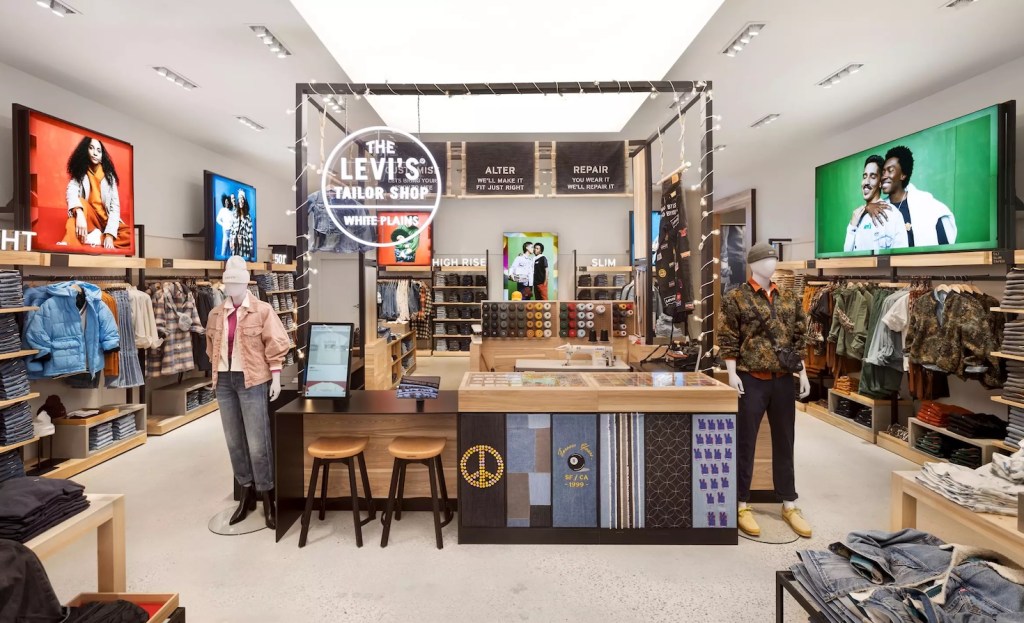
In addition to its longtime focus on design for longevity, Levi Strauss has been advancing other circular economy programs within its sustainability strategy. The 173-year-old company offers tailoring services at certain stores, including free hemming for its Red Tab loyalty program members.
Part of Levi’s push for net zero by 2050 includes the 2030 goal of cutting down Scope 3 purchased goods and services emissions by 42 percent over 2022 levels. The use of Levi’s products, including laundering, makes up 31 percent of the company’s overall emissions, according to its 2024 Climate Transition Plan.
Efforts to address that include Levi’s Secondhand branded resale program, which is entering its sixth year. It also enables customers to exchange used Levi’s for a coupon of up to $30 at certain retail stores. Buying used items requires 53 percent of the carbon that would be emitted from buying something new, according to the company.
Patagonia, Uniqlo, Primark and Neiman Marcus are among the other companies expanding a mix of repair services, alterations guides or in-house workshops in the United States. Comparable efforts are relatively more normalized in Europe, which has a longtime culture of product aftercare and restoration, particularly among luxury houses such as Hermès, Dior and Burberry.
Other fashion brands repair plays
Here’s a sampling of approaches by other brands to make repairs mainstream:
Patagonia
The fleece jacket giant’s network of free, lifetime repairs is part of its Worn Wear program, launched in 2017 with the idea that “repair is radical” and generating $13 million in revenues in 2025. Patagonia offers simple patching or seam-closings in stores and from repair vans at special events, as well as more complex mail-in fixes. Its Reno, Nevada, repair center counts tens of thousands of repairs each year. A partnership with iFixit produces virtual repair guides, which Patagonia says has kept 583,000 items out of the trash.
Uniqlo
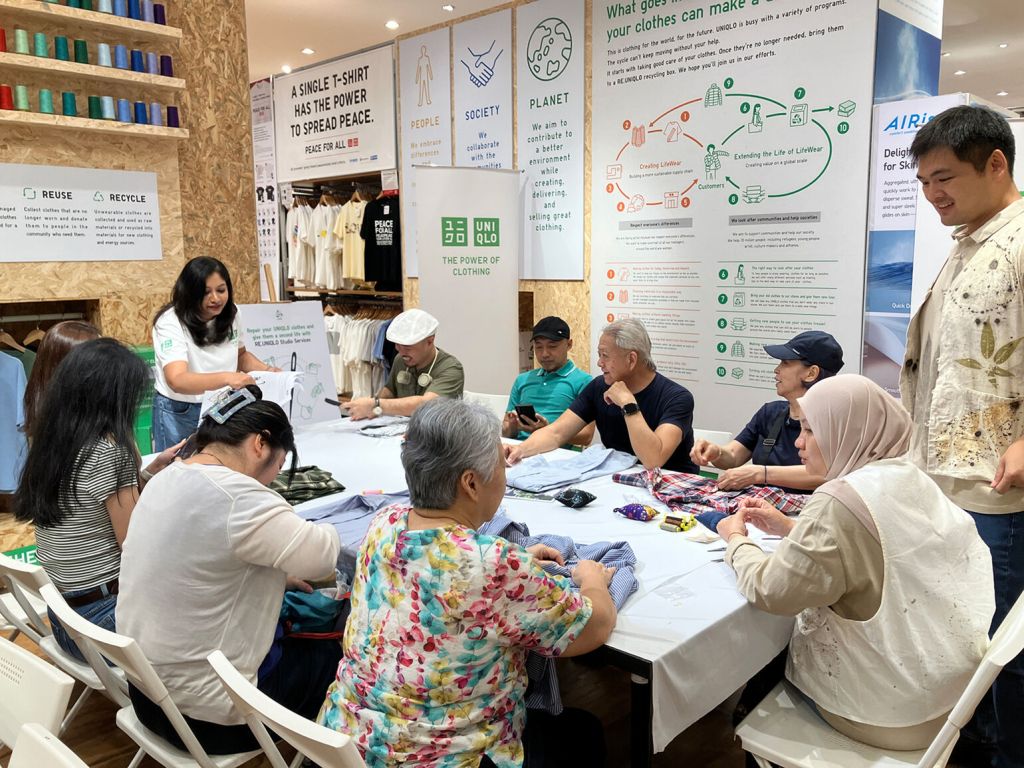
Repair counters are spreading at fast-growing Uniqlo stores, owned by Fast Retailing of Yamaguchi, Japan. An upcycling workshop at one of its shops in Germany has grown into Re:Uniqlo Studio repair and “remaking” services at 70 stories in 23 international markets. The brand introduced Re:Uniqlo to certain U.S. stores several years ago, charging $5 to close fabric holes or replace buttons.
Primark
In May, Dublin retailer Primark began expanding repair workshops to the U.S. in Staten Island and Tysons, Virginia. The company has held more than 730 such events across Europe since its “Love it for longer” program began in 2021. The company also shares online tutorials for mending and hemming.
Neiman Marcus
Former Dallas-based department store Neiman Marcus, now based in New York under Saks Global, belongs to an old world or high-end, in house repairs. All of its three-dozen locations offer tailoring, alterations, repair and restoration, including for clothes, shoes and handbags bought elsewhere. Simple adjustments for full-price goods are free. The brand began marketing decades-old services as a circularity play around 2021. It met a 2025 goal to extend the lives of 1 million products two years early.
However, repair is harder to monetize than resale, according to “Untangling Circularity” podcast host Cynthia Power: “These are the companies with loyal customers who will shop at the brand for decades. These companies have much to gain from offering repair services and repair education programs because they are strengthening the foundation of their existing value proposition to their customer.”