Meet the drilling entrepreneur unlocking geothermal power for Google
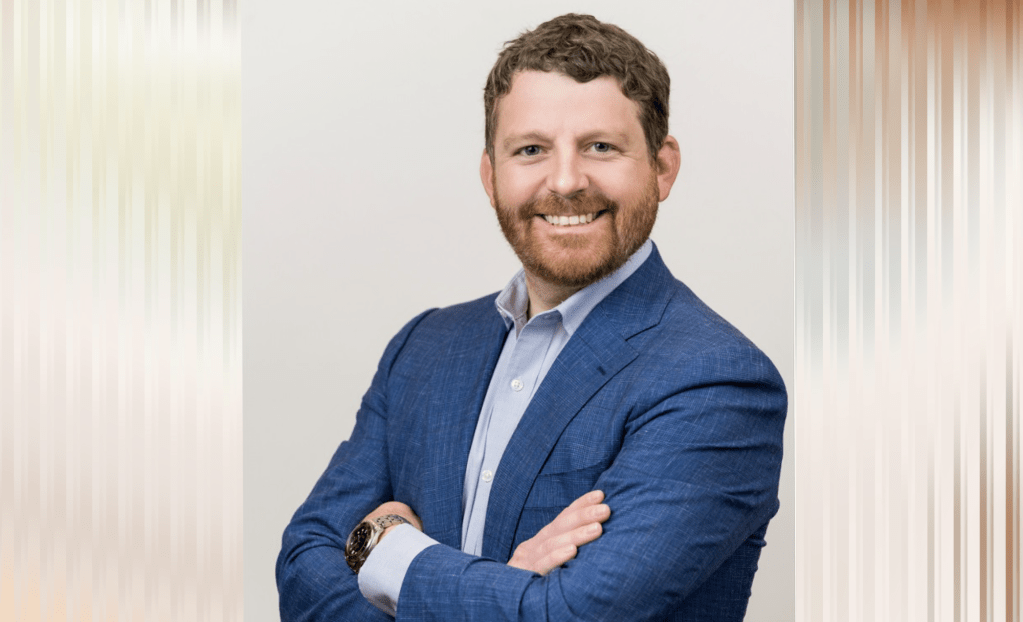
Fervo Energy co-founder and CEO Tim Latimer was inspired by skills learned in the oil and gas business. Read More
- The startup’s technology expands the number of locations where geothermal development makes sense.
- Fervo’s first commercial projects are in Utah and Nevada.
- The company uses AI in every aspect of its business.
Fervo Energy isn’t the largest U.S. geothermal energy company, but its approach to drilling — inspired by the co-founder’s oil and gas experience — is expanding potential commercial applications.
The startup has raised more than $1.5 billion, including $462 million in December 2025, from a broad spectrum of investors including tech giant Google, Japanese conglomerate Mitsui and Tesla co-founder JR Straubel.
Fervo’s mission: Use horizontal drilling and rock fracturing techniques to bring geothermal energy to places where projects weren’t previously cost-effective because the heat and steam for turning turbines wasn’t close enough to the surface.
Its approach, called “enhanced geothermal,” allows for energy companies to exploit reserves as deep as 12,000 feet, compared with surface-level geothermal installations or legacy well depths of 2,000 feet. Fervo reduced its per-foot drilling costs by more than 70 percent during its proof-of-concept projects to $400 per foot. Over time, enhanced geothermal systems are projected to cost $64 per megawatt hour, cheaper than traditional geothermal and equivalent to the cost of solar plus storage.
“There’s really no limit to where we can go,” said Fervo Co-founder and CEO Tim Latimer, in the latest episode of Climate Pioneers. “We can make this work anywhere.” Latimer met his co-founder, Jack Norbeck, who is the chief technology officer, while the two were earning degrees at Stanford.
Google’s gamble
Early interest from Google, which is buying clean power that can run its data centers around the clock, will help put Fervo’s first corporate-backed project on the grid in Nevada.
Google created a special utility tariff with Fervo and NV Energy to fund construction without saddling other customers with the costs.
“When you’re building and deploying a new technology, finding these customers that share your goals and share your missions and recognize that getting technology out into the world is not easy … was really critical to our success,” Latimer said.
Fervo is also developing another 500 megawatts of capacity at a site in Utah, called Cape Station. It’s a testbed-turned-commercial project that will add 100 megawatts to the local grid starting in October.
One of Fervo’s pitches to other corporations seeking clean power that’s available around the clock is that its land footprint is much smaller than what’s required for a solar or wind project. Its technology requires water, but it doesn’t have to be fresh, so it won’t steal from community or agricultural water needs, Latimer said.
“The real key with geothermal is it’s carbon-free, so you don’t have to compromise on your climate goals,” he said. “It’s fast to build because it has a well-understood supply chain and technology roadmap, and it’s also a 24/7 baseload resource.”
Many of these factors can be useful for winning over communities worried about the furious pace of data center construction and the new energy resources required to run them. Fervo attended its first town hall two years before it drilled its first well, to get ahead of those concerns.
AI and radical transparency
Fervo uses artificial intelligence across “every part of our business,” one reason that the startup has been able to reduce its development costs so quickly. Among other things, AI can measure fluid and density data from rock during exploration and drilling, enabling the company to make decisions about sites far more quickly.
Fervo measures or evaluates everything from torque and drilling parameters to which drill bits are most effective. It’s publishing much of that data, hoping that it will help accelerate enhanced geothermal adoption.
“There’s two failure modes for companies,” Latimer said. “One is you let all your secrets out, and somebody beats you to the punch. The other is that you never attract the attention of policy makers or customers or investors because they don’t take you seriously. We were always way more worried about the second failure mode than the first failure mode.”
About those IPO rumors
Latimer’s advice for other climate tech founders: Stay close to customers to build a business model that is resilient in the face of wild policy swings. That mindset is one reason Fervo is expected to go public in 2026. The company is rumored to have filed the paperwork for an IPO in January, but Latimer dodged the subject.
“The thing that has always been our guiding principle from Day 1 is: What puts more megawatts of this reliable clean energy source on the grid the fastest and how do we capitalize the business to go forward?” he said. “We’re looking at a variety of options, really, so we can accelerate our growth and impact.”

Subscribe to Trellis Briefing