The biggest barrier to more sustainable diets: Affordability
Very few consumers say healthier, more sustainable diets aren't worth it. Read More
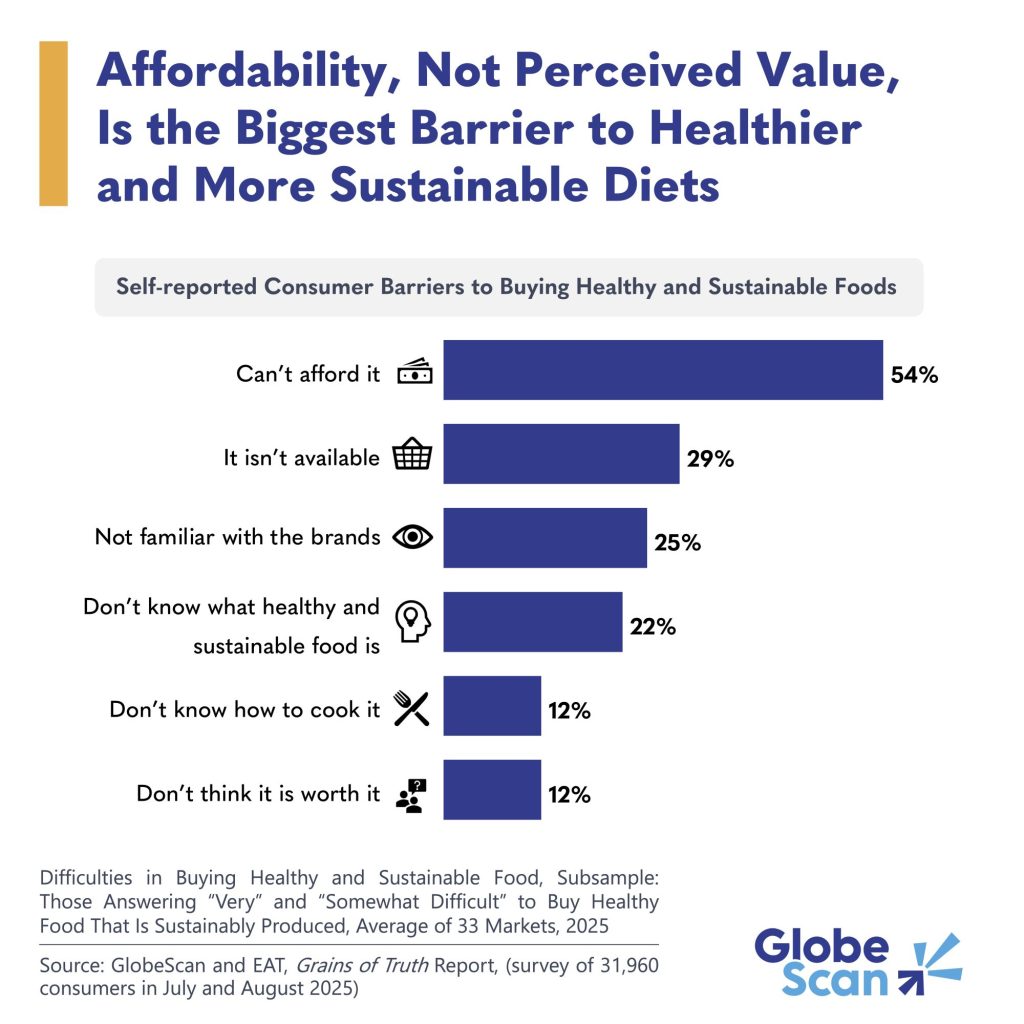
- Cost is the most frequently-cited obstacle for consumers trying to purchase healthier and more sustainable food.
- Limited availability and low familiarity with what qualifies as healthy, sustainable food also constrain consumers’ ability to act, pointing to market and system gaps.
- Only a small minority of consumers say healthier and more sustainable food isn’t worth it, suggesting uptake is limited by practical barriers, not a lack of appreciation for its benefits.
With many people tightening their wallets these days, new research shows the ability to pay for healthy, sustainable food is a bigger barrier than whether consumers think it’s worth it — a finding that shifts responsibility away from consumer attitudes and toward the food system itself.
Consumer research from Trellis data partner GlobeScan, in partnership with EAT, highlights a clear gap between aspiration and everyday reality when it comes to food choices. While interest in healthier and more sustainable diets remains high globally, affordability emerges as the most commonly cited barrier preventing consumers from purchasing healthy and sustainable food.
Beyond cost, access and lack of knowledge also shape consumer behavior. Many respondents point to the limited availability of healthier and more sustainable options, along with a lack of familiarity with brands and uncertainty about what qualifies as healthy and sustainable food. Together, these barriers suggest that challenges lie primarily in the food environment rather than in consumer attitudes.
Only a very small minority say a lack of perceived value is a reason for not eating a more healthy and environmentally conscious diet. This reinforces one of the central insights from the research: Progress depends less on changing minds and more on removing practical barriers that limit consumers’ ability to act on existing intentions.
What this means
The findings point to a shift from persuasion to enablement and to a clear opportunity to unlock marketplace value while supporting better health outcomes and more sustainable food systems. Consumers aren’t rejecting healthier and more sustainable diets; they’re instead facing practical constraints that limit uptake. Improving affordability, expanding availability and clarifying what qualifies as healthy and sustainable can help convert existing demand into sustained market growth.
Based on a survey of nearly 32,000 people across 33 markets conducted July — August 2025.

Subscribe to Trellis Briefing