Greening Consumer Electronics
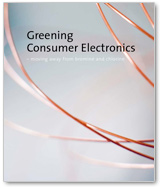
This report from Clean Production Action and ChemSec highlights the innovations driven by electronics manufacturers that have removed toxics like bromine and chlorine from high-tech gadgets.
The report, “Greening Consumer Electronics: moving away from bromine and chlorine,” offers case studies of seven electronics companies that have overhauled their product designs through a combination of transparency around product materials and working with suppliers to develop safer alternatives to brominated and chlorinated chemicals.
“These seven companies demonstrate that there are less toxic and still cost effective alternatives to substances of high concern that do not compromise performance or reliability,” CPA Project Director Alexandra McPherson said in a statement. “They are well positioned to gain competitive advantage in a marketplace and regulatory environment increasingly sensitive to the use of toxic chemicals in consumer products.”
At least some of the impetus for the design successes highlighted in this report come as a result of the Restrictrion on Hazardous Substances (RoHS) law, enacted in 2006 in the European Union; since then similar laws have been adopted in South Korea, Turkey, China and Japan. That law restricts the use of six toxic materials, including two brominated chemicals.
In the wake of RoHS restrictions, as well as pressure from customers and NGOs, Apple and Sony Ericsson in particular have reformulated product lines to restrict or eliminate entirely the use of bromine and chlorine in products. Apple now has a number of polyvinyl chloride-free (PVC) and brominated flame retardant-free (BFR) product lines, including iPhones, iPods and a number of the company’s computers.
Sony Ericsson has not only removed these substances from their products — all are 99.9 percent BFR free and will be 100 percent PVC free by the end of 2009 — but the company is also developing full chemical inventories for all of their product lines as well.
Full material disclosure was one of the keys to success for another of the companies profiled in the report. Seagate, the world’s largest manufacturer of disk drives, implemented a product stewardship policy in 2005 that has led to releasing a full chemical inventory of all of its products, as well as achieving PVC- and BFR-free formulations of 50 percent of the products it ships.
More details about the companies profiled and the issues involved in the report are available online at CleanProduction.org and ChemSec.org.