Patagonia blurs the line between secondhand and new clothing
The outdoor apparel company sold almost 160,000 used items in fiscal 2026, generating about $13 million in sales. Read More
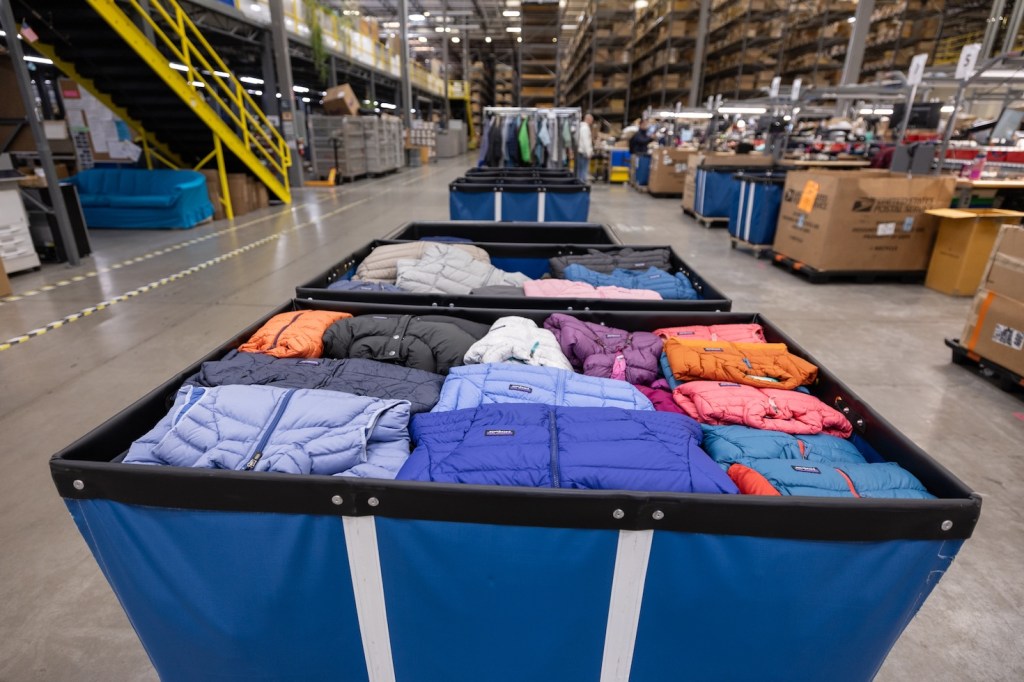
- Patagonia collects apparel through multiple channels, including its retail stores, via the website and mail-in programs.
- Worn Wear workers in Reno, Nevada, processed more than 230,000 previously owned garments in 2025.
- To make the change, Patagonia had to accommodate a larger number of unique stock keeping units and find ways to track discontinued items.
Outdoor apparel retailer Patagonia will no longer maintain a separate website to represent the used clothing in the Worn Wear collection, launched nine years ago.
Those items are now merchandised alongside new options on the company’s e-commerce site. Customers can compare used and new apparel while browsing, and they can buy either or both from the same e-commerce shopping cart. Both types of apparel are covered by the company’s warranty.
Most retailers or fashion brands that offer a formal program for reclaimed, repaired or remade clothing merchandise and sell those items separately. For example, Eileen Fisher supports a unique internet address for its Renew collection.
Brands have been slow to integrate secondhand apparel into existing inventory for many reasons, including concerns about cannibalizing sales of new collections, the unpredictability of the supply and the complicated work of pricing “units of one,” said Ken Pucker, professor of practice in sustainability at The Fletcher School at Tufts University.
“For those reasons, they have been more interested in outsourcing,” he said. “I think what Patagonia is doing is courageous.”
Making the transition
Patagonia expects to drive greater participation in its secondhand program by exposing those items on its website to customers that might not have previously sought out pre-owned apparel but that might find the price points appealing.
Circular economy initiatives — including its long-standing repair program and the resale of previously owned apparel — help reduce emissions related to Patagonia’s raw materials, which represent the largest source of its greenhouse gas emissions.
Patagonia sold almost 160,000 verified secondhand items in fiscal 2026, generating about $13 million in sales.
“Our goal is to put this in front of more eyeballs and create a more normalized experience where the choices are more seamless,” said Sam Brown, head of resale at Patagonia.
Patagonia collects apparel through multiple channels, including its retail stores, website and mail-in programs. The items are examined, cleaned, repaired and verified by more than 40 Worn Wear associates at its facility in Reno, Nevada. That team processed approximately 230,000 pieces of clothing in 2025; roughly 80 percent of that can be resold, Brown said.
Adding the Worn Wear items to Patagonia’s main ecommerce site required a multiyear update of the information technology systems that support the company’s inventory management, merchandising, website creative and user design, and pricing teams.
Among other things, Patagonia needed to accommodate a larger number of unique stock-keeping units, find ways to track discontinued items, and create rules for how the condition of a garment will affect pricing. Many of these tasks were previously handled by the software company Trove, which managed Patagonia’s separate Worn Wear site.
“This was a massive internal effort,” Brown said. “It required building new muscles across virtually every part of our business.”

Subscribe to Trellis Briefing