Why data center companies Equinix and Oracle are buying fuel cells
Companies like Bloom Energy and Fuel Cell Energy report growing interest in their technology. Read More
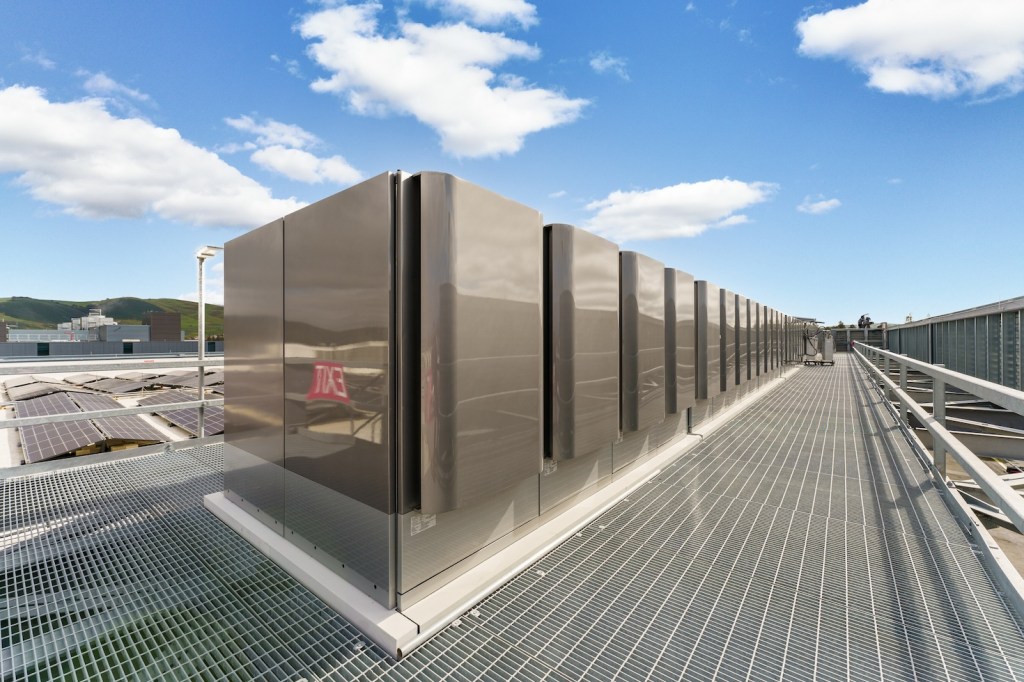
- Oracle is buying up to 2.8 gigawatts of Bloom units for its AI infrastructure.
- Equinix plans to use fuel cells as the primary power source for one of its San Jose, California, locations.
- Fuel cells have a lower environmental impact than natural gas generators that use combustion.
The “speed to power” ambitions of big cloud computing service providers and data center companies are boosting installations of on-site fuel cells, particularly those made by Bloom Energy.
Oracle is contracted to install up to 2.8 gigawatts of capacity for its cloud computing and artificial intelligence services: Almost half of those projects are already underway, with some fuel cells operational in 55 days.
Equinix, which operates more than 280 data centers globally, already has 73 megawatts of Bloom fuel cell capacity operational.
The company is contracted for an additional 35 megawatts in installations, covering 19 data centers in six states. Equinix plans to make fuel cells the primary source of power at one of its data centers in Silicon Valley, using the grid as a backup resource.
Fuel cell prospects
Fuel cells work by using hydrogen or another feedstock, mostly natural gas, to create a chemical reaction that produces electricity. Their benefits include a shorter installation time — less than a year, compared with the multi-year development cycle of other power sources — and higher efficiency than gas turbines. They’re also quieter and can often be installed right next to the data centers they support.
Fuel cells can meet up to 15 percent of new power demand, or one-quarter of all behind-the-meter electricity resources, according to Goldman Sachs Research estimates. That translates into at least 8 gigawatts of additional generation capacity by 2030.
“Expansion of fuel cells is currently constrained by its small manufacturing capacity, given its limited historical use, but we believe this is about to change, both in the U.S. and Asia, with major manufacturing expansion,” said Michele Della Vigna, head of natural resources research at Goldman Sachs.
Bloom makes solid oxide fuel cells; they uses natural gas as a fuel source but can be converted to other sources.
Equinix has avoided an estimated 285,000 metric tons of carbon dioxide equivalent (CO2e) and 382 billion gallons of water use through the use of Bloom technology, according to the 2025 Equinix sustainability report.
“You don’t have the transmission and distribution losses, you don’t have actual combustion, you don’t have [nitrogen oxide] and [sulfur oxide] and the particular emissions, and you’re using far less water in terms of the energy and water nexus,” said Christopher Wellise, vice president of sustainability at Equinix. “They’re highly efficient.”
Bloom, one the best-known fuel call makers, surpassed $1 billion in revenues for the first time in the second quarter.
Other vendors tailoring their technology for data centers and off-grid power include FuelCell Energy, a Connecticut firm that in June signed a contract to provide AI infrastructure Fit Energy with up to 380 megawatts of power capacity from its molten carbonate technology; PowerCell Group, a Swedish hydrogen fuel cell maker that has an industrial partnership with Bosch and contracts with AI infrastructure firm ECL; and Ballard Power Systems, a Canadian company that has traditionally focused on transportation applications.

Subscribe to Trellis Briefing