U.S. companies are dropping climate targets, Harvard data reveals
Anti-ESG campaigns by Republican attorneys generals may be one cause. Read More
- The number of large U.S. companies with climate targets fell by 79 between 2023 and 2024.
- The result bucks a global trend toward increasing prevelance of corporate targets.
- Political and regulatory factors may explain the drop.
The number of U.S. companies with climate targets peaked in 2022 and has fallen since, according to a newly released database compiled by Harvard University researchers.
Estimates of corporate climate action often report growth in the number of companies setting goals — the Science Based Targets initiative, for instance, said earlier this year that it had validated its 10,000th pledge, with companies in close to 100 countries participating.
But the Harvard data is notable because it tracks a single group of businesses — members of the Russell 3000, which includes 98 percent of U.S. equities by market capitalization — over a quarter century. The data was compiled by a group of 27 researchers working over a roughly two-year period.
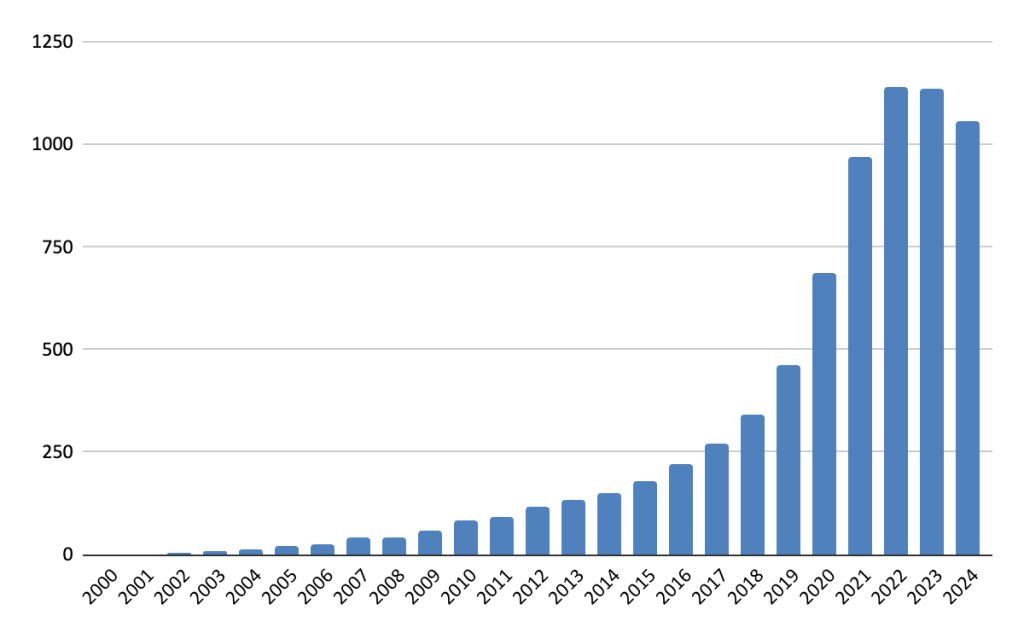
The database, which was published on Sept. 21, shows that the number of companies with targets peaked in 2022 at 1,140, just over a third of the potential total. The number stayed relatively flat the following year, but dropped by 79 in 2024, the most recent year for which the researchers have published data.
Russell 3000 companies with climate targets
Multiple forces may explain the drop, said Joseph Aldy, an environmental policy expert and member of the Harvard team. One factor is the anti-ESG campaign waged by Republican attorneys general, which encompasses investigations into ESG investing and, more recently, SBTi and other climate nonprofits. “I think that has had a bit of a chilling effect for some of these companies,” Aldy said.
Policy is another factor. “The structure of corporate voluntary targets mimics the kinds of ambitious voluntary goals we get in the policy arena,” he added. Some companies pledged to halve emissions by 2030, for example, after President Joe Biden made the same commitment for the U.S. in 2021.
A final issue is the regulatory environment — a counterintuitive result given that the decline came amid a period of regulatory support for decarbonization, including the 2022 passage of the Inflation Reduction Act. But some companies may still have looked at the IRA and realized that its provisions — since largely reversed by the current U.S. administration — did not provide the support they needed. Knowing significant additional climate legislation was unlikely to follow, those companies decided to drop their targets.

Subscribe to Trellis Briefing