More fluff in sustainability reports, study finds
A surge of interest in reporting has not led to more concrete information, say researchers at the University of Chicago. Read More

- A study of more than 2,000 reports found a relative increase in fluff and a decrease in quantitative statements.
- Companies that began reporting more recently tend to produce fluffier reports.
- As reports get longer and more layered, companies need to focus on ensuring critical information is easy to find.
Do annual sustainability reports matter?
The theory goes something like this: Reports allow investors to better understand companies, while civil society groups can use them to hold businesses to account.
But such benefits only flow if reports contain the high-quality information that these and other stakeholders require. But a recent University of Chicago Law School study that analyzed more than 15,000 disclosures from 2,100 large companies is calling that assumption into question.
Researchers at the school used a large language model to check the publications for reporting frameworks the companies followed, the specificity of the language used and what they call a “fluff ratio,” i.e., the total number of vague or meaningless sentences (“Our aim is to be a leader in the industry”) divided by the total number of sentences.
More fluff
The team found that the number of companies publishing sustainability reports surged after 2015, as did adoption of popular standards, including those from CDP, the Sustainability Accounting Standards Board and the Global Reporting Initiative.
Companies publishing sustainability reports
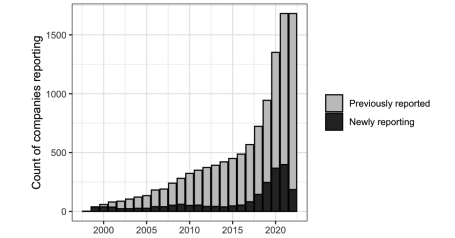
When the researchers looked at the quality of the information, however, they found that this rush of interest brought uneven benefits, with reports in many cases becoming less quantitative, fluffier and less specific.
How report quality changed over time
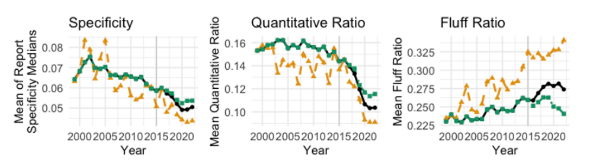

Companies that have been reporting for longer do produce more concrete reports, note lead author Hajin Kim and colleagues. But that’s not necessarily because they’re getting better at it, they add. Fluff shows improvement: Early reporters have published relatively less puffery in recent years. And companies that started early tend to do better than new arrivals, with neither group improving on specificity or quantitative statements over time.
“Voluntary regimes that want to move substance, not just adoption, may need firmer agreement on what specific, high-quality disclosure looks like, topic by topic,” conclude the authors.
Alternative explanation
Kim’s finding has merit, said Maximilian Müller, a financial accounting expert at the University of Cologne. But he noted that the growth in narrative text relative to hard numbers may be about more than hype: As companies disclose more information, more text is needed to explain methods, assumptions and context.
“The concern is not that hard information disappears,” said Müller, “but that it might become harder to find amid a faster-growing layer of narrative. The key question is therefore whether this growing amount of information is presented clearly and usefully.”

Subscribe to Trellis Briefing

Jim Giles
Featured Reports














The Premier Annual Event for Sustainable Business Leaders