Former Salesforce sustainability exec starts AI consulting practice
Boris Gamazaychikov is teaming with AI researcher Sasha Luccioni, one of the first climate scientists to sound alarms about AI’s environmental impact. Read More
- Sustainable AI Group will support sustainability professionals struggling to measure AI’s potential impact on energy and water.
- The two co-created AIEnergyScore, which compares the energy efficiency of AI models.
- The new firm will prioritize AI research and resources that serve the broad corporate sustainability community.
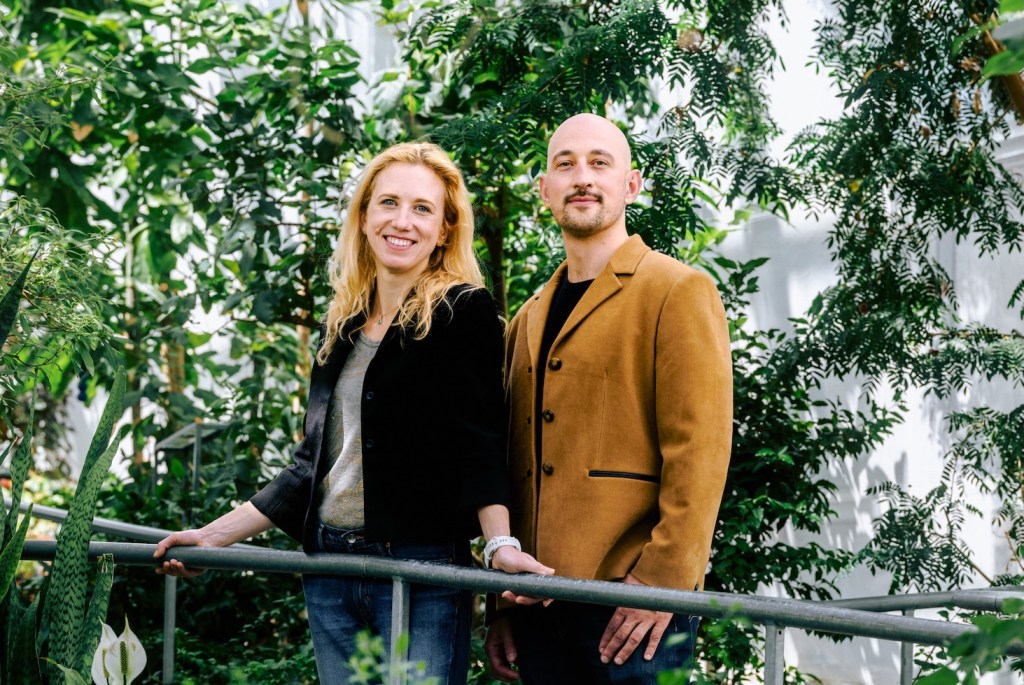
Former Salesforce AI and sustainability manager Boris Gamazaychikov and Hugging Face climate scientist Sasha Luccioni have founded a research and advisory firm focused on demystifying and managing the environmental impacts of artificial intelligence.
The new organization, Sustainable AI Group, will support sustainability professionals at companies that are using AI for day-to-day processes but struggling to measure the potential impact on their emissions and water consumption, among other concerns.
“It became apparent that unlike other sustainability topics that I’ve touched in the past, this is moving at such a rapid speed and customers are feeling really disempowered,” said Gamazaychikov, the firm’s CEO.
Luccioni, the startup’s chief scientific officer, was one of the first to call attention to AI’s outsized energy consumption in her role as AI and climate lead at Hugging Face, an open source software community that hosts code for machine learning and other AI applications.
Luccioni’s interest in AI was inspired by her research for financial services firm Morgan Stanley, where she saw a disconnect between rapid corporate adoption of AI and consideration of its impact on climate change. She quit that job to research how AI could be used in a “climate-positive” way.
“I think that most people don’t realize to what extent the AI that they use, that we use, doesn’t run locally,” she said in an upcoming episode of our Climate Pioneers interview series.
“All of this is running in data centers, and all these data centers are so far away from us,” Luccioni observed. “As human beings across the millennia, we’ve been focusing on immediate threats to our safety, like the saber-toothed tiger that jumps out of the bush. Data centers are the saber-toothed tigers that are very, very far away from us.”
Luccioni and Gamazaychikov have previously collaborated on resources for sustainability professionals grappling with AI.
One example is AIEnergyScore, a resource published on Hugging Face that compares the energy efficiency of AI models. They’ve also published a primer for sustainability professionals about the power, water and natural resources needed for AI data centers and a list of questions that procurement teams should ask when sourcing AI models.
They plan to continue developing these and additional resources that can be shared across the community. Their first focus will be on sectors where AI is reaching mainstream maturity and employees and investors are asking for more information about the ethics and sustainability policies in place to manage the technology.
One of the best ways for sustainability professionals to insert themselves into the conversation is to study how the software used by their organization incorporates AI and to encourage questions about where they are hosted and their energy consumption.
“That actually helps aggregate the signal and push the software-as-a-service providers into really demanding this from their AI vendors,” Gamazaychikov said.
AI and sustainability will be a central theme at Trellis Impact 26 including mainstage conversations with leaders paving the way for sustainable data centers like Microsoft’s Jim Hanna, as well as the AI x Sustainability Program including focused sessions like how AI is changing investor analysis of corporate disclosure and how to use AI to tackle supply-chain deforestation.

Subscribe to Trellis Briefing