How companies are using AI to support sustainability goals
Emerging AI-powered processes including optimization, digital-twin simulations and analysis are delivering results. Read More
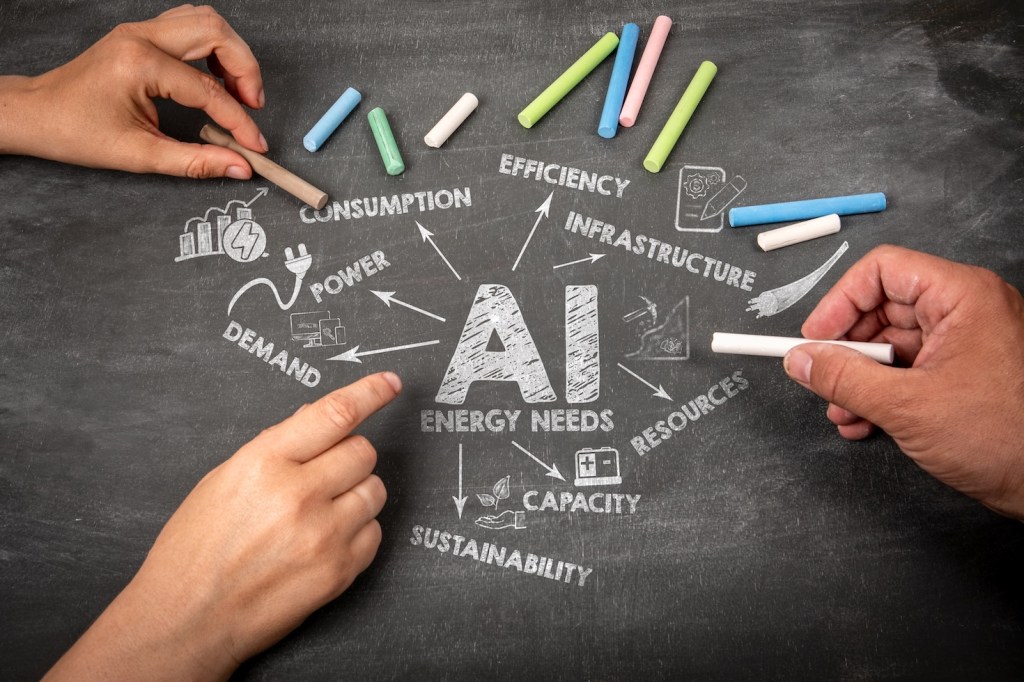
- There is a clear argument for the use of AI tools to support corporate sustainability goals, despite uncertainty around the impacts of the technology.
- Companies are using AI to streamline processes, cut emissions and save energy.
- Sophisticated AI tools are speeding analysis that offers deeper insights into sustainability-related risks and opportunities.
The opinions expressed by Trellis expert contributors are their own, not those of Trellis.
Sustainability practitioners have a judgment call to make: Do the carbon emissions and other impacts of artificial intelligence outweigh the potential benefits?
The calculus remains unclear. Estimating the costs of AI model use is challenging, in part because certain impacts — emissions generated during training runs, for instance — are omitted from some calculations.
This uncertainty shouldn’t prevent practitioners from exploring uses of AI in sustainability. The tools explored here present a clear case for doing so.
Already at work: AI optimization
Cub is a Midwest grocery chain that historically counted on employees’ experience for forecasting, ordering and store operations. In a sector where any shrinkage or food waste cuts already slim profit margins, the business wanted more advanced solutions.
It found one with Afresh, a San Francisco software company that uses AI to forecast demand, optimize ordering and reduce waste. During a three-month pilot, Afresh helped Cub increase sales by more than 2 percent and cut inventory holdings by 7 percent. When it was fully rolled out, produce shrink fell 18 percent, according to Cub’s chief information officer. In addition, the company is now on track to avoid more than 1,200 metric tons of greenhouse gas emissions, 43 million gallons of water and 2 million pounds of food waste annually.
Here’s another example. Heidelberg Materials wanted to reduce emissions from one of its cement plants, a challenge in an industry where 30 percent of a plant’s emissions come from the combustion of fuel. Its solution was to deploy software firm Gigaton’s AI platform at its Mokra plant in the Czech Republic.
The goals were lower fuel costs, lower emissions and improved clinker quality. In this instance, the AI runs on top of the plant’s existing advanced process control systems where it adjusts key parameters, including fuel mix, kiln speed and oxygen levels, resulting in lower energy costs and reduced emissions.
The results are promising. In the first month of continuous operation, Heidelberg’s plant saw a 4 percent cut in its average cost of fuel and a 2 percent reduction in fuel-derived emissions. Lower heat consumption also let the team shift the fuel mix away from heavy fuel oil and toward cheaper, less carbon-intensive fuel sources.
Another effective application: Digital twins
One exciting area of development is AI-enabled “digital twins,” which simulate virtual replicas of physical objects or systems. By combining AI systems with knowledge of company processes and systems of record, businesses can identify process-related bottlenecks and unlock sustainable value in unexpected ways.
This June, for instance, Unilever and Accenture announced a multi-year partnership to scale AI-enabled digital twins of processes used to manufacture soap, detergent, deodorant and food. The goal is to build 40 live-data twins — virtual models of equipment and production lines fed by real-time data from the shop floor — that will reduce the process variabilities that cause waste, stoppages and excess energy use.
At a Unilever plant in Raeford, North Carolina, a twin of the deodorant stick production for Dove, Degree and Axe is already predicting 95 percent of process flow restrictions and delivering a 20 percent reduction in waste.
Another twin in Haldia, India, is optimizing fan speeds, temperature settings and moisture controls that resulted in a reduction in thermal energy use over two years.
For the future: Analysis of nature-based risks
Another area of active exploration is an AI-driven method that can improve corporations’ understanding of economic impacts, risks and opportunities associated with the use of natural resources.
This emerging approach, known as Nature Adjusted Economic Valuation (NAEV), can help companies in extractive, manufacturing and other resource-intensive industries assess their reliance on ecosystem services — and the financial impacts they might face if those services were no longer available.
In the NAEV modeling studies, AI supports the analysis of companies that rely on some form of natural capital, say water or timber, for its core value-creating process. Using AI, we can compile and analyze vast volumes of data from field studies and computational models of the ecosystems that provide those services and project how far those ecosystems are from becoming degraded and eventually exhausted.
Based on these analyses, we can then model the risks related to the potential loss of these ecosystem services and estimate the impact on key indicators of the companies’ financial viability — such as loss of revenue, business disruption costs and weighted average cost-of-capital.
Pilot studies are underway, and early results show the potential of this approach. Before the widespread use of AI, such analyses would be prohibitively time-consuming and expensive to undertake.
The upside — understanding how to use resources more efficiently and identifying ecosystems best positioned to support such activity — seems likely to outweigh the potential negative impacts of AI use.

Subscribe to Trellis Briefing

Matthew Gardner
Featured Reports












The Premier Annual Event for Sustainable Business Leaders