ISO’s new net-zero standard is here: What to know
The recommendations define governance paths for development, implementation and disclosure. Read More
- Companies using the new standard will require independent verification for approval.
- The guidance references other widely accepted methodologies, including the Science Based Targets initiative’s new net-zero standard.
- Public comments on the draft will be collected for 12 weeks.
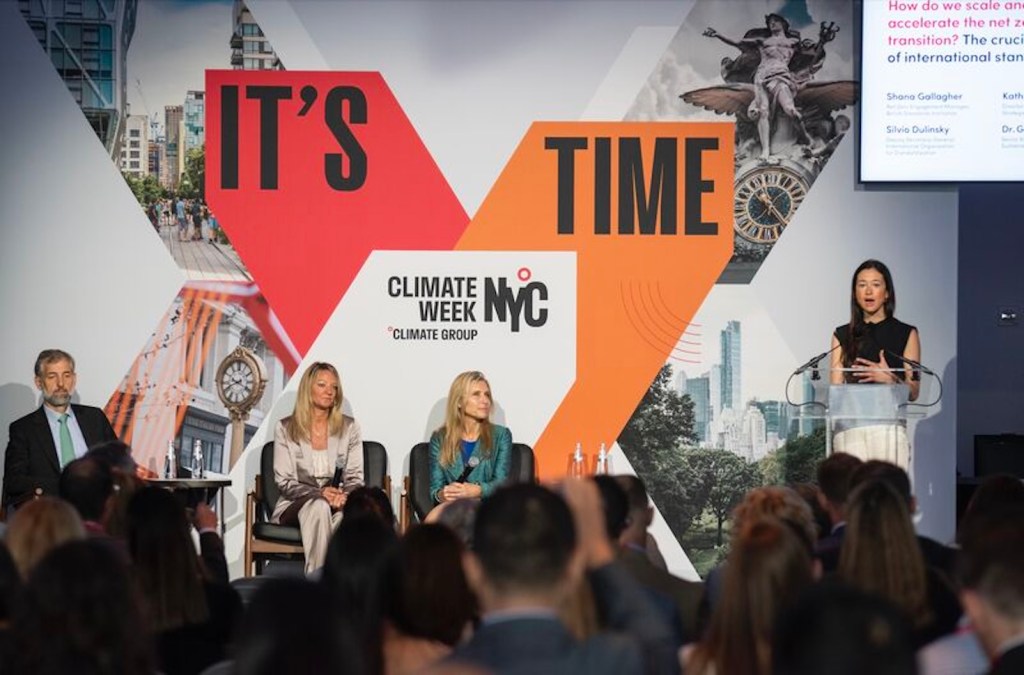
The International Organization for Standardization (ISO) has published the consultation draft of a new, independently verifiable standard for corporations that make net-zero emissions commitments.
The ISO Net Zero Aligned Organizations Standard (ISO 14060) started life as loose guidelines shaped by more than 1,200 stakeholders from civil society and the corporate world, including Amazon, FedEx,Google, Intel, Mars, McDonald’s and Meta.
The 91-page draft outlines processes that companies should use to develop, implement and communicate their strategies for reducing their greenhouse gas emissions to net zero, as outlined in the Paris Agreement.
The standard builds on ISO’s existing suite of rules for quantifying and reporting on emissions, many of which are referenced along with widely used standards and guidance from other organizations, including the Science Based Targets initiative’s new corporate net-zero recommendations.
“The big proposition of ISO is scalability,” said Noelia Garcia Nebra, head of sustainability and partnerships at ISO. “The standard is for any organization, any size, any sector. In that sense, it is agnostic. Anyone can apply it.”
The backstory
ISO is a respected organization that has produced more than 25,000 international standards that are used by companies for everything from food safety to information security.
It’s also a close — and getting closer — partner of the carbon accounting rules maker Greenhouse Gas Protocol: The two standards organizations aim to combine their existing guidance into a new set of co-branded standards, a relationship disclosed in late 2025.
ISO’s net-zero draft will be circulated for 12 weeks, during which its members — more than 170 national standards bodies — will collect feedback. The British Standards Institution, the UK National Standards and Colombia’s national standards body, ICONTEC, are responsible for the process.
ISO hopes to reach consensus by September, but the timeline is difficult to predict because member organizations will be obligated to address every comment, Garcia Nebra said.
What it is
The standard’s focus is the commitment and governance necessary to achieve net zero, and toward that end, it will require companies to publish a detailed transition plan within two years of setting a target. That roadmap must include, among other things:
- “Reliable, quantified data” justifying the suggestions
- Processes for integrating the strategy into the company’s core business model
- Timelines for the actions the company plans to take
- Information about how progress will be measured, reported and verified
- Details about any planned use of carbon credits
The draft also includes a section specific to net-zero strategies for small and midsize enterprises, which is intended to simplify the process for them and reflect the unique challenges they face.
For example, smaller companies are more likely to grow significantly, making absolute carbon emissions cuts more difficult. They’re also less likely to have access to detailed data or the same reduction options as large companies, ISO’s standard suggests.
To reflect those obstacles, small and midsize enterprises can opt to concentrate on interim targets or on prioritizing their most significant emissions categories. They also can decide to report on progress every three years, rather than annually.
“We do hope that through this ISO standard, we can reach out to other companies that have not been thinking about it yet,” Garcia Nebra said.
On the flip side, ISO encourages companies with “higher technical and economic capacity” to act more ambitiously. That might include phasing out products and services that could “lock-in the use of fossil fuels” or to aim for an operational state “in which the organization’s annual CO2 removals exceed its GHG emissions.”

Subscribe to Trellis Briefing