Riding the blue wave: Why corporate advocacy is safe again
Clean energy has been decisively reframed in the political conversation following the results of the recent U.S. midterm election results. Read More
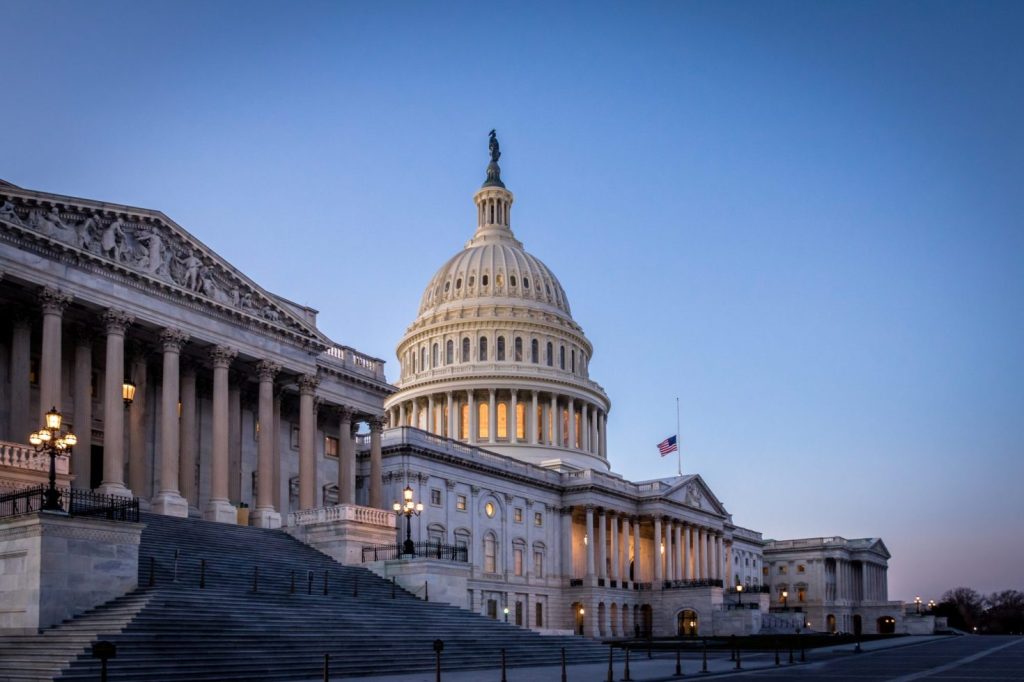
- The midterm election results represent a policy window for sustainability professionals to drive real change.
- Backing the Bipartisan American Affordability and Jobs Act would ease transmission siting and protect issued federal permits from arbitrary revocation.
- Joining coalitions, signing letters, joining an amicus brief and attending convenings are all easy first steps.
The opinions expressed here by Trellis expert contributors are their own, not those of Trellis or its editors.
The U.S. midterm election results have provided a defining moment for corporate sustainability leaders. We’ve survived serious headwinds over the past two years — against clean energy projects, climate goals and the very notion that businesses should care about the environment. Now, we have a major tailwind.
Clean energy has been decisively reframed in the political conversation, and I’m seeing renewed interest from countless business leaders in constructive policy advocacy.
Responsible business voices are crucial to making that a reality. We have momentum, majorities and a mandate for change. It is a real chance to curb actions from the current administration and to build a more affordable energy system for businesses across the economy.
Companies should engage with lawmakers on both sides of the aisle and make their individual and collective interests heard. I offer four opportunities below:
Bipartisan permitting reform
The Bipartisan American Affordability and Jobs Act (BAAJA) offers an immediate opportunity for direct engagement on permitting and transmission reform. To quote Tom Steyer, the bill is “the best chance we’ve had to build clean energy at scale.”
The legislation would make important changes to the siting and permitting processes for long-distance transmission lines, making it easier to build the infrastructure we need to transport clean energy around the country. It also includes provisions that would ensure federal permits cannot be arbitrarily revoked once they are issued, which would put a stop to the administration’s ongoing attacks on wind and solar projects.
It’s important that lawmakers pass it before the end of the year because waiting until the next Congress would effectively restart the negotiations. We can’t afford to keep waiting while projects keep getting stuck in bureaucratic and political fights.
Companies have joined Ceres for more than 70 meetings on Capitol Hill this fall to support the bill. More than 80 organizations also joined Ceres and other sustainability advocates in a letter thanking congressional negotiators for their work on the legislation.
We still have some concerns about the bill’s proposed changes to key environmental laws. While the bill has passed the Senate, we anticipate that there will be opportunities to improve its impact and prospects as it moves to the House in the weeks to come.
Meet the new members on Capitol Hill
The 120th Congress will be a more favorable environment to build a robust, clean economy. Nothing beats meeting directly with lawmakers to tell them your individual needs, challenges and vision.
Responsible businesses were key voices when Congress enacted sweeping investments in clean energy, electric vehicle (EV) infrastructure and clean manufacturing in 2021 and 2022. Although many have since been repealed, they still spurred some $185 billion in private investment in clean energy manufacturing, and the vast majority of those projects are still moving forward. More recently, they have helped build bipartisan support for the permitting and transmission provisions in BAAJA, as well as novel trade policies like carbon tariffs that could capitalize on America’s clean manufacturing advantage.
Ceres’ signature annual advocacy day, LEAD on a Clean Economy, is a big opportunity to hit Capitol Hill in person. As always, our goal is to build a bipartisan coalition to pass and enshrine durable policy wins. We’ll be talking to members of Congress about five critical areas:
- New clean energy policy and programs using tax credits, federal appropriations and engagement with the Federal Energy Regulatory Commission
- Leveraging data centers to pay for grid upgrades and clean energy deployment
- Trade policies that reward clean manufacturing and industrial products
- Preserving investors’ ability to consider climate and environmental risk factors as part of their decision-making
- Advocating for transportation and domestic battery policy to drive EV adoption
Across hundreds of meetings at our annual advocacy days, by far the most popular person in any congressional office is a business leader operating in that member’s state or district. Lawmakers and their staff love to hear about jobs and opportunities in the places they represent. Telling them about why a particular energy project matters to your operations is the most effective way to direct their attention to the policy issue at hand. It also helps them bring the clean energy message home to voters.
With dozens of new lawmakers in both the House and Senate, now is the time to explain why clean energy and a modern grid matter to you. Joining like-minded companies across sectors to get the message across is both effective and low risk.
States are engines of innovation
State energy policy is hugely important and ripe for sustainability leaders to maximize their impact. Newly elected state legislators will be thrust into complex, parochial debates about the electric grid. By explaining how that policy impacts operations, business leaders can help them see the bigger picture.
Electric transmission is the major opportunity here. It’s the key that unlocks a more affordable grid over the long term. Business leaders can join advocacy efforts at the state level to ensure policymakers know that expanding the transmission system is critical for reliability, affordability and the broader economy. They need to hear from diverse businesses like ski resorts, retailers and manufacturers that increased transmission will benefit all sectors.
More than 25 companies and business organizations have signed a letter asking policymakers to enact commonsense solutions to modernize the electric grid, accelerate clean energy deployment and expand energy efficiency programs. California, Virginia, Illinois and others have made some of these ideas a reality over the past year, and more will follow suit when legislatures convene in 2027.
In Georgia, which just elected new leaders across state government, Ceres is bringing together companies and policymakers for a discussion on electricity load growth and sustainability. We’re partnering with Siemens and Advanced Energy United for a similar event in Pennsylvania featuring the governor’s staff and the chair of a key committee in the legislature. Showing up to events like these is a great first step to having your voice heard.
Support regulatory certainty
Companies need stability and regulatory certainty to invest. They should stand up for it, as EPA seeks to roll back its 2009 Endangerment Finding, which underpins all of the agency’s climate pollution standards. An easy way for companies to get involved is to join the business amicus brief Ceres and EDF are joining in the ongoing lawsuit against EPA’s rollback.
Being a “friend of the court” is a simple way to join a group of peer companies and investors who understand the financial and business risk of climate change and the need for EPA’s authority to address it.
For nearly 20 years, forward-thinking companies have built a movement for responsible businesses to create a more sustainable world. If the last two years have taught us anything, it is that our movement needs supportive public policy and the rule of law.
In the coming months, smart companies will ride new waves of advocacy opportunities and abandon the undertow of despair.