Leaving value on the table: Why sustainability leaders must look beyond carbon to water

What if carbon is only half of the story? Upstream family forests could hold the key to high-return water source protection. Read More
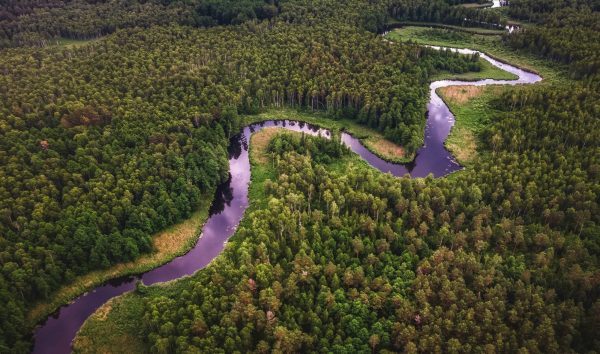
Anyone following the voluntary carbon market knows that credits from forest restoration and management take up the lion’s share of corporate sustainability portfolios.
However, carbon is only half of the story. When it comes to the financial potential of carbon co-benefits provided by forests, sustainability leaders are leaving massive value on the table.
Family-owned forests cover nearly 37 percent of U.S. woodlands, and over 60 percent of forests in the Eastern U.S., making them the largest single group of forest owners in the country.
At American Forest Foundation, we have spent years unlocking the massive climate potential of family forests by empowering small landowners, who historically have not had a feasible pathway to participate in the carbon market, to take meaningful conservation action through our Family Forest Carbon Program (FFCP).
By aggregating the carbon impact of family forests, our program is on track to remove 3.5 million metric tonnes of CO2 equivalent from the atmosphere over the next 30 years.
However, as in the rest of the market, we are only beginning to quantify the immense financial value and risk mitigation provided by the broader ecosystem services that forests offer. From purifying drinking water and air to safeguarding biodiversity, managing private forests for long-term health provides profound benefits beyond carbon sequestration.
Among these vast benefits, water stands apart. Water source protection offers the most urgent and immediate bridge between upstream forest stewardship and downstream economic value. To unlock these un-monetized water benefits at scale, we must first recognize our working woodlands for what they truly are: critical natural infrastructure.
Forests as high-return water infrastructure
One in five companies already reports significant water-related risks in their supply chains showing that water scarcity is no longer just a sustainability issue, but an urgent operational threat.
Corporations must look upstream to source water protection as the most cost-effective entry point for securing resources and supply chains. Protecting private working woodlands enables investors to convert un-monetized ecosystem services into verifiable, high-impact climate and water assets.
Limiting our strategy to carbon leaves billions in un-monetized ecosystem value on the table, subjecting their protection to trends in the carbon market. On the other hand, diversifying funding into water quality, habitat protection and forest resilience creates a multi-revenue conservation model that keeps working forests solvent and sustainable nature-based infrastructure for generations to come.
Our recent report with the Sorenson Impact Institute at the University of Utah evaluated more than 1,600 family forests across over 215,000 acres. It quantifies potential non-carbon returns across water security, public health, rural economic output and biodiversity.
The water findings alone demand immediate cross-sector attention:
Family forests filter and protect priority drinking water
Ninety-one percent of FFCP-enrolled forest properties are in areas rated by the U.S. Forest Service as having “high” or “very high” importance to surface drinking water supplies. This means that private forest management is a critical investment in protecting our drinking water supply.
Family forests stabilize flow and mitigate floods
Degraded forests destabilize soils and increase runoff by up to 240 percent, escalating flash flood risks downstream. However, FFCP’s climate-smart forestry practices maintain soil stability, acting as a natural sponge that buffers corporate operations, utility infrastructure and local communities against extreme storm surges and seasonal droughts.
Family forest provide significant infrastructure savings
Healthy forests also serve as nature’s premiere filtration infrastructure. Watershed data indicates that for every 10 percent increase in forest cover, municipal water treatment costs decrease by roughly 20 percent. This means facilities operating in watersheds with over 70 percent forest cover see as much as 60 to 80 percent lower annual water treatment expenses and avoided capital repairs.
Value proposition: The case in Maryland
For example, in Maryland, 73 percent of total forestland is privately owned, with the vast majority held by families and individuals. With over 90 percent of Maryland’s land draining into the Chesapeake Bay, Maryland’s family forests act as the primary natural filter for the state’s most vital water systems, mitigating stormwater runoff and trapping sediment as well as nutrients like nitrogen and phosphorus before they reach the Bay.
If we assume that forest management in Maryland’s family forests through FFCP improves forest conditions by a conservative 10 percent over a business-as-usual scenario: Forests enrolled in FFCP would keep 35.5 million pounds of sediment, 55,000 pounds of phosphorus and 1.4 million pounds of nitrogen out of waterways annually.
If we use a conservative version of water quality credit prices developed in Maryland to value those services, this equates to nearly $70 million per year in value to downstream businesses and communities.
Moving from models to markets
Treating critical water source protection as a free byproduct of carbon finance is a missed strategic opportunity. At New York Climate Week 2026, AFF convened impact financiers, corporate sustainability leaders, and project developers to confront market realities head-on. Moving from modeled estimates to fundable water assets requires four key shifts:
Breaking down silos to build real value: Project developers like AFF need to engage corporate leaders, utility companies, municipalities, and water stewards to better understand where their priorities lie and how their investments can be best utilized.
Funding performance over promises: We need cross-sector collaborations that support outcome-based pilots that reliably quantify useful water metrics, so all stakeholders can translate upstream watershed health directly into downstream resilience.
Targeting operational risks over treatment costs: Positioning forests as flood and drought mitigation infrastructure that reduces corporate and community risk, rather than simple filtration systems, can help drive more interest from a diversity of sectors.
Aggregating source-water protection at scale: Aggregating the water benefits of small landowners and small water systems across watersheds can link upstream forest stewardship directly to measurable downstream water security at larger scales than any one property on its own.
This is where AFF comes in. The forests that safeguard our water supply depend on the small family owners who steward them, yet the financial value of these services rarely returns to them. Through the Family Forest Carbon Program (FFCP), AFF already provides the infrastructure, trust, and 20-year commitment needed to aggregate small landowners and deliver verified impact at scale.
Having built the vehicle, AFF invites corporate leaders, utilities, municipalities and impact funders to help drive the next phase of market evolution with us. Together, we can map family forest properties directly to your operational watersheds, tailor climate-smart practices to address regional risks like flooding or sediment, establish science-based measurement frameworks and co-design innovative funding pathways that connect downstream capital directly to family forest owners.
Join us in turning our shared dependence on forests into a shared investment in their future.
Connect with AFF to learn more:
- Download AFF’s Co-benefits Report & Register for our Water Webinar
- We’d like to hear from you:
- Help us build the future of water investment. We invite sustainability leaders and water pioneers to reach out to chat with our team about building the mechanisms that help upstream forest stewardship provide tangible downstream value. Reach out to our team at: ffcp_partnerships@forestfoundation.org

Subscribe to Trellis Briefing