Sustainability professionals respond to the paradox of AI
Sustainability leaders are simultaneously exhausted by AI and intensely curious about it, writes Trellis Group CEO Hana Kajimura. Read More

“If I hear ‘AI’ one more time, I’m leaving,” one chief sustainability officer announced to a room of peers at our GreenBiz conference in February.
Later that day, I attended a crowded session about how big tech companies are managing the growing demand for water and energy at data centers, along with 223 other attendees. I had to sit on the floor.
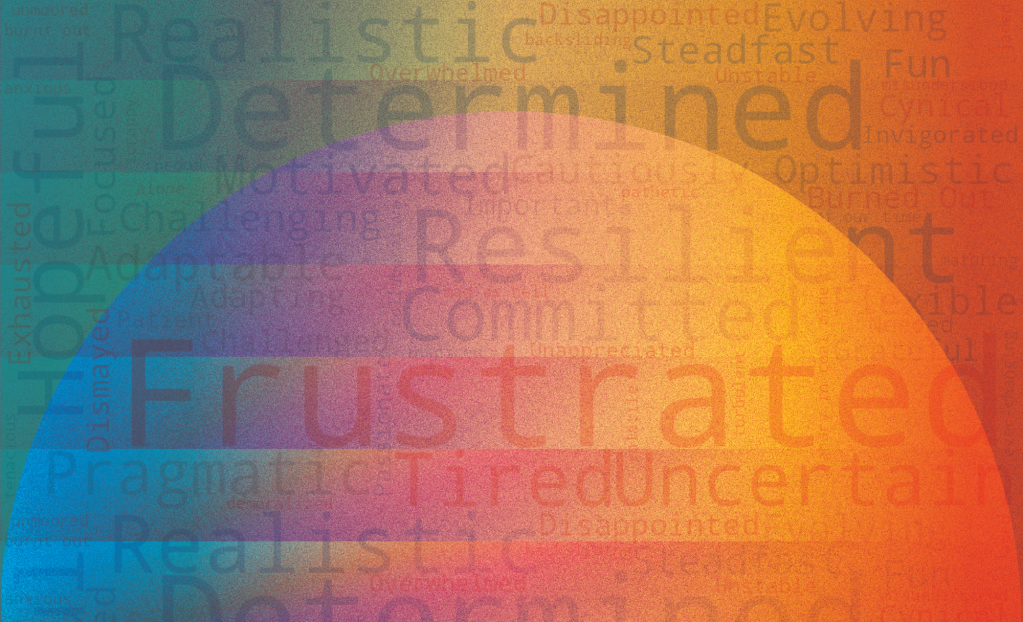
Sustainability leaders seem to be simultaneously exhausted by AI and intensely curious about it. Last month we surveyed Trellis readers to understand why, and what to do about it. They told us that they believe AI will dramatically reshape the profession, yet most have only just begun to understand how to use it. Sustainability professionals have a difficult needle to thread: how to use AI to accomplish their goals without undermining them.
Eighty-one percent of the 195 sustainability professionals who responded believe that AI will change how they do their jobs in the next 3-5 years, and the vast majority (78 percent) are already using it in their day-to-day work.
But most of the 147 written-in examples in response to “How are you using AI in your day-to-day work?” could be categorized as basic use cases to “speed up grunt work.” These words were mentioned most frequently in verbatim comments: “research” (47 times); “summarize” (28); and “email” (23). One participant put it best: “Nothing too impressive in my opinion.”
Only eight survey takers described using AI in more complex ways to accomplish tasks like greenhouse gas modeling, monitoring and reduction planning.
“I used Gemini yesterday to estimate the emissions reductions if our dev team migrated a certain volume of public cloud load from one region with a dirtier grid to another cleaner grid,” one more advanced respondent wrote. “The analysis would’ve taken me multiple days of work, which Gemini completed in seconds.”
AI topics that sustainability leaders most want to learn about
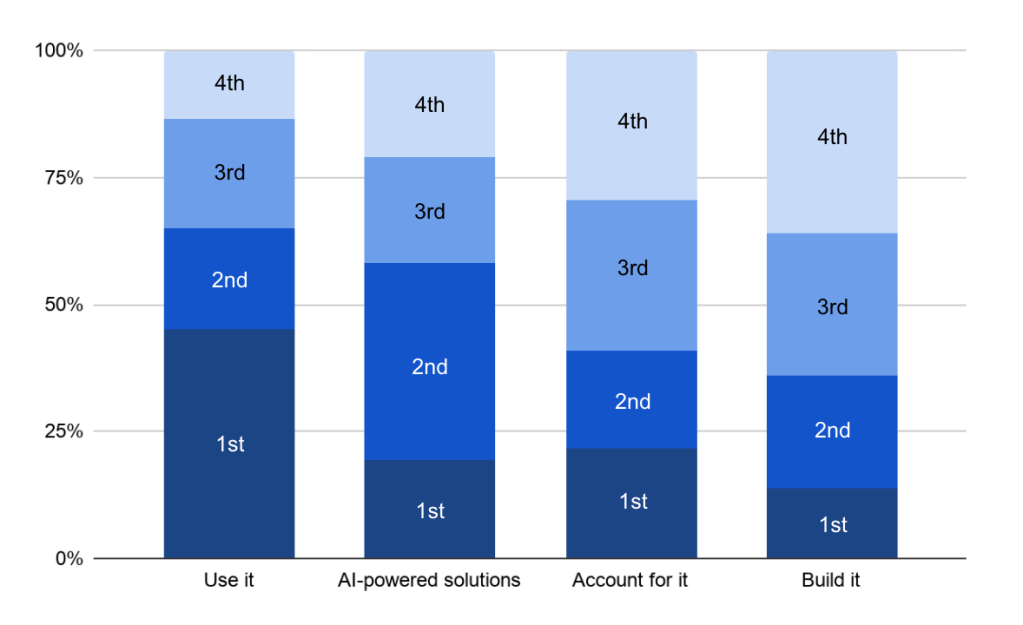
Unsurprisingly, the AI topic respondents are most interested in learning about, when given four choices (‘using it,’ ‘building it,’ ‘accounting for it’ and ‘AI-powered solutions’) is how to effectively use AI tools. Forty-five percent of respondents ranked how to use it as their top priority and expressed genuine curiosity about how others are using AI to get more done and generate more impact.
For professionals deeply motivated by the climate mission itself, there’s hope that AI might actually accelerate progress on problems that feel increasingly urgent. Thirty nine percent said that their second priority was learning how ‘AI-powered solutions’ can solve sustainability challenges like using resources more efficiently, improving supply chain transparency and forecasting emissions.
“The AI datacenter boom is doing something no climate policy has managed to do at scale: forcing massive, immediate capital into clean energy infrastructure,” one respondent wrote. “AI didn’t create the green transition, but it may be the forcing function that finally funds it at the speed and scale the climate actually needs.”
Third and fourth were building AI infrastructure in line with sustainability goals and accounting for it.
Not worth the environmental costs
While some sustainability professionals are using AI to boost productivity, others say that the marginal gain is not worth the environmental costs.
A vocal minority (22 percent of respondents) are not using AI day-to-day, or have intentionally stopped.
“When I see a need that justifies the extreme intensity of computing power and energy use, I’ll consider it,” one respondent wrote. “I haven’t seen it yet in my day-to-day.”
Regardless, AI is becoming a part of workflows as it is increasingly integrated into corporate tools.
“I’m explicitly not…using AI, but it keeps creeping in,” one respondent wrote. “I then have to correct these intrusive insertions. All of this has made me LESS productive than when I didn’t have AI’s ‘help.’”
An inherent conflict
Respondents are divided on whether AI will transform the sustainability profession for better or worse. Reacting to the statement, “Products and services using AI have more benefits than drawbacks for sustainability,” 38 percent of respondents neither agree nor disagree. More people “strongly agree” or “agree” (34 percent) than “disagree” or “strongly disagree” (28 percent).
“I am highly interested in the emerging conflict between a board’s mandate to ‘deploy AI everywhere to remain competitive’ and the chief sustainability officer’s mandate to ‘cut our carbon footprint by 30 percent by 2030,’” one respondent wrote. “AI adoption is making simultaneous compliance with ESG goals mathematically impossible for many digital enterprises.”
What’s next
We’ll continue to help sustainability executives and their companies learn how to use AI in their day-to-day to drive more positive impact, while understanding and mitigating the downside environmental risks.
Check out our recent coverage of ChatNetZero 3.0, an AI net-zero research tool that also discloses its energy use for each use, real AI prompts for sustainability pros recommended by sustainability pros, and 3 ways sustainability leaders can help tech teams manage AI’s environmental impact. Plus, how companies like Jabil and WD use AI to bolster their decarbonization agenda.
AI and sustainability will be a central theme at Trellis Impact 26 including mainstage conversations with leaders paving the way for sustainable data centers like Microsoft’s Jim Hanna and Danielle Decatur, of Cloverleaf Infrastructure, as well as the AI x Sustainability Program including focused sessions like how AI is changing investor analysis of corporate disclosure and how to use AI to tackle supply-chain deforestation.
Have an exciting AI use case you want to tell me about? Write me at hello@trellis.net.

Subscribe to Trellis Briefing