Tesla sets net-zero target for first time
The company continues to criticize conventional target-setting frameworks, which it says favor incumbent polluters. Read More
- Tesla has committed to reaching net zero across its value chain by 2040.
- The company has not set a near-term target or published a climate transition action plan.
- Tesla’s success in helping consumers avoid emissions is not recognized by existing target-setting frameworks, the company argues.
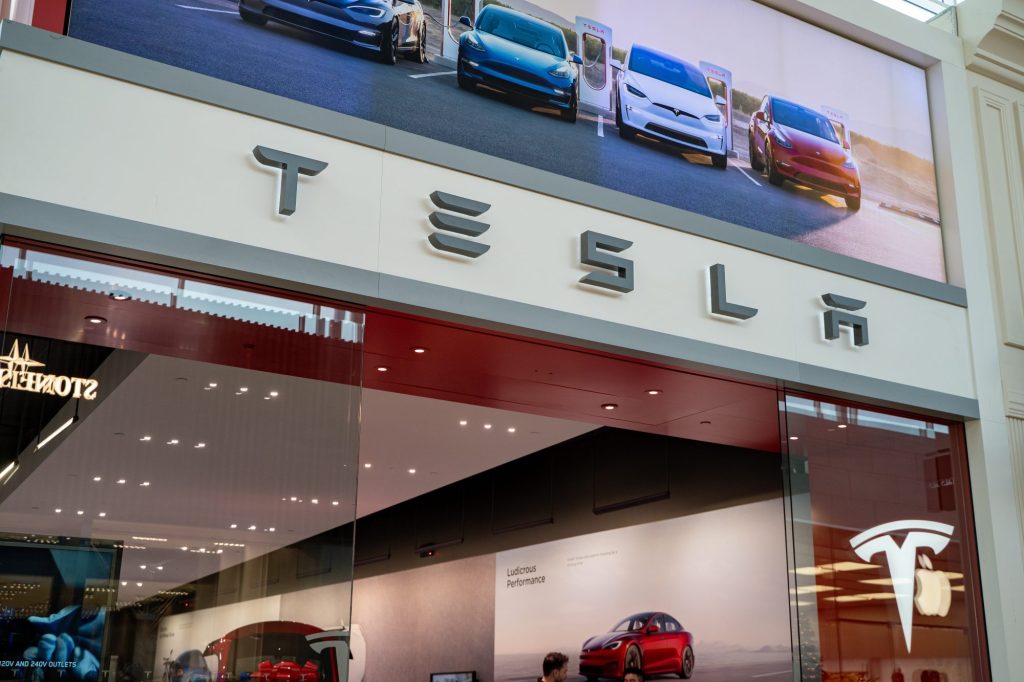
Tesla has pledged to reach net zero by 2040, the first time the world’s most valuable automaker has made a time-bound, company-wide emissions commitment.
The target is the latest move in a steady shift in climate strategy for the company, which also sells solar panels and batteries. Tesla has historically touted the greenhouse gases its products help avoid rather than its efforts to cut company emissions. But in recent years it has done more to disclose emissions and begun to discuss reduction plans.
Its net-zero commitment, made earlier this month in Tesla’s annual Impact Report, adds to two existing pledges: to use 100 percent renewable electricity in its operations “well before” zeroing out its emissions, and to continue to match the load from its Supercharger network with renewables. The company previously said it planned on reaching net zero, but had not set a deadline.
The company did not provide a detailed breakdown of how it plans on reducing emissions or set a near-term emissions goal, which many experts consider an essential component of a net-zero strategy. Its Scope 1 emissions (from operations) have grown 43 percent since 2023, while its Scope 2 (purchased electricity) number is up 80 percent. Scope 3 emissions, which include purchased materials and at 56 million metric tons of carbon dioxide equivalent (tCO2e) are by far the largest source, are 14 percent higher.
New direction
Still, the 2040 pledge, together with a new commitment to align its reporting with widely used rules from the IFRS Foundation, is significant given the company’s previous criticisms of corporate climate action. Founder Elon Musk once described corporate ESG as the “Devil Incarnate” and the automaker has previously dismissed target-setting frameworks, which it says favor incumbent polluters. Tesla did not include Scope 3 emissions in its annual report until 2022 and continues to decline to disclose to CDP, a prominent data-sharing platform.
Tesla argues instead that its environmental benefits — which Musk has described as greater than those of “all other companies combined” — rest on its products.
The automaker estimates that each of its vehicles avoids an average of 32 tCO2e over a lifetime of use, and that all of its products combined avoided close to 37 million tCO2e in 2025, more than half of its total emissions for the year. In assessments that look at products as well as emissions, Tesla does very well: The company topped the 2025 automaker ratings from the International Council on Clean Transportation, for example.
Transition targets
“We agree that traditional target-setting frameworks centred on absolute emission reduction can disadvantage innovators entering a market while favouring incumbents,” said Frederic Hans, a senior climate policy advisor at the NewClimate Institute.
But a focus on vehicle sales alone is insufficient, Hans said: The institute also pushes automakers to set “transition targets” for production and purchase of low-carbon batteries, steel and aluminum. In a 2025 study of five major manufacturers, NewClimate found that only Ford and General Motors had set targets for steel and aluminum, and none had done so for batteries. Tesla’s recent report does not include such targets.
Sector trends
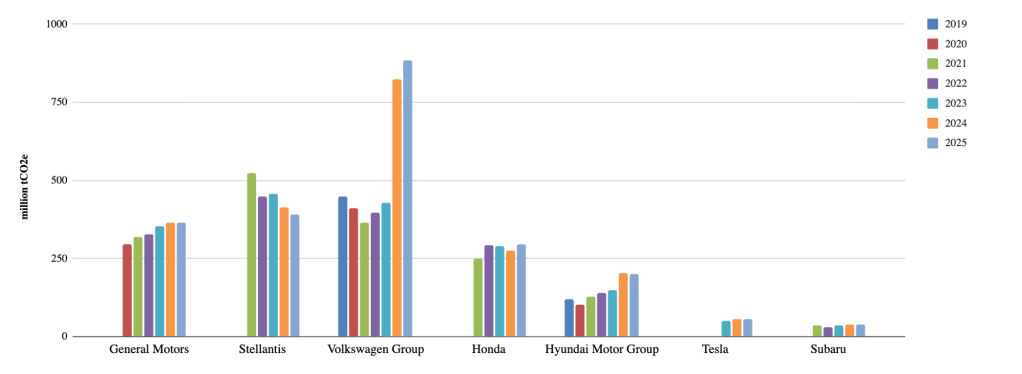
Comparisons between companies are complicated by differences in sales volume and territories, but data shared with Trellis by DitchCarbon, a specialist Scope 3 platform, shows that Tesla is far from alone in experiencing rising value-chain emissions.
Automaker Scope 3 emissions, 2019-2025
Tesla did not respond to a request for comment on its new target or climate strategy.

Subscribe to Trellis Briefing