The top 3 threats for people globally
Data security, dangers of AI and social/political division didn't top the list. Read More
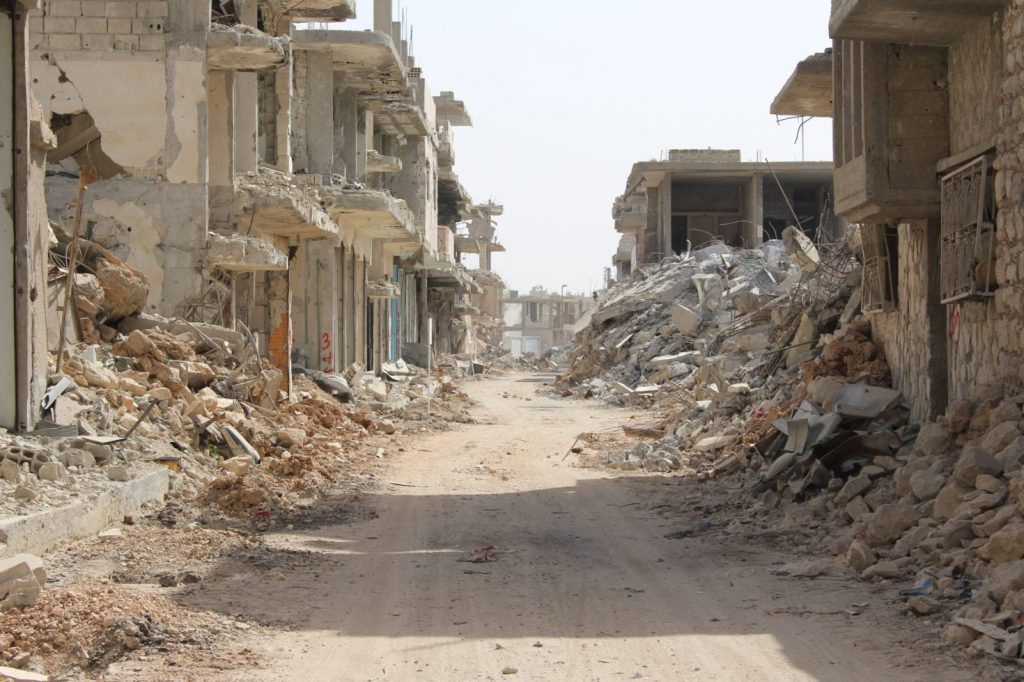
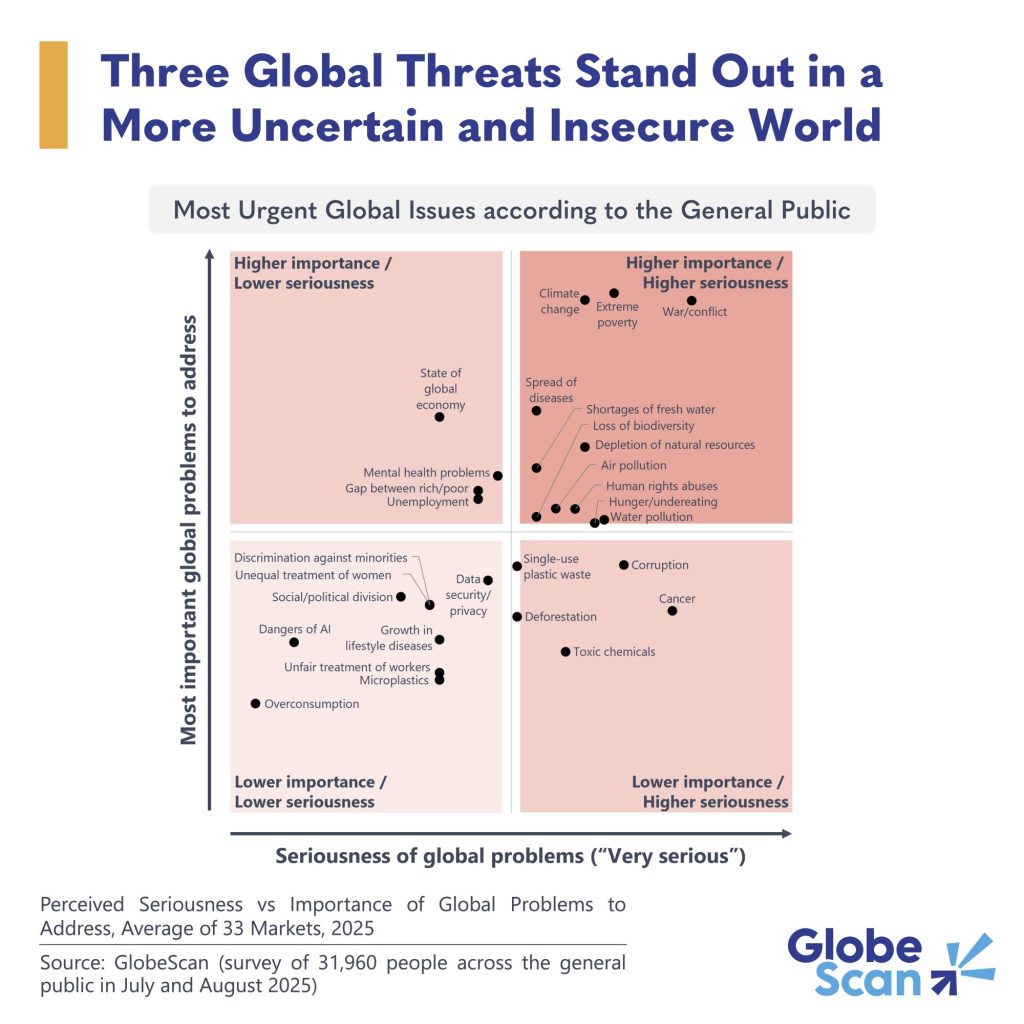
- War and conflict, climate change, and extreme poverty stand apart from all other global challenges as the issues people consistently rate as very serious and among the most urgent to address.
- The finding reflects a broader climate of insecurity around safety, environmental stability and basic economic well-being.
- Organizations that respond to these threats with empathy, relevance and practical support are more likely to build trust and engagement.
Recent insights from Trellis data partner GlobeScan show that when people in the general public across 33 markets were asked to assess the seriousness of global problems and which ones most urgently need to be addressed, a clear pattern emerged: war and conflict, climate change and extreme poverty form a distinct top tier of perceived urgency.
Together, these concerns capture a broader sense of insecurity spanning safety, environmental stability and basic economic well-being, reflecting a world where multiple and interconnected existential threats converge.
Other challenges including public health risks, governance issues and environmental problems beyond climate change are still widely recognized as serious, but fewer people place them among the most urgent priorities. What distinguishes war, climate change and extreme poverty is that they combine highly-perceived severity with a strong sense of urgency, elevating them above all other concerns. While the data don’t show that the general public explicitly links these dynamics, the simultaneous prioritization of these issues reflects the broader global context shaping public anxiety and feelings of insecurity.
Across regions, these three challenges surface consistently. War and conflict tends to rank highest in Europe, while climate change often leads in parts of Asia-Pacific. Extreme poverty is salient in North America as well as in many African, Latin American and Middle Eastern markets. Yet in every region, all three appear near the top of the general public’s priorities. This shared pattern underscores a rare level of global convergence around these threats.
What this means
These top issues define the context in which people judge leadership today. They shape how individuals interpret responsibility, credibility and intent in a world marked by persistent uncertainty and instability. Organizations that acknowledge this lived uncertainty and respond with empathy, relevance and practical support are better positioned to build trust and sustain engagement. In doing so, they can demonstrate that their actions and communications are grounded in the realities people face, thereby strengthening trust and engagement in a volatile and complex world.
Based on a survey of nearly 32,000 people across 33 markets conducted July — August 2025.
Subscribe to Trellis Briefing