No more ‘who shouts the loudest’: How Aldi decided where to spend on sustainability
To help it prioritize, the European retailer put a dollar value on hundreds of potential sustainability initiatives. Read More
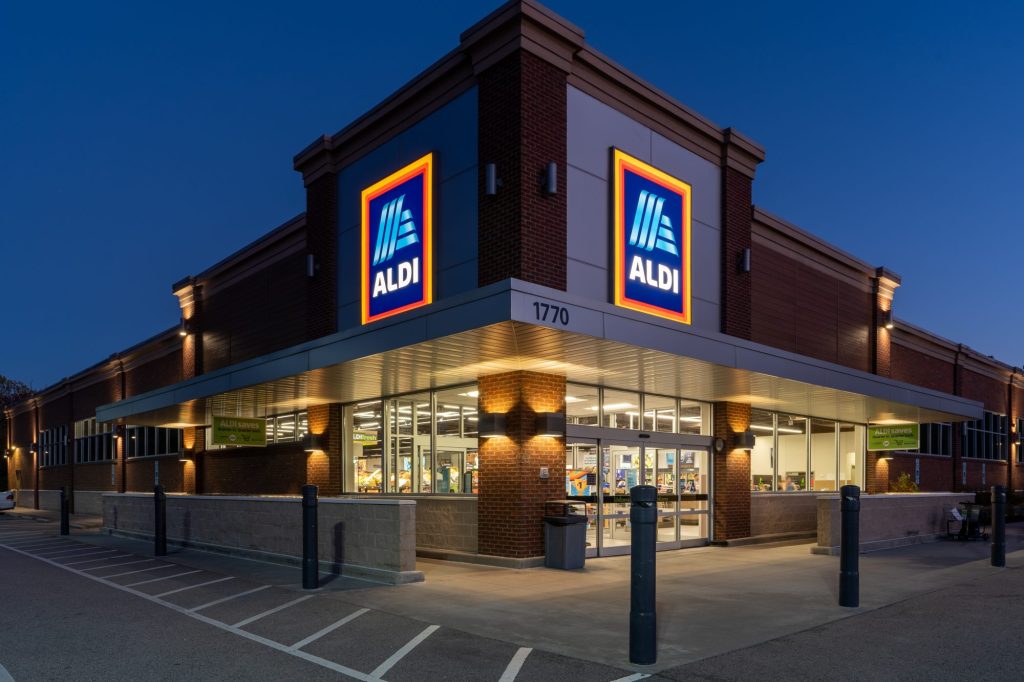
- Aldi Süd’s most recent emissions data shows the company is tracking well behind its Scope 3 goal.
- The retailer quantified and compared the likely environmental and social impacts of initiatives in meat, dairy and other key commodities.
- Country-level teams inherit group-level targets and execute plans according to local conditions.
Supermarket chain Aldi Süd is known as a sustainability leader, in part through its decision to hold tight to its emissions reduction targets even as it pursues ambitious growth plans in the U.S. and U.K.
What’s less clear is whether it can meet those climate goals. The Germany-based business, which operates more than 7,500 stores in 11 countries, has not published a full sustainability report in two years. Its most recent data, for 2023, put Aldi’s largest source of emissions — primarily from agricultural activities — at 39 percent above baseline. The company’s goal of a 30 percent reduction by 2030 looks extremely challenging.
Yet the retailer is sticking with its pledges, which were validated by the Science Based Targets initiative (SBTi) in 2024. Trellis asked Thomas Udesen, Aldi’s group chief commercial officer, how he plans to meet those end-of-decade goals.
Aldi’s prioritization process
In 2023, 84 percent of Aldi’s footprint of 96 million metric tons of carbon dioxide equivalent came from products it purchased. Land-based emissions, including from agriculture and deforestation, made up two-thirds of that total. Alongside its goal for that sector, the retailer has also committed to a 25 percent cut in other value-chain emissions between 2022 and 2030. Emissions in this area were down 7 percent in 2023.
Aldi’s decision to pause publication of its sustainability data is due in part to a prioritization process, launched in 2025, designed to identify areas where the company could use its scale, resources and influence to greatest impact.
The company looked at hundreds of existing and potential sustainability activities in five priority supply chains: coffee, cocoa, dairy, beef and fruit and vegetables. Wherever possible, the team assigned a monetary value to the expected environmental and social impacts of each approach. Those values provided a consistent measure the team then used to compare activities against each other, and with the investment required. Broader strategic factors, including the potential of the approach to scale, were also considered.
Udesen contrasted this “disciplined” prioritization with more conventional approaches to creating a portfolio of activities, which he said are sometimes based on “who shouts the loudest.” The result was a list of activities agreed upon by the global leadership team in March. “Now we are moving from ideation and planning into genuine execution,” Udesen added. That includes the release of new sustainability data, slated for next fall.
How Aldi is executing
Aldi is unusual in that 90 percent of its stock consists of in-house brands. This gives the company a direct relationship with a large number of producers it can work with directly on sustainability programs. But that doesn’t mean the work can be centralized: Because so much of its stock is sourced in-country, and is often unique to specific country markets, much of it has to take place at the local level.
The same goes for targets. Local chief commercial officers inherit country-level goals and are responsible for the strategies used to hit them, but Udesen avoided setting overly detailed goals for each country. “If you’re too detailed,” he argued, “you end up with a bureaucratic monster. People will spend more time calculating figures rather than picking up the phone and going to farms.”
The result is a slew of local projects across the five key supply chains. Earlier this month, for instance, the company announced a seven-figure investment in tackling emission hotspots at farm projects in Germany and the Netherlands, including manure, fertilizer and diesel consumption. In other areas, the team identified collective action as the more impactful approach. The company was one of 10 businesses that contributed an initial $32 million to water conservation in the Colorado River Basin.
One strategy Aldi will not pursue is reducing the fraction of animal protein it sells. Some of its rivals, including Lidl, have set targets for shifting sales away from animal products and towards plant-based alternatives — an approach that environmental groups praise for its emission-reducing potential. Customers would go to rivals if Aldi did the same, Udesen predicted. “Then all our great ideas of having a positive impact through scale will vanish.”
Long-term value
Some of the costs of these strategies will be substantial, but Udesen tries to look at the spending as investments that will improve future performance by making supply chains more resilient to climate change. A lot of the backpedaling on climate commitments, he added, is due to a failure to recognize the need for the kind of long-term investments other industries take for granted. “If you are a train company, you will not be surprised that you need to spend hundreds of millions on putting tracks out and maintaining those tracks,” he said. “Otherwise, you’re just simply not in business, right?”

Subscribe to Trellis Briefing