Starbucks merges sustainability and social impact with latest layoffs
The coffee retailer’s chief sustainability officer, Marika McCauley Sine, was among 300 employees across the company whose positions were affected, sources said. Read More
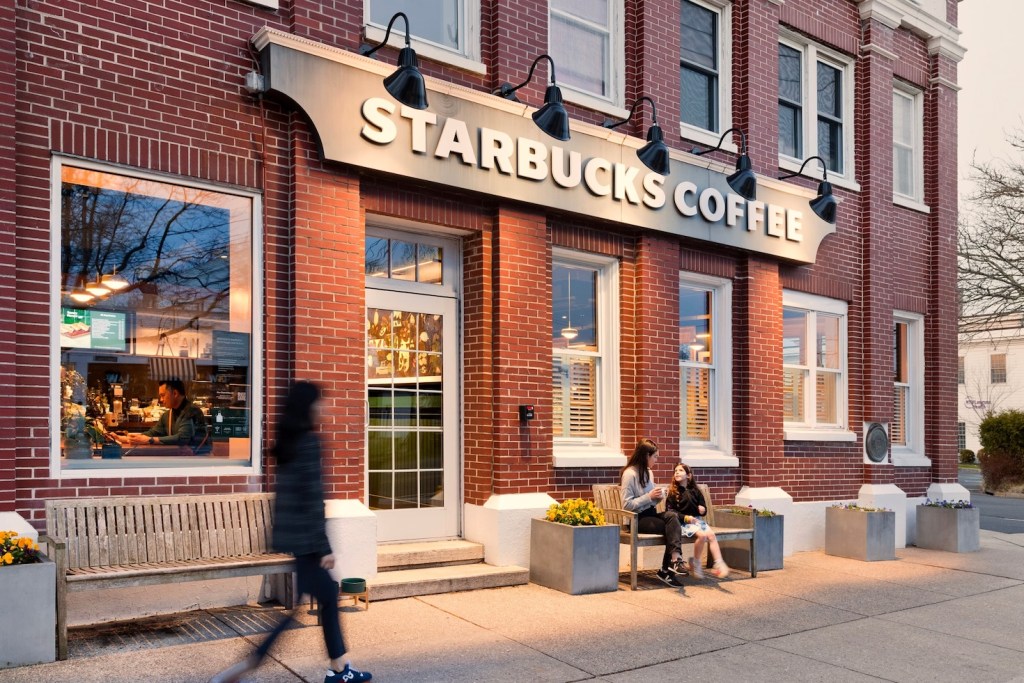
- Starbucks has cut more than 2,300 corporate and administrative positions since September 2024.
- The company’s chief social impact officer takes on responsibility for remaining sustainability functions.
- Starbucks hasn’t published a global impact report in 2026; it usually does so by April.
Starbucks’ chief sustainability officer, Marika McCauley Sine, and the manager heading its reusable packaging strategy, Chris McFarlane, were among more than 300 employees whose positions were affected by the coffee retailer’s latest job cuts announced in mid-May, said sources familiar with the situation who asked not to be named.
Remaining corporate sustainability team members now report to Chief Sustainability and Social Impact Officer Kelly Goodejohn, a 20-year veteran of Starbucks who has worked on coffee sourcing strategy and also leads Starbucks’ foundation. Goodejohn previously worked on social impact and supply chain issues for Nordstrom and Eddie Bauer.
“We’re bringing sustainability and social impact under one leader because — in our coffeehouses and in coffee-growing communities — the work goes hand in hand,” said a Starbucks spokesperson.
Starbucks has cut approximately 2,300 corporate and administrative positions since CEO Brian Niccol introduced a wide-ranging financial turnaround plan in September 2024, and every cross-company support function has been impacted as part of the downsizing over the past 18 months.
Starbucks’ central sustainability team and those responsible for ethical sourcing strategies have been hit hard by the ongoing layoffs as the company prioritizes profitability, said former global coffee strategist Katie Herod in a LinkedIn post. She lost her job after 13 years in the latest round of cuts.
“At the time, there was no other company like it,” Herod wrote, describing her tenure. “A Fortune 500 company that lived its mission and values so overtly it almost felt like a cult. Leaders spoke openly about humanity, dignity, sustainability and community — and then actually operationalized those values. … Lately, the philosophy feels different.”
Brief tenure
McCauley Sine, a former Mars executive, joined Starbucks in November 2024 to take over from the company’s first chief sustainability officer, Michael Kobori, who led efforts to operationalize its 2020 commitment to cut its greenhouse gas emissions, water consumption and waste in half by 2030.
Starbucks has struggled to deliver on that promise, which it codified with science-based targets in March 2021. Its carbon footprint grew 3 percent between 2019 and 2024: emissions related to dairy milk and coffee were the biggest culprits, according to an analysis for our Chasing Net Zero series. That’s the last year for which public data is available. Starbucks hasn’t published a global impact report in 2026; it usually does so by April.
Starbucks had said little publicly about its emissions reduction plans since McCauley Sine took over, but it has continued to tout its work on plastics recycling. The company has been a big funder and proponent of reusable cup and packaging initiatives for the past five years, an effort spearheaded by McFarlane.
As of June 18, both McCauley Sine’s and McFarlane’s LinkedIn profiles still list them as employed by Starbucks. The company’s latest job cuts will begin to take effect starting on July 17, according to a state regulatory filing that lists the affected positions.

Subscribe to Trellis Briefing