Why everyone is talking about this superpollutant at New York Climate Week

A potent greenhouse gas, a proven fix, and a business opportunity: why N2O is this year's superpollutant to watch. Read More
Two years ago, “superpollutant” was a word heard mostly at technical conferences. Today, they’re a primary target for corporate action.
In March, for instance, a business-led coalition announced a $100 million global funding effort to cut superpollutants. Amazon, Google, JPMorganChase, Salesforce and Workday through 2030 as part of the Beyond Alliance Superpollutant Action Initiative.
First came methane, followed by refrigerants. Now the gas moving into the spotlight is nitrous oxide, or N₂O. Today, two trusted and credible NGOs, National Resources Defense Council (NRDC) & Institute for Governance & Sustainable Development (IGSD), announced an ‘Industrial Nitrous Oxide (N₂O) Challenge,’ calling on companies and entities to join them in a 12-month sprint to mobilize global N₂O reductions. Underscoring their announcement was the Climate and Clean Air Coalition’s (CCAC) publication of a new Briefing Note on N₂O showcasing the massive climate and human health opportunities with N₂O abatement.
Why this greenhouse gas is different
The numbers are striking, according to the CCAC’s Briefing Note, N₂O is approximately 270 times more potent for warming than CO₂. It stays in the atmosphere for roughly 120 years. And as the third-largest contributor to greenhouse-gas-driven warming since the Industrial Revolution, N₂O remains the most significant ozone-depleting substance emitted globally. And if your company makes, buys or ships anything involving nylon, polyurethane or fertilizer, N₂O already lives in your value chain, whether or not you’ve counted it.
Industrial N₂O is concentrated in a surprisingly small number of facilities cited in the CCAC Briefing Note, of the 20 to 25 adipic acid plants worldwide, about half abate N₂O today; and only about 200 of the 580 nitric acid plants do.
That concentration is a huge opportunity. We don’t need to change how a billion people farm, drive or eat. Instead, several hundred plant operators need to install equipment that already exists, an important lever within NRDC & IGSD’s N₂O abatement challenge
Here’s how it works
Picture an industrial facility that creates the chemical building blocks behind fertilizer and nylon. The production line emits nitrous oxide as a waste gas.
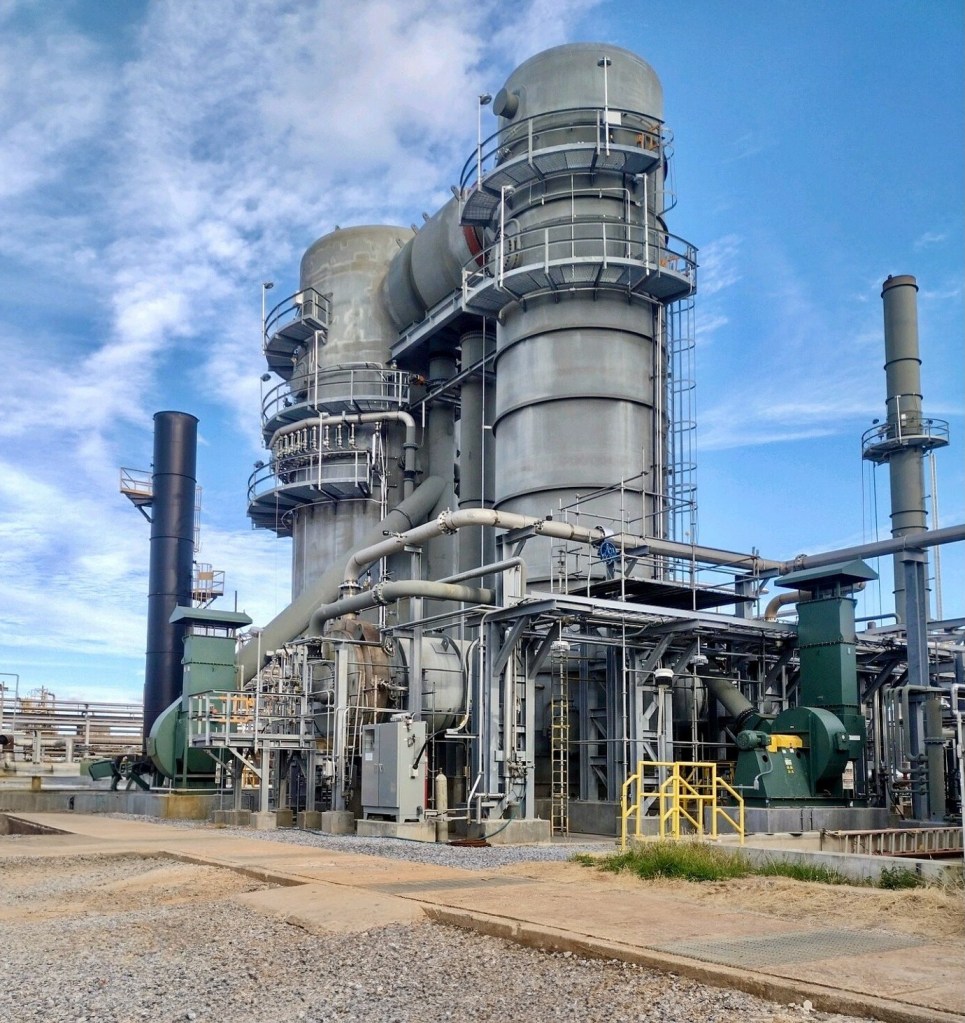
The fix: a reactor attached to existing machinery breaks apart the N₂O into harmless nitrogen and oxygen. No new plant, no new process. And since N₂O isn’t part of what the producer makes or sells, removing it doesn’t affect their product.
Roughly 60 percent of the world’s abatement potential can be captured this way, for under $10 per metric ton of CO2 equivalent, according to the CCAC Briefing Note.
The momentum is real and recent
A recent NRDC whitepaper, Heading Toward Near-Zero Industrial Nitrous Oxide Emissions, lays out the abatement pathways and the remaining gaps.
Additional experts, including President of Gigaton Strategies, Rick Duke, has been working on the crucial policy side, but have been clear that we cannot wait for others to move, per Duke’s timely point of view, shared in an article by ForeignPolicy.com
The crediting infrastructure has also caught up. The Climate Action Reserve’s adipic acid protocols, covering both the U.S. and China, only issue credits for abatement above a strict baseline, designed to reward real reductions. In 2025, the Integrity Council for the Voluntary Carbon Market approved both for the Core Carbon Principles label, the strongest integrity signal in the voluntary market.
What it means for a company that does not make chemicals
Even if you never operate a nitric acid plant, N₂O is not outside your remit.
Adipic acid is a key feedstock for nylon 6,6 and polyurethane. It’s necessary for tires, carpets, upholstery, textiles, footwear, auto parts and airbags.
Nitric acid is used mostly for fertilizer, with the rest for explosives for mining and construction.
If any of that runs through your supply chain, unabated N2O is sitting in your Scope 3, already.
What’s more: industrial N₂O is permanent and irreversible, destroyed at the source, continuously monitored and third-party verified. There is no reversal risk to disclose and no durability debate to navigate.
The size of the opportunity
Credible action to address this superpollutant can put us on a path to cut approximately 300 million tonnes of carbon dioxide equivalent per year by 2030 and 8 billion tonnes of cumulative emissions between now and 2050. That is like taking more than 80 coal-fired power plants offline or 70 million gas-powered cars off the road during that time frame.
And in this century, ambitious abatement would prevent an estimated 25,000 to 125,000 skin cancer cases each year later this century, a result of preventing N2O from further depleting the ozone layer.
Superpollutants won’t remain obscure much longer. The technology to reduce them works, the crediting is credible and companies have already started taking action. And with not one, but multiple respected and major voices sounding the alarm on industrial N₂O abatement, this is not just one to watch in 2027, but to integrate into your plans, now.

Subscribe to Trellis Briefing