Why SAP screens every AI project for ethical and environmental risks
The company is one of the few enterprise software marketers to consider greenhouse gas emissions in its AI policies. Read More
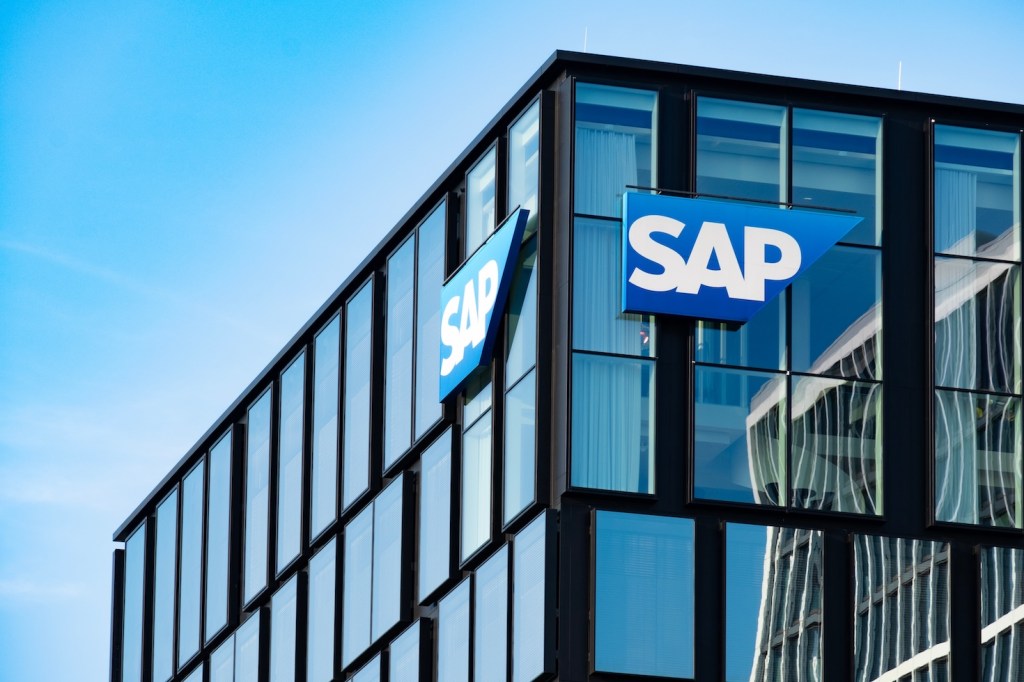
- All SAP AI projects are assessed and rated for potential risks, including increased emissions.
- SAP encourages development practices that improve efficiency and hold electricity consumption in check.
- A focus on hardware efficiency and creating smaller AI learning models reduced SAP’s average emissions per AI token by 60 percent between 2024 and the first quarter of 2025.
SAP isn’t the only enterprise software company with an official artificial intelligence ethics policy, but it’s one of the few that have included explicit criteria covering environmental considerations.
Amazon, Google and Microsoft have all published AI ethics policies, but none of them include criteria for greenhouse gas (GHG) emissions despite their ambitious clean energy and emissions reduction strategies. Salesforce, like SAP, made environmental concerns part of a policy it first published in 2024, and IBM also includes them as part of its responsible technology governance.
SAP was the first European technology company to form an AI advisory council in 2018: It published its first ethics guidelines three years later. The policy has been updated two times, most recently in June 2026.
The principles call for SAP employees to consider the company’s broader sustainability comments related to electricity use, water consumption and greenhouse gas (GHG) emissions before committing to adding AI into a product or service. AI should only be deployed “where it is relevant and delivers a tangible impact, avoiding unnecessary computational overhead,” the company advises.
“It’s about adding an additional moment to consider, Have all the possible consequences been thought of?” said Sophia Mendelsohn, chief sustainability and commercial officer at SAP.
AI is one of SAP’s most important strategic imperatives. The company plans at least $3 billion in related investments that will extend its core enterprise resource planning systems, used by close to 90 percent of Fortune 500 companies. That includes applications tailored for sustainability professionals, such as SAP Green Ledger, which uses transaction information to generate emissions metrics.
Sustainability leaders have a limited opportunity to propose AI procurement criteria that will limit impact before these services become deeply embedded, Mendelsohn said.
“There’s a lot of corporate budget available right now that is not being filtered through the lens of sustainability,” she said. “All our organizations are in a race to find efficiency and growth through AI, and sustainability has to be part of that.”
SAP has adopted development and business practices that are intended to curb its energy consumption including:
- A push to use the smallest models or tools possible for a given feature or task
- Automation that routes queries to the most efficient AI models available
- A policy to match power consumption at company-owned data centers with renewable electricity
AI impact assessment
Every new AI project must undergo an assessment before it proceeds, according to SAP’s ethics policy.
That review includes scrutiny of the anticipated environmental impact, along with privacy and data considerations, human rights issues and potential societal impacts. Projects receive a risk ranking based on the results. Those with a high risk score are escalated to SAP’s ethics steering committee for further review.
The process provides clear guardrails that are visible to SAP’s stakeholders, including customers and employees.
“SAP believes organizations will successfully deploy and adopt AI if the people inside organizations trust it enough to use it,” said Matthias Medert, global head of sustainability at SAP. “Hence, AI sustainability and AI ethics are closely interconnected questions rather than separate workstreams.”
Work in progress
Like other software companies, SAP is scrambling to gather emissions information from its partners. It has created resources to monitor and report on the impact of internal development work and infrastructure projects.
SAP’s focus on hardware efficiency and its policy of creating smaller learning models helped the company reduce average emissions per AI token — the small bits of text that make up queries — by 60 percent between 2024 and the first quarter of 2025, the company said.

Subscribe to Trellis Briefing