Why The Nature Conservancy’s chief scientist says our climate theory of change was always broken
Hope, not alarm, is what actually moves boards and employees to act. Read More
- Most corporate climate messaging stops at “the head,” piling on alarming data without giving people — or companies — an achievable next move.
- Executives who’ve put real capital toward climate targets are quietly treating missed numbers as failure, eroding belief that climate action is winnable at the moment it’s needed most.
- Hayhoe’s top lever for a Fortune 500 CEO isn’t another PPA or science-based target — it’s employee education paired with turning workers’ own ideas into the company’s thought leadership.
For two decades, a quiet assumption has propped up corporate climate strategy: Eventually, extreme weather, wildfires and other disasters will get bad enough that corporate boards, political leaders and the rest of us snap to attention and finally take on the hard work of countering, and adapting to, the climate crisis.
Katharine Hayhoe wants that assumption retired.
The atmospheric scientist, Texas Tech professor and chief scientist at The Nature Conservancy — and author of Saving Us: A Climate Scientist’s Case for Hope and Healing in a Divided World — recently joined me and my “Two Steps Forward” podcast co-host, Solitaire Townsend, to talk about why hope beats doom as a communication strategy and what that means for companies watching their own climate commitments slip.
Her clearest example of the broken theory of change is Hayhoe’s home country (although she currently lives in Texas) of Canada. It endured its worst wildfire season on record in 2023, with parts of the country burning coast to coast. The conventional prediction: The federal election nine months later would be a climate election. Instead, voters elected Mark Carney, a former UN climate finance envoy, on a platform that included scrapping the consumer carbon tax.
People didn’t get more motivated to act. They felt overwhelmed and detached because a wildfire that size made the problem feel unsolvable at an individual level.
“The behavioral science is very clear that it’s not enough to make people act,” Hayhoe told us. Worry alone, without a sense that action matters, doesn’t move people — or companies.
The efficacy problem
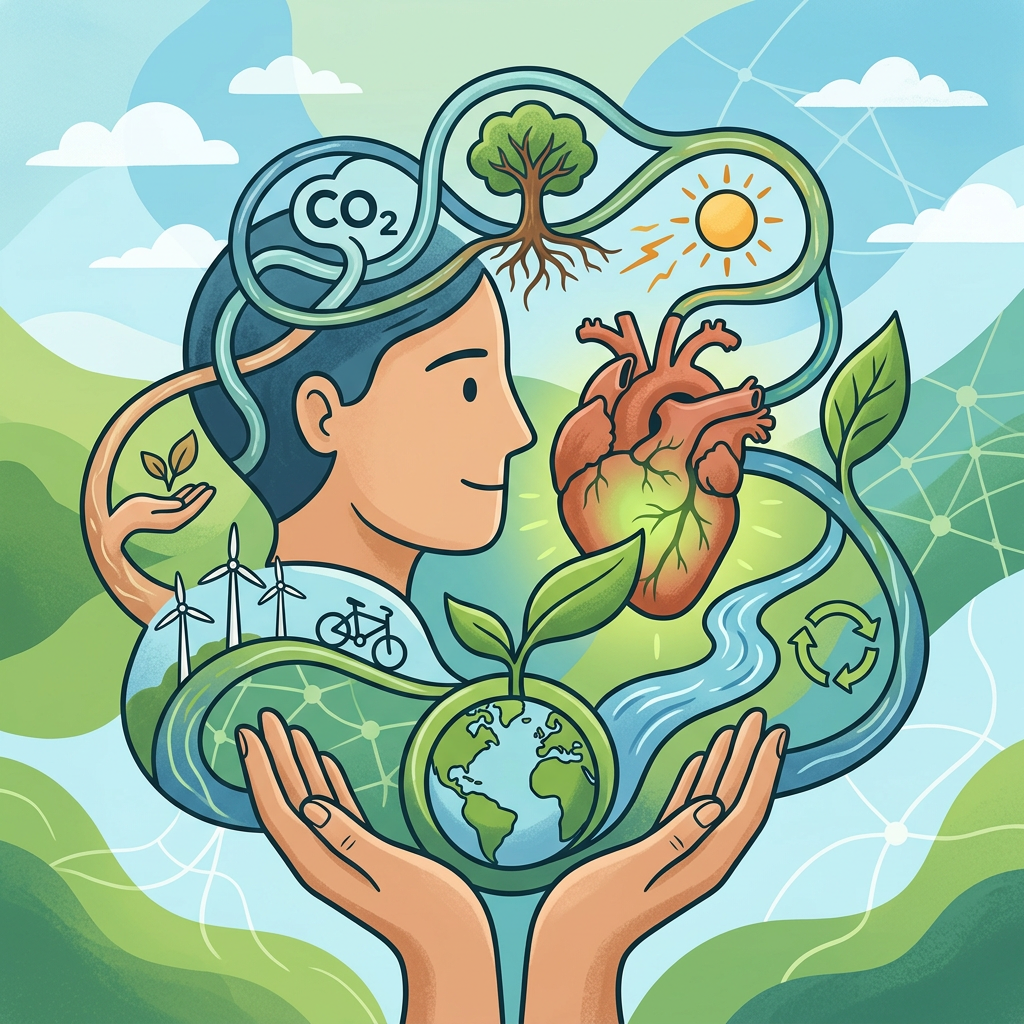
That’s the piece Hayhoe thinks sustainability teams undervalue: efficacy (rather than urgency). She frames effective climate communication as connecting three things — head (what’s happening), heart (why it matters to what you already value) and hands (what you can actually do). Most corporate climate messaging, she argued, starts and stops at the head, piling on data that raises alarm without giving people — or companies — a next move that feels achievable.
That gap shows up at the top of organizations too. Hayhoe pointed to a version of corporate finger-pointing: The sustainability officer says she’d act, but the CEO won’t let her; the CEO says the board won’t allow it; the board says shareholders won’t stand for it. Meanwhile, the executives who deployed real capital and effort toward targets view those targets as failures when the numbers slip. That, Hayhoe said, is corroding the sense among business leaders that climate action is winnable at the exact moment they need to believe it is.
No more frameworks!
Her prescription isn’t another framework from the top. Asked what one underrated lever she’d hand a Fortune 500 CEO, Hayhoe skipped over tools like renewable power-purchase agreements and science-based targets. Instead, she advocated for internal education that connects climate to what employees already do, paired with an explicit invitation for ideas from people who’ve been doing the job for years — then elevating those ideas as the company’s own thought leadership. In other words, bottom-up input paired with top-down amplification.
Hayhoe was equally candid about her own field’s failures. She’s argued, in a 2018 Science essay (and video) titled “When Facts Are Not Enough,” that scientific literacy doesn’t reliably predict climate acceptance. Identity does. And in a 2024 paper, co-authored with Christel van Eck and Lydia Messling, she pushed back on the idea that scientists should present themselves as neutral, arguing that transparency about one’s own values builds more trust than false objectivity.
She’s putting that perspective into practice through her newsletter, Talking Climate, which is aimed at training more people to be trusted messengers in their own communities. As she put it, this conversation was never going to be finished in just one podcast episode.
Two Steps Forward is available wherever you get podcasts, including on Trellis.net. Find past episodes and show notes at twostepsforwardpodcast.com.

Subscribe to Trellis Briefing