TerraCycle’s CEO wants waste other recyclers can’t handle
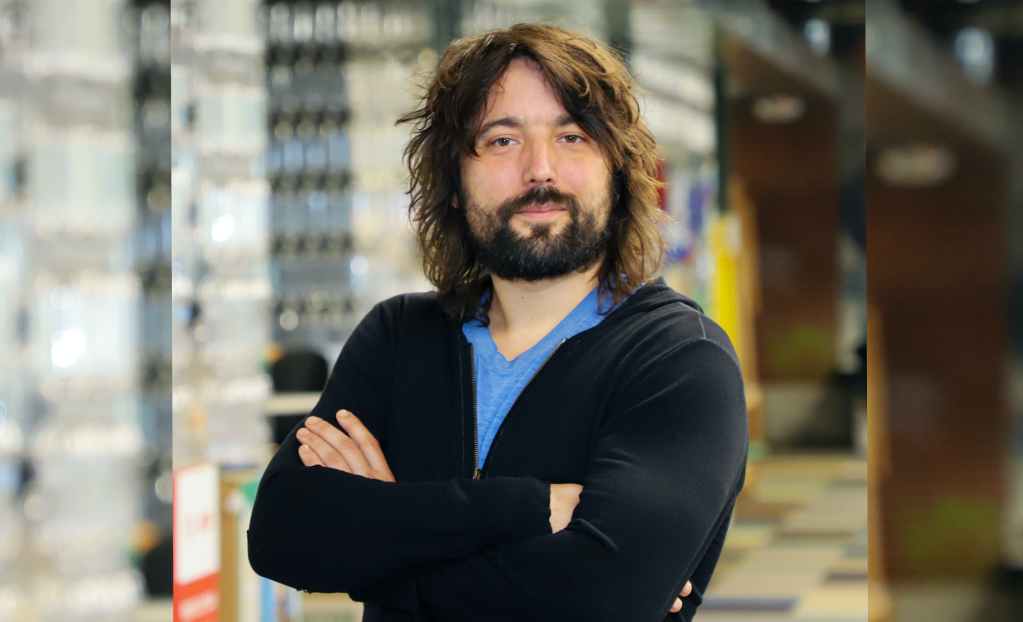
The company Tom Szaky co-founded 25 years ago as an undergraduate is raising $75 million to acquire companies that recycle difficult-to-handle or regulated materials. Read More
- TerraCycle has made three acquisitions since 2018, with a focus on recycling commercial lightbulbs.
- Categories of interest: solar panels, batteries and other forms of e-waste and heavily regulated materials from medical laboratories.
- The company plans an expansion of its Loop reusable packaging program in the U.K. by the end of 2026.
Entrepreneur Tom Szaky’s fascination with trash began at an early age; as a Hungarian immigrant in Canada, he was astounded to see televisions tossed in with other garbage.
“Isn’t it interesting that everything we possess will one day be legal property of the garbage industry,” Szaky said in the latest episode of our Climate Pioneers interview series. “It’s the only commodity or material in the world that has negative demand. In other words, we are willing to pay to get rid of it.”
Szaky co-founded TerraCycle as a Princeton undergraduate in 2001, originally to sell organic fertilizer made from worm poop. Walmart was among the retailers that signed up to carry it.
The company pivoted to waste collection in 2007, and today it generates more than $47 million in annual revenue as it recycles hard-to-handle items, from snack wrappers to toothpaste tubes to car seats.
Many consumers are familiar with the free collection programs that TerraCycle manages for companies such as Procter & Gamble, but some have criticized them as greenwashing. Partner brands tout the initiatives in sustainability reports, and TerraCycle audits progress independently to verify claims, but they are difficult to build out.
“TerraCycle offers a get-out-of-jail-free card for materials that aren’t handled by traditional facilities, and that can create the false illusion of scale,” said Calvin Lakhan, research scientist at York University and director of its circular innovation hub.
As an example, he cites TerraCycle’s marketing of its proprietary cigarette butt collection efforts, which Lakhan believes leads consumers to assume that traditional recycling facilities can handle these materials. “It preys on a lack of understanding,” he said.
Quest for scale
TerraCycle isn’t the largest commercial recycler in the U.S. — Waste Management and Republic Services are far bigger — but, according to Lakhan, it is one of the most innovative. “The biggest takeaway from what they do is there is value in everything,” he said.
TerraCycle’s revenue has grown 93 percent over the past five years, in part as a result of three strategic acquisitions. It bought another company — NLR, which specialized in lamps, electronics, batteries and mercury devices — in early June and is expecting to buy more recyclers this year.
“We’re really targeting companies that have been around for a decade, maybe two decades, so a lot of history, and are in the category of difficult-to-handle waste streams that require regulatory permits,” said Szaky.
The acquisitions have increased TerraCycle’s capacity to handle commercial lightbulbs, which aren’t accepted by most recycling facilities, and various electronic waste, such as lamps. The company invests in these facilities so they can handle additional waste streams — turning them into one-stop shops.
TerraCycle raised $5 million in 2025 to support these deals through a type of crowdfunding known as Regulation CF, which includes small retail investors. It’s seeking another $75 million through a Regulation A offering; an earlier round in 2018 raised $19 million. TerraCycle, which is required to file financial reports with the U.S. Securities and Exchange Commission twice a year to keep its investors informed, has been profitable for a decade.
“We want to really accelerate growth, and while we are growing organically, the majority of the capital, say about 80 percent, is dedicated to acquisitions,” he said.
Among the categories of interest: solar panels, batteries and other forms of e-waste and heavily regulated materials from medical laboratories such as centrifuges tubes, personal protective equipment and pipette tips.
“The amount of waste that comes out of the medical sector is absolutely tremendous, and it’s higher because there’s a lot of requirements for health and safety,” Szaky said. “Some products may be wrapped in three different wraps to ensure proper health and safety protocols.”
Passion project: expand reuse
TerraCycle also continues to cultivate its burgeoning business focused on reusable packaging, called Loop; to date, it has invested almost $50 million in the operation. “The joke internally is that the profits of recycling pay for reuse,” he said.
Loop is no longer available in the U.S. because the regulations don’t exist to justify the investment by consumer products companies and retailers. But it has found a footing in France, where laws are requiring retailers to dedicate a portion of shelf space to refillable containers by the end of 2027.
“Perhaps our biggest learning there is to really focus on what existing packaging today is conducive to reuse, without supply chain changes,” Szaky said. “One-third of the packaging on your supermarket shelf is like that — your hot sauce container, pickle jar, laundry detergent bottle, plastics, glass, metals. It’s conducive to reuse with basically no changes.”
TerraCycle also anticipates a Loop expansion in the U.K. by the end of 2026; two retailers there (Szaky won’t name them) have already signed on.

Subscribe to Trellis Briefing