Why sustainability professionals should be ready for wild cards
We’re good at tracking trends, but not so good at planning for the things that blindside us — and there are more of those coming. Read More
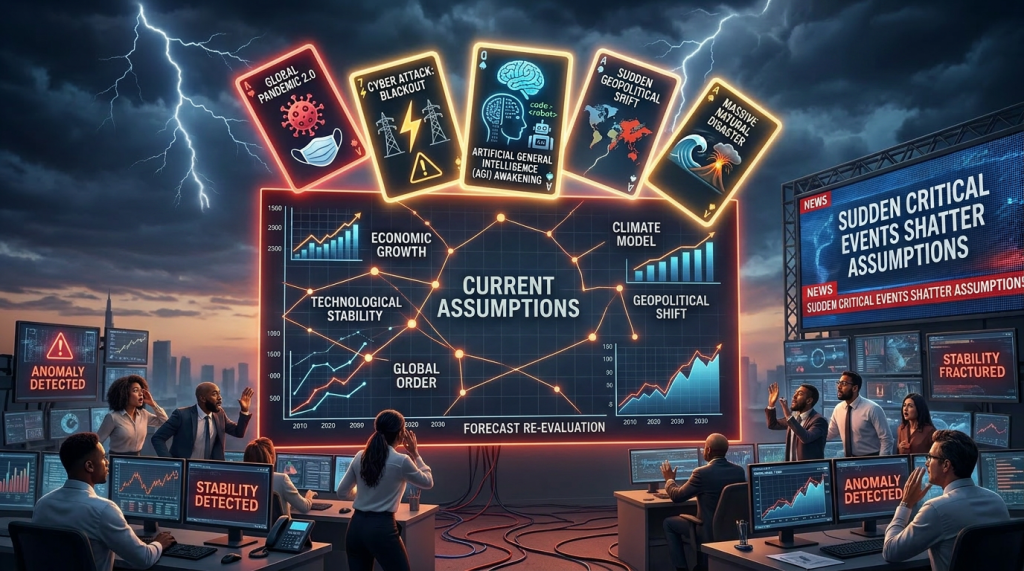
- We’re in the “BANI” era — brittle, anxious, non-linear and incomprehensible — and sustainability teams have no reliable playbook for it.
- Wild cards can be headwinds or tailwinds: The same unpredictability that brought the youth climate movement could accelerate a backlash tomorrow.
- A looming El Niño, community revolt against data centers and the slow creep toward an uninsurable future are all materializing faster than most companies are planning for.
The latest episode of Two Steps Forward started, appropriately enough, as a wild card. My co-host Solitaire Townsend suggested the topic mere seconds before we hit record.
That’s fitting, because the whole point of the episode is this: Sustainability professionals are trained to track trends, build on momentum and compound progress. What we’re not so good at is planning for the things that come out of nowhere and blow the model up (or mess up our mornings).
Soli introduced me to a framework I hadn’t heard: BANI — brittle, anxious, non-linear, incomprehensible. It’s a sharper update to VUCA — volatility, uncertainty, complexity, ambiguity— that’s been making rounds, and it fits the moment better. We’re not just in uncertain times. We’re in what I’ve dubbed the Asterisk Era, where every confident statement needs a caveat: “Things are going really well, considering.”
So we went through our respective list of wild cards. Among them:
• The rules keep changing. Companies that set ambitious net zero targets in the post-Paris glow of 2015 are finding that the goalposts have moved — sometimes by regulators, sometimes by their own boards. CSRD went from “everyone’s preparing for it” to “never mind” in what felt like a news cycle.
• El Niño is a ticking clock. NOAA put the probability of a strong El Niño this year at 90 percent, with a one-in-four chance it turns very strong. That’s not a distant climate signal; that’s a looming shock to commodity prices, monsoons, energy demand and supply-chain sourcing commitments that many companies still aren’t pricing in.
• Community opposition to data centers is a growing and pricey movement. It has blocked $18 billion in U.S. projects since 2024, delayed another $46 billion and quadrupled in scale last year. Twelve states have filed moratorium bills. This isn’t the NIMBYism of yesteryear. It’s a convergence of energy anxiety, water stress and growing public distrust of AI — and it’s moving faster than the industry can respond.
• The insurance exodus is a slow-motion crisis. California’s FAIR Plan — the state’s insurer of last resort — has gone from 140,000 policyholders in 2018 to over 600,000. Former California Insurance Commissioner Dave Jones has warned, “We’re marching toward an uninsurable future.” There are examples like this around the world. If boards aren’t asking which of their assets become uninsurable in the next decade, they’re not doing risk management. They’re hoping.
The antidote, Soli argued — and she told a remarkable story about a Polynesian island that survived a tsunami with 200 survivors out of 200 — is radical preparedness. Not prediction. Acceptance that the wild card will come, followed by honest drilling for it.
I have my own version of that story: A few years ago, I’d quietly gamed out in my head what we’d do if a fire came roaring down the canyon near my Oakland home. Then, at 5:10 one morning, when a neighbor called to say our house was on fire, I knew exactly what to do: dogs, wallets, phones, computers, car out of the garage, grab a few other things. I had time to come back and fight the fire before the fire crew arrived. Six minutes, start to finish.
A little preparedness goes a long way. The question for the sustainability community is whether we’re actually doing the drills — or just assuming tomorrow will look like yesterday.
Two Steps Forward is available wherever you get podcasts, including on Trellis.net. Find past episodes and show notes at twostepsforwardpodcast.com.

Subscribe to Trellis Briefing