Google’s AI expansion weighs heavily on climate goals
The tech company reported an 18 percent leap in greenhouse gas emissions in 2025, largely fueled by computing hardware, steel, concrete and other supplies related to data center construction. Read More
- Google’s electricity demand leapt 37 percent for the year, the largest increase in its history.
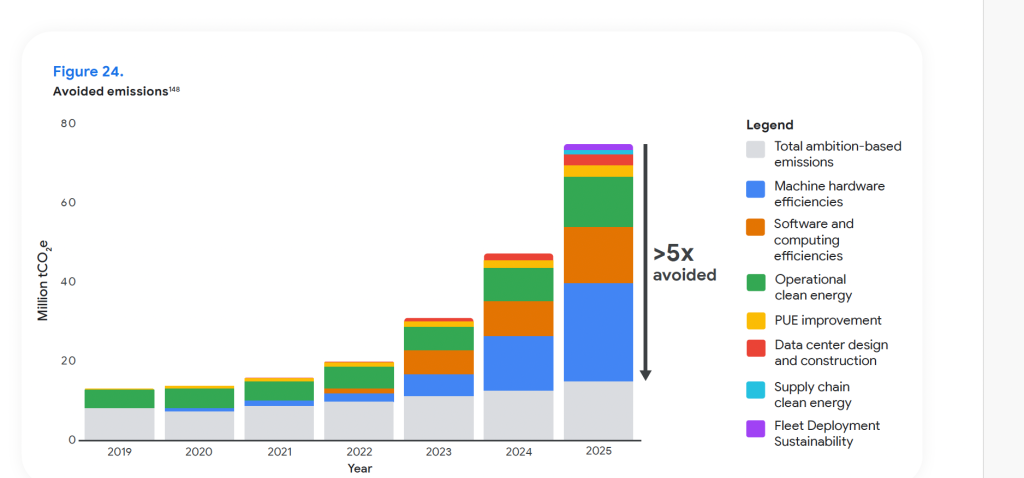
- Emissions have risen more than 80 percent since the 2019 baseline year — but it could have been worse.
- The company did replenish 7.7 billion gallons of water in 2025, which represents 78 percent of its freshwater consumption.
Google’s investments in artificial intelligence and cloud computing services, coupled with tough market conditions for clean energy in Asia and the U.S., pushed its 2030 net-zero “moonshot” further out of sight in 2025.
Google reported an 18 percent leap in greenhouse gas emissions, largely fueled by computing hardware, steel, concrete and other supplies related to data center construction. That piles onto the 11 percent increase that the tech company reported in 2024.
Google’s cumulative emissions have risen more than 80 percent since 2019, the baseline year for the company’s “intentionally aspirational” pledge to cut its operational emissions and certain supply chain emissions in half by 2030.
Google’s electricity demand leapt 37 percent for the year, the largest increase in its history. Since 2019, the power consumed by its products and services has increased by 250 percent.
“While our long-term commitment to reducing our environmental impact remains the same, our progress is being shaped by rapid shifts in technology and the slow evolution of power grids,” Google said in its 2026 environmental report published on June 30.
Things could have been worse. Google figures that without its clean energy contracts — more than 35 gigawatts in total across solar, wind, geothermal and nuclear facilities — plus ongoing investments in hardware and software efficiency, its GHG emissions footprint for 2025 would have been five times larger. Because of its work on custom chips and computing equipment, Google said its data centers use 83 percent less “overhead” energy than the industry average.
The company is also making progress on water: the 7.7 billion gallons it replenished in 2025 represents 78 percent of its freshwater consumption. (It has pledged to replenish 120 percent.) Unlike Microsoft and Amazon, Google doesn’t report on water efficiency, although it is unusually transparent about site-level water use.
Under pressure
Google is the first of the big three AI and cloud computing services companies to report this year on progress towards its climate commitments.
Like the other two, Amazon and Microsoft, it is struggling to balance ambitious goals for emissions, water and waste reductions with the environmental impact of data centers purpose-built for AI. Concerns over electricity prices and water withdrawals are drawing heightened scrutiny and opposition from communities across the U.S.
To counter that narrative, Google leans heavily on messaging that plays up the potential of AI to reduce emissions for consumers, businesses and cities, primarily through improved efficiency.
For example, it estimates that features in Google Maps and Nest thermostats, along with seven other applications it offers, helped consumers and businesses cut 41 million metric tons of carbon dioxide equivalent in 2025, three times Google’s footprint.
Parent company Alphabet has also developed technologies to speed grid modernization; slow interconnections for new clean energy generation are a primary impediment to many companies’ emissions reduction plans, across all industries.
Google Chief Sustainability Officer Kate Brandt is responsible for both the company’s environmental strategy and for identifying ways that it can use AI to address climate problems. Brandt, who has been in her role for 11 years, says Google’s innovations in sourcing clean electricity and applying AI to climate problems are “consequential” for the company.
“I would just say I feel like this work is more important than ever, it’s being valued, and I’m really grateful to be here,” Brandt said.
Changing the system
Google’s report highlights partnerships and initiatives that have been instrumental in addressing electricity-related emissions.
In 2025, the company began using a new type of time-based environmental attribute certificate to make claims about its use of “carbon-free energy” to make emissions reduction claims. These so-called “granular certificates” allow Google to match claims on an hourly basis, in line with a proposed change to the Greenhouse Gas Protocol’s accounting rules for Scope 2, which cover purchased electricity.
These certificates are meant to encourage the use of firm energy resources such as geothermal and nuclear, as well as energy storage technologies that can supplement solar and wind installations. But their availability is limited. “It’s a new instrument, a new marketplace, so it will take some time to get them to scale,” Brandt said.
Google hasn’t ruled out the use of natural gas in the short term for new data centers given “market realities” and the role it plays in grid reliability, Brandt said. Google is investing in next-generation nuclear technologies, enhanced geothermal approaches, carbon capture and long-duration storage to reduce that need over time.
Last week, Google signed a commercial contract in Ireland to deploy technology from Energy Doom, which is developing a battery that uses liquid carbon dioxide to store power for up to 24 hours.
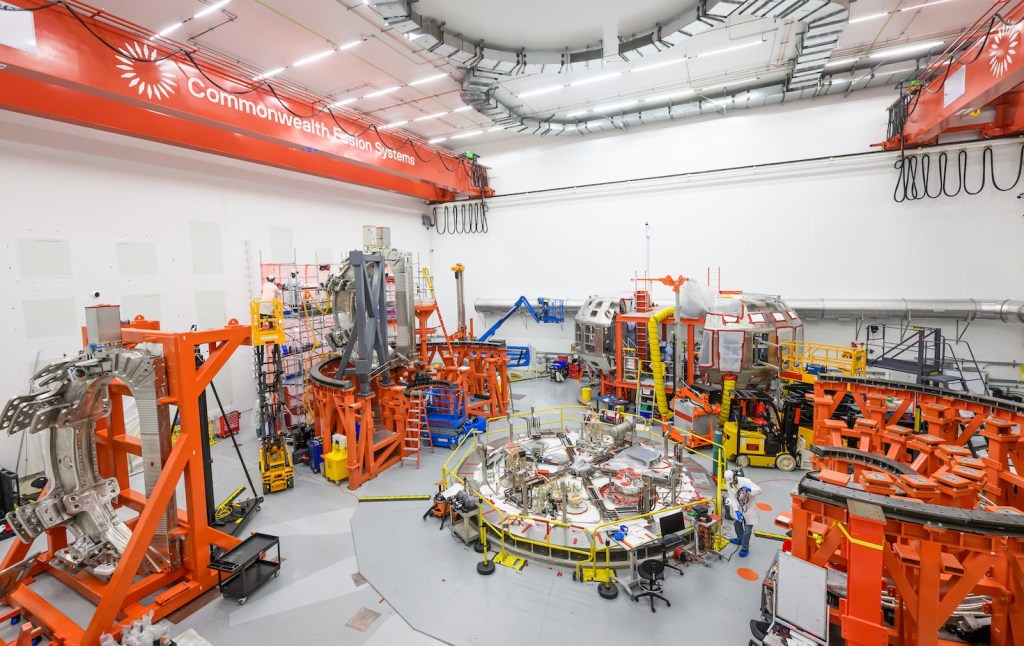
And last year, it announced a deal to restart a damaged nuclear plant in Iowa and broke ground on a small modular reactor project in Tennessee. Google also signed the largest direct offtake contract for fusion energy, a 200-megawatt agreement with Commonwealth Fusion Systems.
“More scale-up is needed to enable that deployment, especially at the gigawatt scales we need,” Brandt said.

Subscribe to Trellis Briefing