Q&A: How Purina is implementing regenerative agriculture

A Q&A with Purina's regenerative agriculture lead and Field to Market's president on regenerative partnerships and what's needed to scale adoption. Read More
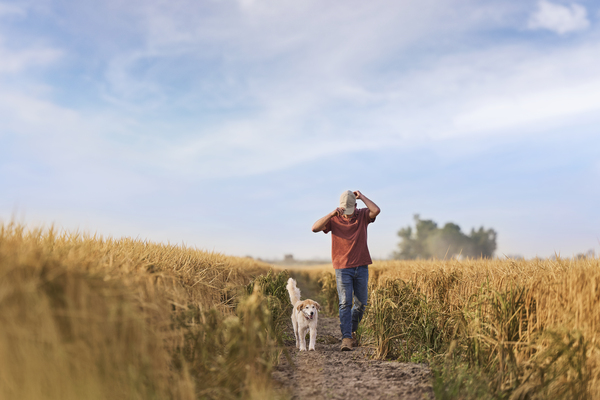
We all love our pets, but few people consider the environmental impact of feeding them. Pet food is part of our global food system, and focusing on sustainability in the pet food supply chain is one step we can take to make a positive impact.
For companies like Purina, which relies on ingredients from U.S. farms to create high-quality pet food, regenerative agriculture helps address consumer expectations for environmental stewardship and supports efforts to build business resilience. As both a sixth-generation farmer and president of Field to Market, I’ve seen that achieving more sustainable outcomes requires collaboration across the entire value chain — from businesses to farmers to scientists and beyond.
I sat down with Kelsey Ryan, Ph.D., a food scientist and regenerative agriculture lead at Nestlé Purina North America, to explore how regenerative agriculture supports business needs while feeding pets across the U.S. As part of her role, Kelsey partners with suppliers and other experts to support initiatives that help drive the company’s progress toward a more resilient future.
Carrie Vollmer-Sanders: What’s your perspective on the state of sustainability and regenerative agriculture in the food industry?
Kelsey Ryan: Today’s sustainability landscape has undergone a rapid transformation, and regenerative agriculture is increasingly becoming a strategic focus for major companies. There’s now real momentum behind environmental sustainability and regenerative agricultural practices that can create climate and nature benefits by improving soil health, water quality and quantity, and biodiversity.
From multinationals to startups, companies across the food industry are working toward sustainability commitments, recognizing that progress can’t happen in silos. This has inspired new technology, research funding and more organizational support for agricultural and supply chain innovation. We’ve seen this play out firsthand through your team at Field to Market, which has done a great job bringing together experts across the value chain to share practical learnings and work toward collective action.
It’s very encouraging to see the market shifting in this direction, and to see companies moving beyond pilots to broader implementation. However, to achieve the scale we need, we must inspire even more corporations across the food supply chain to make similar commitments — commitments that are farmer-focused and grounded in the realities of farming, which is what we embrace at Nestlé globally. We also need to continue helping consumers and the broader public understand regenerative agriculture’s role in creating the environmental outcomes they want to see.
Vollmer-Sanders: Can you explain where Purina is focusing its regenerative agriculture efforts in the U.S.?
Ryan: Purina is supporting the adoption of regenerative agriculture practices in regions where it sources row crops. Currently, Purina is helping scale regenerative practices across our supply chain by supporting programs that work directly with farmers in regions where grains and legumes like corn, soy, wheat and rice are grown. For example, Purina supported regenerative agriculture practices on more than 60,000 acres of rice alone in 2025.
We’re helping farmers in the Midwest and the Mississippi Delta adopt practices like reduced and no-till systems, crop rotation and alternate wetting and drying for rice. These are proven agronomic techniques that improve soil health and can reduce farmers’ input costs over time.
Vollmer-Sanders: What challenges do you see the industry navigating as it works toward implementing regenerative agricultural practices?
Ryan: Standardization is an ongoing challenge across the industry. Regenerative practices look different across geographies, soil types and farm operations, so there can be tension between crop-specific metrics and company-wide reporting. On top of that, companies often have different requirements and reporting frameworks, which creates more work at the farm level to capture the necessary data sets. It’s important to have universal standards to combat greenwashing and track progress, but it’s challenging to find a one-size-fits-all approach to measurement.
While regenerative practices can reduce carbon emissions, it’s also important to remember that they can deliver ecosystem benefits far beyond carbon reduction, including improved soil health, water outcomes, biodiversity and overall farm viability. Whether you’re a farmer or a business leader, regenerative agriculture is essential to long-term resilience and business continuity at both the farm and corporate level. For Purina, it comes back to how we can play a role in feeding pets for generations to come.
Vollmer-Sanders: You mentioned Purina’s support of regenerative agriculture in grains. What are some of the most important factors behind expanding adoption of regenerative practices among farmers?
Ryan: Farmers are at the heart of regenerative agriculture. Our approach in working with growers starts with recognizing that they know their farm best; every operation has different soil conditions, weather patterns, economics and levels of risk tolerance. Shifting farmer behavior at scale requires direct investment to alleviate the initial financial costs, as well as technical support to make practice adoption and reporting easier.
One example of this is Purina’s support of U.S. rice farmers. New technology is enabling the collection of real-time agronomic insights, which is allowing farmers to understand the actual emissions and water impact of their decisions. This lets them quantify benefits and choose the practices that make the most sense for their operation, including nutrient management planning, split fertilizer applications, conservation tillage and advanced water management strategies like alternate wetting and drying. In one of our past rice projects, participation increased over the years as farmers saw real results and value from the adoption of regenerative practices.
Vollmer-Sanders: How do those types of projects inform how you approach Purina’s supply chain risks over the next 5-10 years?
Ryan: It’s very important to use these partnerships to understand what has actual benefits in the field and can inspire practical change on a larger scale. Agricultural cooperatives are often great partners because the model fosters collective problem-solving and knowledge sharing that’s necessary for widespread innovation. Our support of farmer-owned rice cooperatives has yielded promising results and learnings that can be applied across a broader network or explored in similar crops. We found that alternate wetting and drying led to improvements in irrigation efficiency compared to conventional methods, while maintaining waterfowl habitat through winter flooding practices. Climate change will put pressure on our water systems, especially in at-risk regions like the Plains, so these projects shed light on changes we can make to decrease our impact and be better prepared.
Vollmer-Sanders: Thank you, Kelsey.
The work won’t be easy, but regenerative agriculture won’t scale without support for farmers, strong partnerships across the value chain and a mindset shift to recognize that business success and environmental benefits aren’t competing priorities. When companies like Purina invest alongside farmers, the risk and the reward get shared, and that shared stake is what drives lasting change.
Every ingredient tells a story, and it’s clear Purina is committed to making sure that pet food delivers the same positive impact on the planet as pets bring to our homes. To learn more about Purina’s commitment to regenerative agriculture, visit Purina.com.

Subscribe to Trellis Briefing