How your company can work with Stanford’s $1 billion sustainability school
Companies can become university affiliates or reach out direct to spinout companies. Read More
- Stanford’s new Doerr School of Sustainability is translating basic research into solutions for power generation, agriculture and other sectors.
- More than 90 projects are being developed in the school’s Sustainability Accelerator.
- Spinouts working on topics ranging from soil carbon credits to the delivery of power to data centers have emerged from the school..
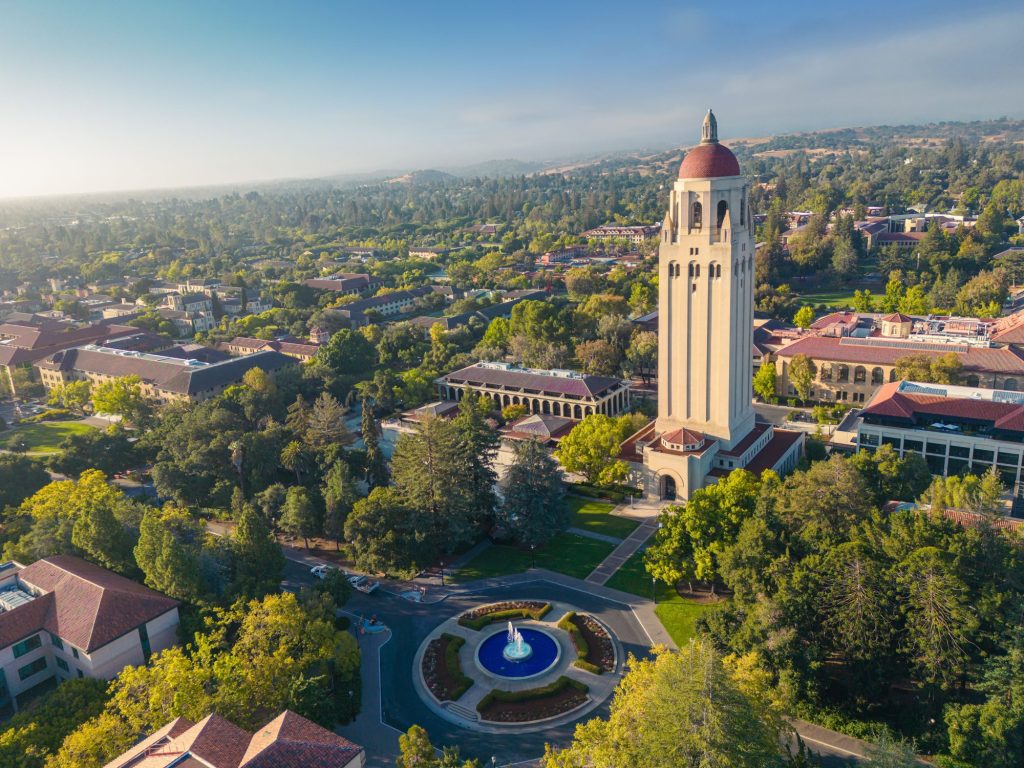
The Stanford Doerr School of Sustainability is running at full steam following a 2022 $1.1 billion donation from venture capitalist John Doerr and his wife Ann. Multiple existing research areas, including energy studies, have been folded into the school. But the Sustainability Accelerator, which is dedicated to translating research into scalable technologies, will be of particular interest to businesses. Trellis asked leading members of the school how companies can get involved.
What is the Sustainability Accelerator?
Project teams led by Stanford faculty join the accelerator to access funding, mentorship and connections to experts outside the university. Each team joins a cohort working toward one or more “flagship destinations,” ambitious sustainability targets identified by the school as having the potential for global impact. Cohorts include electricity and grid systems, greenhouse gas removal, industry and food and agriculture.
Many startups and technologies emerging from the accelerator are looking to partner with established companies. That’s an offer worth considering, because each went through a due diligence process involving experts at Stanford and elsewhere before being selected. “This helps stress-test project ideas and ensure we select the most promising,” said Charlotte Pera, executive director of the accelerator.
What kind of solutions are coming out of the accelerator?
There are more than 90 active projects in the accelerator and several fledgling companies have been created. Those spinouts have developed innovations that include:
- A fast-acting soil additive from Mafix that restores soil health and boosts crop yields while permanently capturing carbon dioxide from the atmosphere.
- Wastewater treatment technology built by Recovered Potential that eliminates the release of nitrous oxide, a potent greenhouse gas, and creates nitrogen fertilizer.
- A process for speeding the delivery of power to data centers by modeling the grid and identifying latent capacity. See the GridCARE website for more details.
How can companies get involved?
Many of the projects and spinouts are looking for strategic partners and early buyers. Mafix, for example, will monetize its technology by selling credits on the voluntary carbon market. “We’re looking for buyers for our first thousand tons,” said co-founder Jade Marcus. If companies are interested, she added, “they should definitely come talk to us.”
Companies looking for a formal connection with the university should also consider joining one of Stanford’s affiliate programs, added Arunava Majumdar, dean of the sustainability school.
For more information on specific programs, projects and spinouts, complete the contact form created for the school’s recent sustainability forum.

Subscribe to Trellis Briefing